 how-to
How to Choose the Right Solar Panel Cleaning Frequency
Quick Summary
The right solar panel cleaning frequency in dusty climates depends on how fast dust builds up on your site and how much that costs in lost power. Start with a baseline, choose a starting interval by dust level, then adjust using measured output. Clean when weather-adjusted production falls about 5 percent below baseline.
- Log two to four weeks of output with clean panels to set a baseline.
- Severe dust sites may need inspection weekly and cleaning every two to four weeks in dry season.
- Clean when weather-adjusted production drops roughly 5 percent below baseline; investigate at 10 percent.
- Rain only cleans panels when it is heavy enough to sheet off the glass.
- Clean early morning or late afternoon to avoid thermal shock on hot glass.
Table of Contents
- Why Dusty Climates Change the Cleaning Schedule
- How Dust and Soiling Reduce Energy Production
- Setting a Solar Panel Cleaning Schedule for Your Site
- How to Clean Solar Panels Safely
- Cleaning Solar Panels After a Dust Storm
- Low-Water Options for Scarce-Water Sites
- Booking Your First Professional Cleaning With Mr Clean Solar Cleaning
- Frequently Asked Questions
Why Dusty Climates Change the Cleaning Schedule
Dust can cut a solar array's output faster than most owners expect. In a dusty climate, the right solar panel cleaning frequency is not a fixed number.
Many owners start with the standard advice to clean a few times a year. That schedule can fall short in places with frequent dust storms, long dry spells, or heavy agricultural activity nearby.
- Dust accumulates faster during dry seasons and windy periods
- Nearby construction, farming, or unpaved roads add more particles
- Rain can wash panels clean, but only if it falls often enough and hard enough
How Dust and Soiling Reduce Energy Production
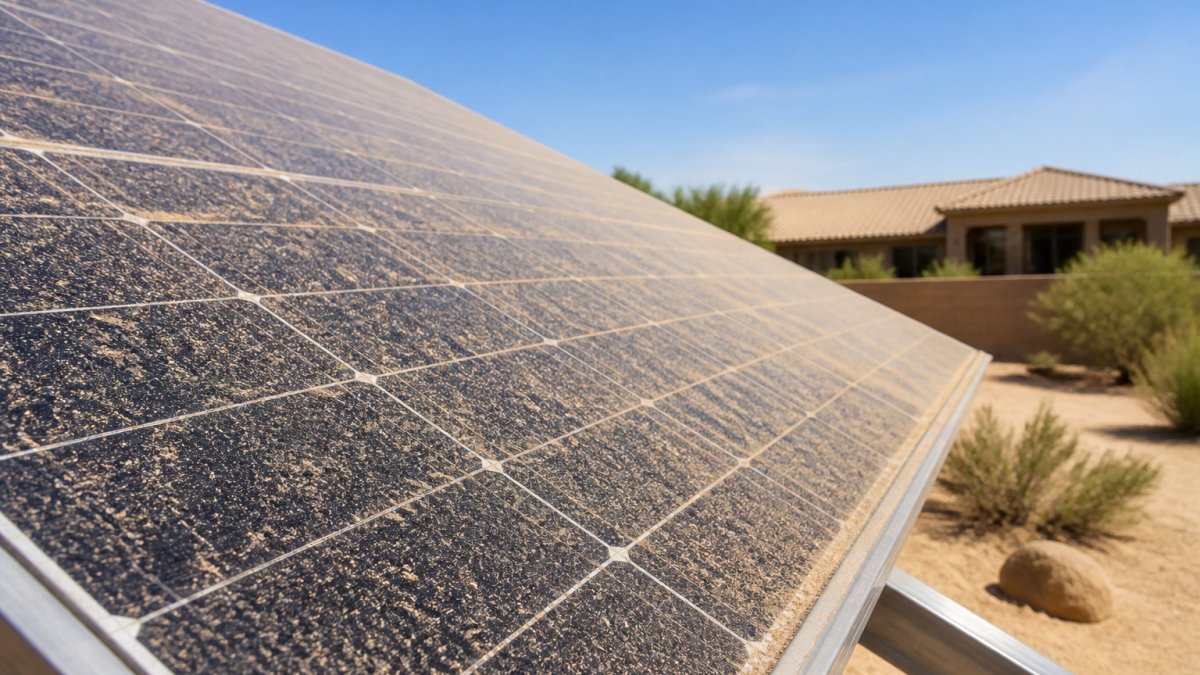
Soiling is the term for dust, dirt, and debris that block sunlight from reaching the cells.
Soiling is uneven. Dust often collects along the lower edge of a panel, and it can gather more heavily on panels set at shallow tilts.
Your system will show these losses in its monitoring data. If output drops during a dry spell and recovers after a rain, dust is a likely cause.
- Thin, even dust causes small, steady losses
- Crusted or caked dust can cause larger, harder-to-reverse losses
- Uneven soiling can make strings underperform even when most panels look fine
Setting a Solar Panel Cleaning Schedule for Your Site
A schedule you can defend is built in three steps: establish a clean baseline, set a starting interval for your dust regime, then adjust that interval with measured output and site conditions. The calendar is the last input, not the first.
Step 1: Establish a Clean Baseline
Clean the array thoroughly, then log daily or weekly production for two to four weeks while the panels stay clean. Record the date, weather, and any monitoring notes. That period becomes your reference for what the array can produce under normal sun. Without a clean baseline, a production-loss trigger has nothing to compare against.
Watch out: a baseline taken during smoke, haze, or monsoon season will understate clean output and make later soiling losses look smaller than they are.
Step 2: Pick a Starting Interval by Dust Regime
Use site conditions to choose a first interval, then let data move it. Most practitioners find the following starting points reasonable for residential and small commercial arrays in dusty climates:
- Severe dust: weekly inspection, cleaning every two to four weeks during the dry season. Typical of sites beside unpaved roads, active construction, or open desert with frequent dust events.
- Moderate dust: inspect every two weeks, clean every four to six weeks in dry months. Typical of suburban sites near farmland or gravel lots.
- Light dust with reliable rain: inspect monthly, clean every eight to twelve weeks or after long dry spells. Typical of sites that receive regular, intense rainfall.
These are starting points, not commitments. The adjustment rules below decide whether your site moves up or down a tier.
Step 3: Adjust With Five Inputs
- Dust intensity and events. Count visible dust storms or high-wind days per month. Two or more major events in a month usually justify moving up one tier.
- Rainfall pattern. Rain cleans panels only when it is heavy enough to sheet off the glass. Light drizzle can mix with dust and leave a cement-like film that is harder to remove than dry dust. Track rain days above roughly a quarter inch rather than total rain.
- Tilt. Shallow-tilt arrays (under about 15 degrees) hold dust longer and soil unevenly along the lower edge. Steeper arrays shed more dust on their own.
- Nearby sources. Unpaved roads, tilling, gravel crushing, and construction within a few hundred feet can spike soiling within days. Ask whether the source is seasonal or year-round.
- Measured output. This is the tiebreaker. If output is holding near baseline, extend the interval. If it is drifting down between cleanings, shorten it.
Using Production Loss as a Cleaning Trigger
A workable trigger is to clean when weather-adjusted production falls roughly 5 percent below your clean baseline, and to investigate immediately if it falls 10 percent or more. To weather-adjust, compare current output to the same hours on days with similar sun and temperature, or use your monitoring platform's expected-generation figure if it provides one.
Watch out: monitoring data shows a loss but does not prove soiling is the cause. Inverter faults, shading changes, a tripped breaker, or a failing string can look similar. Confirm with a visual inspection before scheduling a cleaning.
Residential Versus Utility-Scale Optimization
A utility-scale owner can justify frequent cleaning because each percentage point of lost generation is worth more and crews clean many panels per visit. A homeowner's math is different: a service call has a fixed cost, and a small percentage loss may not repay it. For a home system, the practical rule is to clean when the value of recovered production clearly exceeds the cost of the cleaning.
A Simple Decision Sequence
- Clean and log a two-to-four-week baseline.
- Choose a starting tier from the dust regime table.
- Inspect at the start of each dry season and after any major dust event.
- Compare weather-adjusted output to baseline weekly.
- Clean at the 5 percent trigger, investigate at 10 percent.
- After each cleaning, note how much output recovered and adjust the interval accordingly.
The article's starting intervals for each dust regime are summarised below.
| Dust regime | Inspection | Cleaning interval |
|---|---|---|
| Severe dust | Weekly | Every two to four weeks in dry season |
| Moderate dust | Every two weeks | Every four to six weeks in dry months |
| Light dust with reliable rain | Monthly | Every eight to twelve weeks or after long dry spells |
How to Clean Solar Panels Safely
Safe cleaning protects both you and your panels. Plan the job carefully before you touch the array.
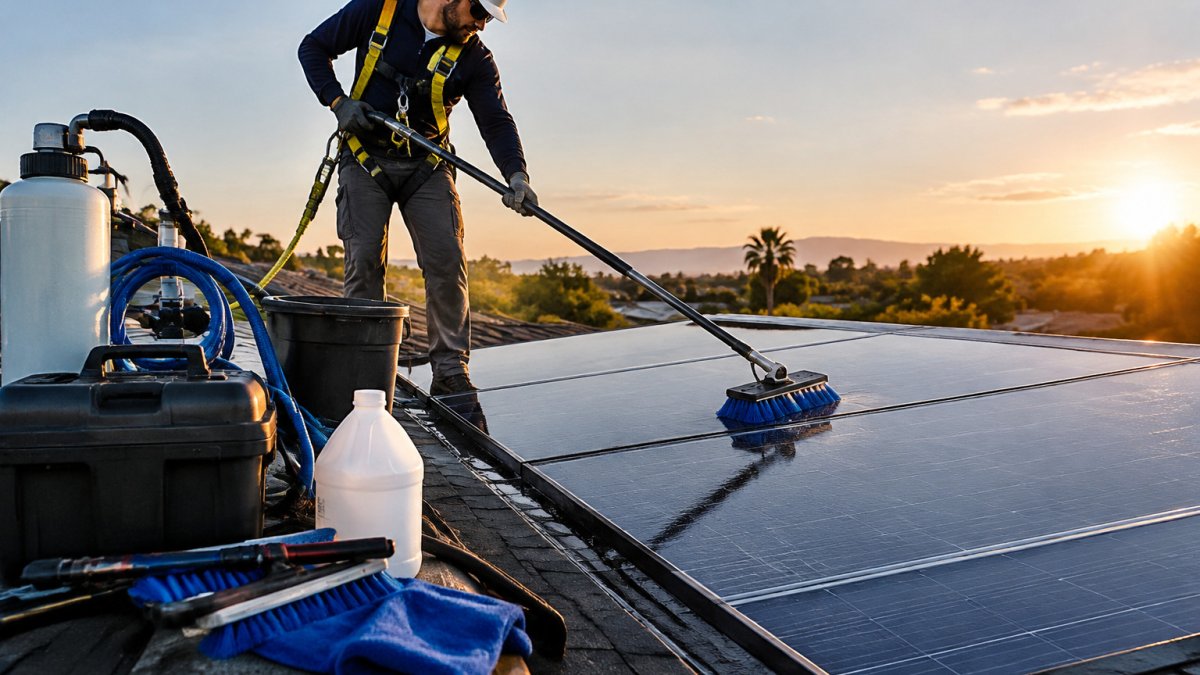
Start by turning off the system or following your installer's shutdown steps. Never clean panels that are wet or electrically live without proper training.
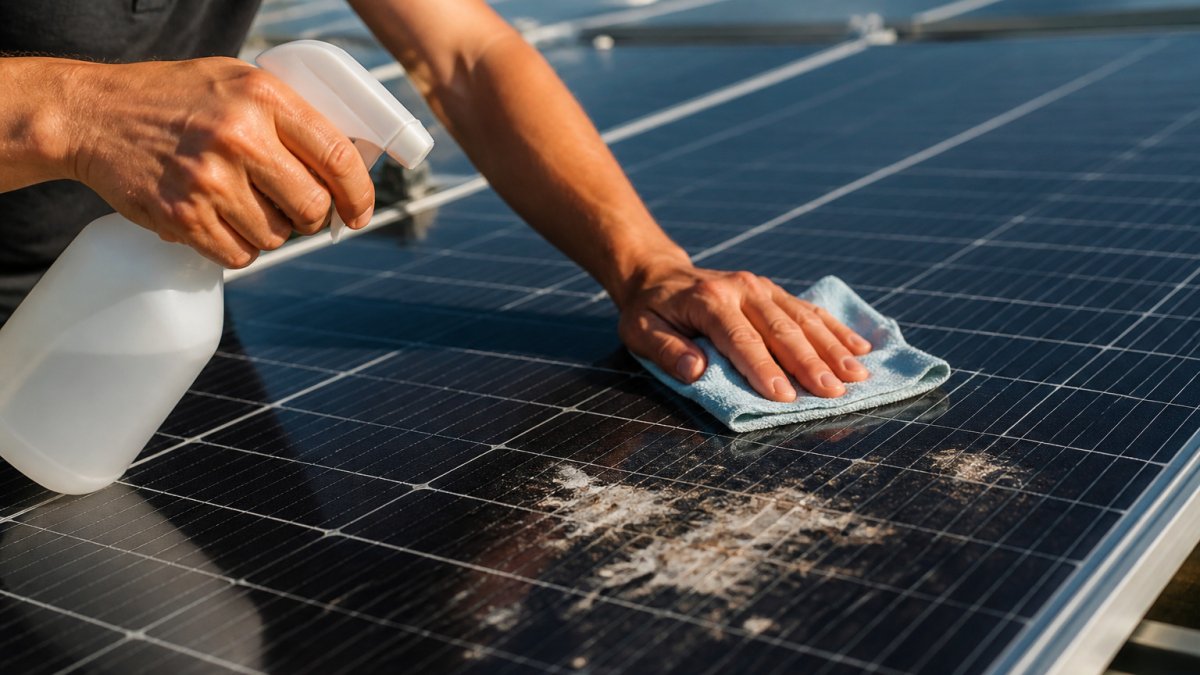
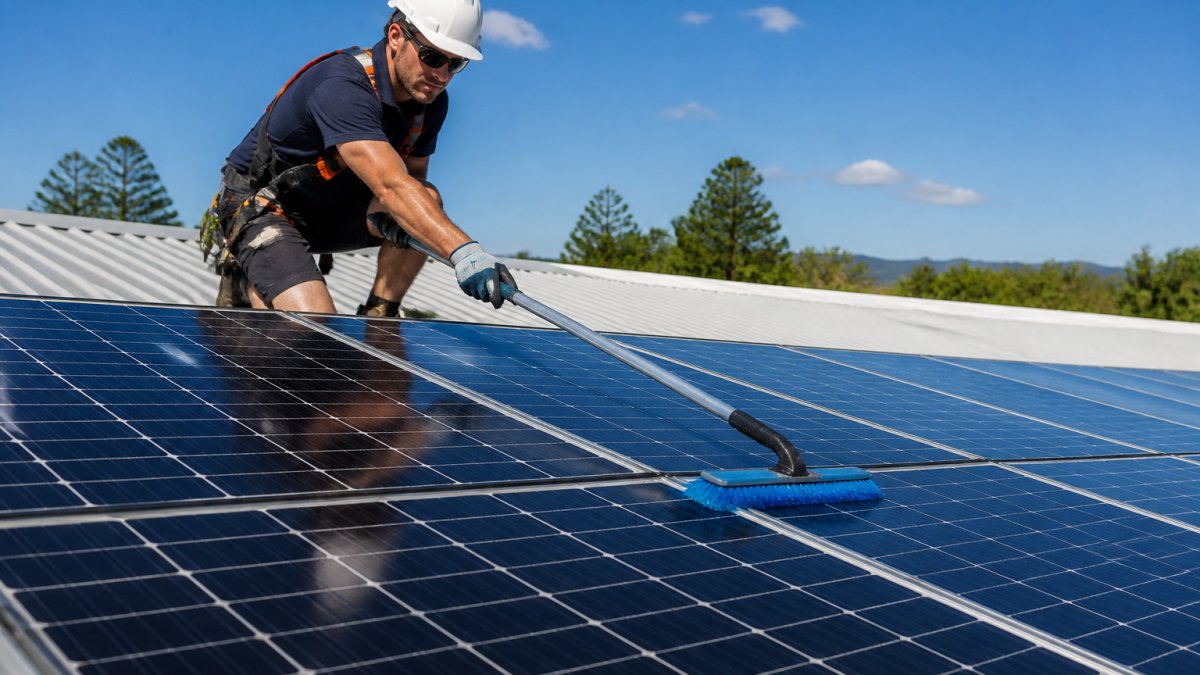
Use water and a soft-bristle brush or sponge. Avoid abrasive pads, harsh chemicals, and high-pressure washers, which can scratch the glass or damage seals.
- Use deionized or softened water when possible to avoid mineral spots
- Work from the top of the array down to the bottom
- Check your warranty for any cleaning requirements or restrictions
Choosing the Best Time of Day to Clean
Clean early in the morning or late in the afternoon. Panels are cooler at these times, which lowers the risk of thermal shock when cool water hits hot glass.
Avoid midday cleaning. Hot panels can cause water to dry in streaks, and you are also more likely to be exposed to heat and glare.
Cleaning Solar Panels After a Dust Storm
A dust storm can coat your panels in a short time.
Heavy, sudden soiling usually calls for a prompt cleaning, especially if output has dropped sharply. Waiting too long can let dust bond to the glass and become harder to remove.
Once the air is clear, inspect the panels for caked dust and debris. Clean as planned, and then update your schedule if storms are becoming more frequent.
Low-Water Options for Scarce-Water Sites
Dusty climates are frequently water-stressed, so the cleaning method has to balance water use against scratch risk. The wrong low-water method can cost more in damaged glass than it saves in water.
Compare the Methods Before You Choose
- Dry brushing. Removes loose dust with little or no water. Suitable for light, fresh dust between wet cleanings. Risk: dragging grit across glass can micro-scratch it, especially with stiff or dirty brushes. Use a soft, clean brush and light pressure, and never dry-brush caked or gritty buildup.
- Rinse-and-squeegee. A small volume of water to float dust off, followed by a soft squeegee or microfiber pass. Uses more water than dry brushing but far less than a hose-down, and it is the safest option for moderate soiling.
- Deionized water spot-free rinse. A low-volume final rinse with deionized water prevents mineral spotting, which matters in areas with hard water.
Water Quality Matters as Much as Water Volume
Hard water leaves calcium and mineral spots that can be difficult to remove and may etch glass over time. If your tap water is hard, use deionized or softened water for the final rinse, or accept spotting and plan a spot-free pass. Never use a high-pressure washer on solar glass; the pressure can damage seals and frame gaskets even when the nozzle is far from the surface.
When Dry Methods Are Appropriate, and When They Are Not
Dry brushing can be reasonable for light, loose dust. It is not appropriate for caked dust after a storm, bird droppings, agricultural residue, or ash, all of which need moisture to lift safely.
Watch out: cleaning hot glass with cold water can cause thermal shock and crack a panel. Clean early morning or late afternoon when the glass is near ambient temperature.
Timing Cleanings Around Rain
If significant rain is forecast within a day or two, it can be worth delaying a cleaning. But do not count on light rain to clean panels; it often turns dust into a film. After a heavy rain event, inspect rather than assume the array is clean.
When to Bring In a Professional
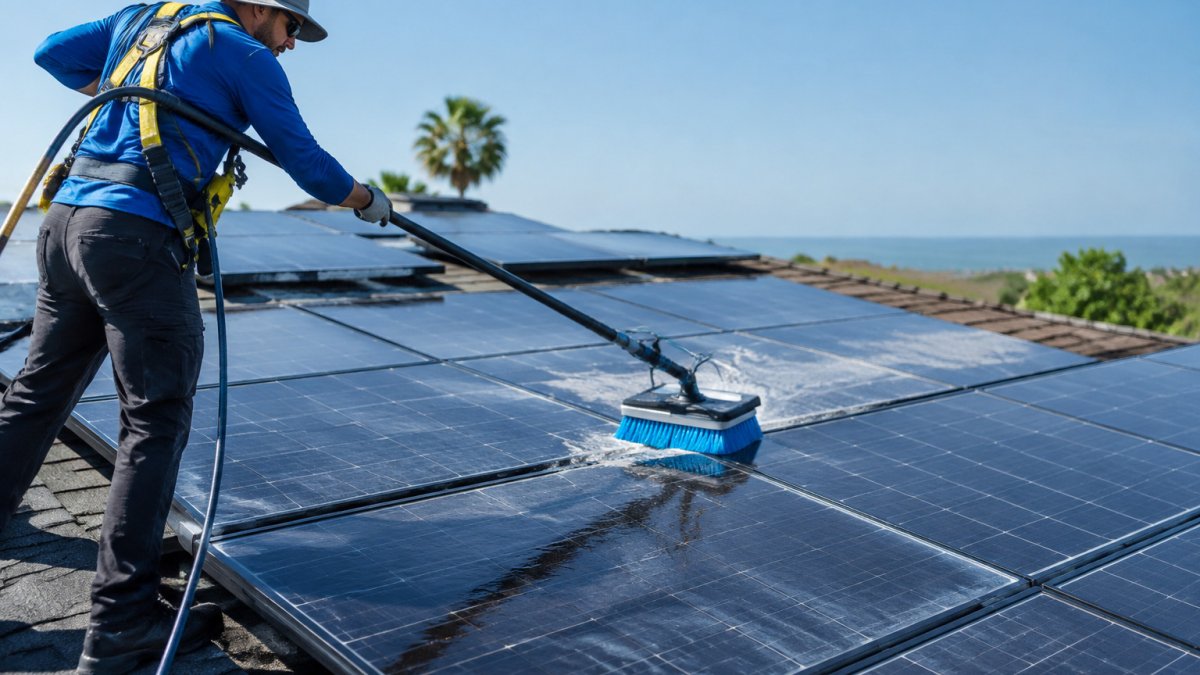
If the array is on a steep or high roof, if soiling is heavy or bonded, or if your water supply is severely limited, a professional cleaning is usually the lower-risk choice. Crews can clean with filtered low-water equipment, avoid roof traffic, and inspect for damage at the same time. Check your manufacturer's instructions and warranty before using any detergent or abrasive tool; some warranties exclude damage from improper cleaning.
Booking Your First Professional Cleaning With Mr Clean Solar Cleaning
If you are unsure how to start, a professional cleaning is a good first step. At Mr Clean Solar Cleaning, our OSHA-trained team uses purified deionized water and specialized soft-bristle systems engineered for solar glass.
Before your first visit, check your current output data and note any recent dust events. This helps the team set a sensible starting schedule for your site.
Contact Mr Clean Solar Cleaning through our website to book your first cleaning. Pricing depends on your situation, so request a quote for current rates.
Frequently Asked Questions
How often should solar panels be cleaned in dusty climates?
In dusty climates, many systems benefit from cleaning every one to three months, though the right interval depends on local dust load, rainfall and how much output you lose between cleanings. Sites with heavy dust, agricultural activity or long dry seasons usually need the shortest intervals. Tracking your production data against weather helps you find the point where cleaning pays for itself. Rain can carry off some dust, but it rarely removes caked-on residue, so a periodic professional clean is still worth scheduling.
Should I clean solar panels after a dust storm?
Yes, if your production dropped noticeably after the storm. Dust deposited in a single event can cut output, and fine particles can bond to the glass once they dry. Check your monitoring data for a sudden dip that does not match the weather, and inspect the panels for a visible film. If the buildup is heavy, schedule a cleaning rather than waiting for the next routine visit.
Can cleaning solar panels too often damage them?
Cleaning itself is rarely harmful when it is done correctly with soft-bristle equipment and purified deionized water, which leaves no mineral residue. Damage usually comes from abrasive materials, high-pressure washing or improper technique. Mr Clean Solar Cleaning uses soft-bristle systems engineered for solar glass and avoids abrasive chemicals. Ask your provider about their methods and insurance before booking.
When is the best time of day to clean solar panels?
Early morning or late afternoon is generally best. Panels that are hot from direct sun can experience thermal stress when cold water hits them, and water dries too quickly during peak heat, leaving spots. Cleaning before the panels heat up or after the sun drops lower reduces both risks and gives a more even result.