 how-to
Deionized Water for Solar Cleaning: Why It Matters
Table of Contents
- Why Deionized Water Works for Solar Panel Cleaning
- Clean Solar Panels With Mineral Deposits: The Deionized Water Advantage
- How to Clean Solar Panels With Hard Water: What You Need to Know
- Can You Use Tap Water to Clean Solar Panels? The Truth About Water Quality
- Solar Panel Cleaning Brush and Tools: Equipment for Streak-Free Results
- Safety, Warranties, and Best Practices for DIY Cleaning
- When Professional Cleaning Delivers Better ROI
- Frequently Asked Questions
Last Updated: October 16, 2026
Why Deionized Water Works for Solar Panel Cleaning
Deionized water for solar cleaning removes mineral deposits without streaks or residue.
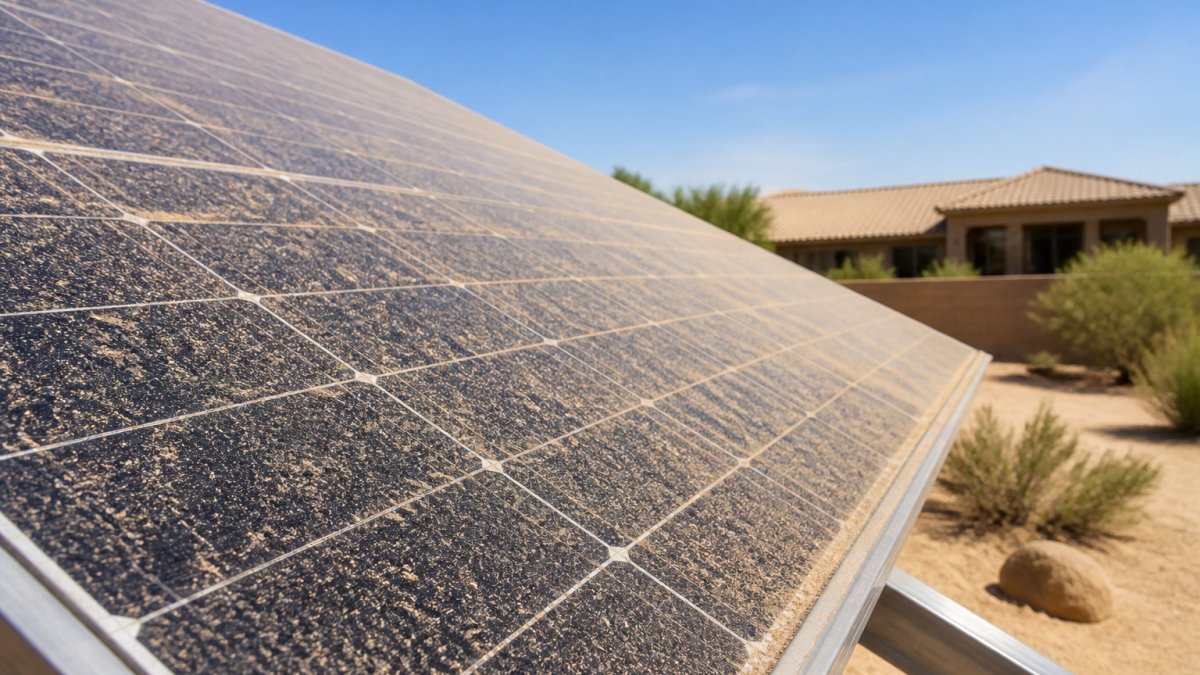
Mineral buildup blocks sunlight from reaching your panel's photovoltaic cells, and even a thin layer of residue cuts energy output, real money lost.
At Mr Clean Solar Cleaning, we use ultra-pure deionized water on every job, not to make panels look clean, but to restore peak efficiency.
Hard water leaves visible mineral deposits on glass. Deionized water leaves nothing. That's why professional solar maintenance relies on it.
Clean Solar Panels With Mineral Deposits: The Deionized Water Advantage
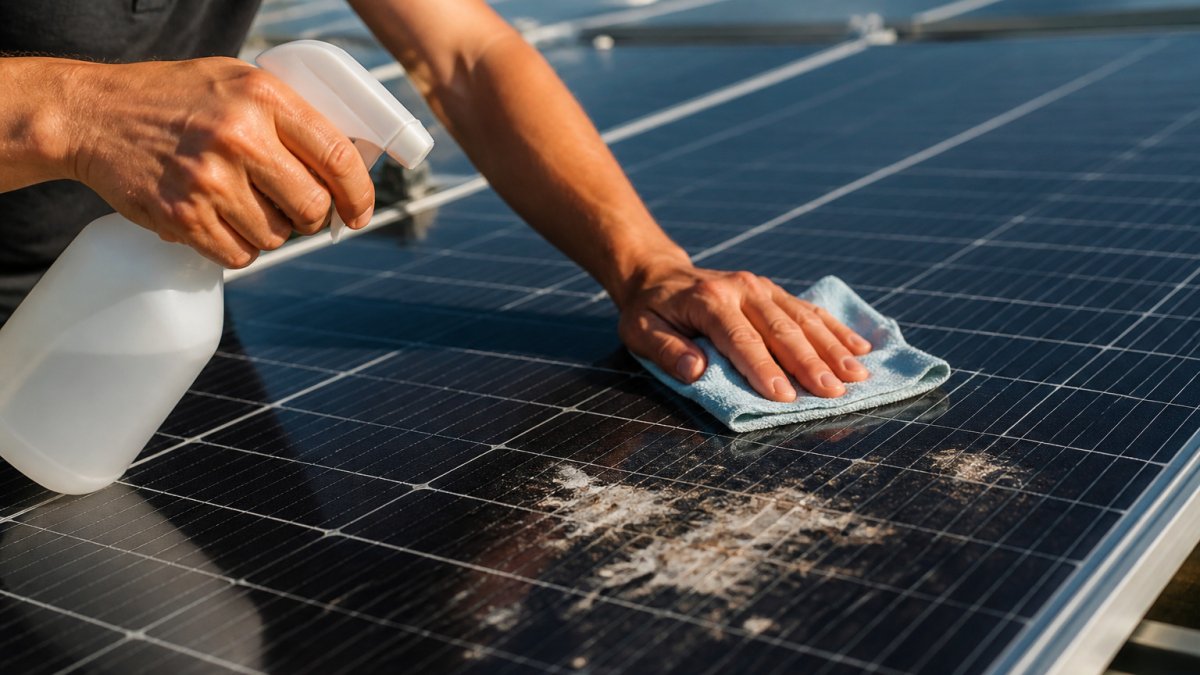
Mineral deposits are stubborn and don't rinse away with plain water. When hard water evaporates on your panels, calcium and magnesium salts crystallize into a white, chalky coating that blocks light.
Deionized water solves this at the source: with no dissolved minerals, nothing precipitates out when it dries, so the surface stays clear and streak-free, especially important for panels with months or years of buildup.
Here's what happens with different water types:
- Tap water: Contains 200-500+ mg/L of dissolved solids. Leaves visible white streaks and spots as it dries.
- Hard water: Contains even more minerals. Creates thick, stubborn deposits that require scrubbing.
- Rainwater: Contains some minerals but fewer than tap water. Still leaves light residue over time.
Once mineral deposits form, they're harder to remove. A soft brush and deionized water gently lift existing grime without scratching the glass.
How to Clean Solar Panels With Hard Water: What You Need to Know
If your area has hard water, cleaning solar panels at home is more complicated: hard water leaves deposits plain rinsing won't remove, so you need deionized water and proper technique.
Pressure washing with hard water drives mineral deposits deeper into the panel surface, and scrubbing too hard scratches tempered glass.
Steps for cleaning panels in a hard-water area:
- Turn off your solar system before starting any cleaning work.
- Gather deionized water, a soft-bristle brush, and a bucket or spray system.
- Rinse panels gently with deionized water to loosen loose dust and debris.
- Use the soft brush with light pressure to remove stubborn grime and mineral buildup.
- Rinse thoroughly with deionized water until the surface is completely clear.
- Allow panels to air dry. Do not wipe or towel dry, which can reintroduce minerals.
- Turn your system back on and monitor output to confirm improved performance.
The key is patience: hard-water deposits didn't form overnight, so multiple gentle passes with deionized water beat one aggressive scrubbing session.
Can You Use Tap Water to Clean Solar Panels? The Truth About Water Quality
Short answer: tap water is the wrong tool for the job. The useful question isn't "tap or deionized?" but "what is my water actually measuring, and how do I verify it?"
What the numbers mean
Water quality for panel cleaning is usually expressed two ways:
- TDS (total dissolved solids), reported in mg/L (equivalent to parts per million). A handheld TDS meter gives a fast reading. Tap water commonly falls in the low hundreds of mg/L; hard water runs higher.
- Conductivity, reported in microsiemens per centimeter (µS/cm). Conductivity and TDS track each other closely, dissolved ions conduct electricity, so a conductivity meter reads the same thing.
Neither tells you which minerals are present, only how much dissolved material is in the water. For cleaning, that's enough: the lower the number, the less material is left behind when the water dries.
A practical target
There is no federally mandated number for solar-cleaning water, so treat this as a working target. A common professional benchmark is a very low TDS, well under 10 mg/L. If you cannot get below 10 mg/L, you likely have exhausted resin or a feed-water problem, not a cleaning problem.
How to measure and verify
- Test the feed water first. Fill a cup from the tap or tank and take a TDS reading, your baseline.
- Test the output. Read the water that will actually touch the glass, after the RO and DI stages, at the pole or nozzle if possible.
- Compare. If output is not meaningfully lower than feed, your filtration is failing: check resin, membrane, and pre-filters.
- Re-check during the job. Resin exhausts gradually; a reading that creeps up mid-job means swap cartridges before you leave streaks.
- Calibrate occasionally. TDS meters drift, so follow the manufacturer's calibration instructions.
Why tap water fails
- It carries dissolved minerals that stay behind as the water evaporates.
- In hard-water areas, those minerals form white spotting and a dull film.
- The film scatters light before it reaches the photovoltaic cells, so the panel looks clean while producing less.
Where reverse osmosis fits
Reverse osmosis alone removes most dissolved solids and can be acceptable for cleaning, but it typically does not reach the very low TDS deionizing resin produces. That's why RO is paired with a DI polishing stage: RO does the heavy lifting, DI finishes the job. If you own an RO system, test its output, if it's not at your target, add a DI stage.
The bottom line
Do not judge water by the label. Measure it: test feed and output TDS, aim for a very low reading, and re-test as you work. That habit prevents the streaks, spots, and re-cleans tap water causes, and tells you when to replace resin.
TDS and conductivity explained for water quality
Solar Panel Cleaning Brush and Tools: Equipment for Streak-Free Results
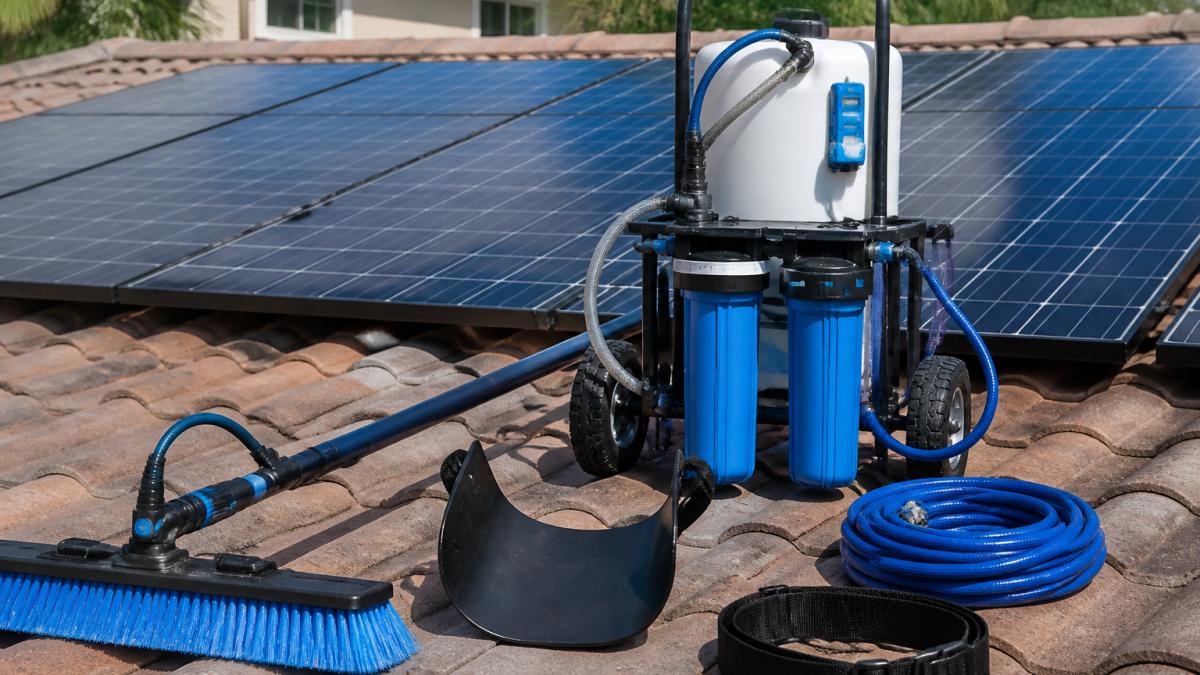
Most guides say to use a soft brush and "purified" water and stop there, leaving the hardest part unanswered: what equipment actually produces residue-free water, and how do you assemble it into a roof-ready workflow? This section covers water production, delivery, and the brush end.
Start with the water system, not the brush
There are two common ways to make low-TDS water for panel cleaning:
- DI-only (deionizing resin). Water passes through ion-exchange resin that swaps dissolved mineral ions for hydrogen and hydroxide. It is simple, portable, and produces very low TDS, but resin exhausts as it captures ions, and high-TDS feed water burns through it quickly.
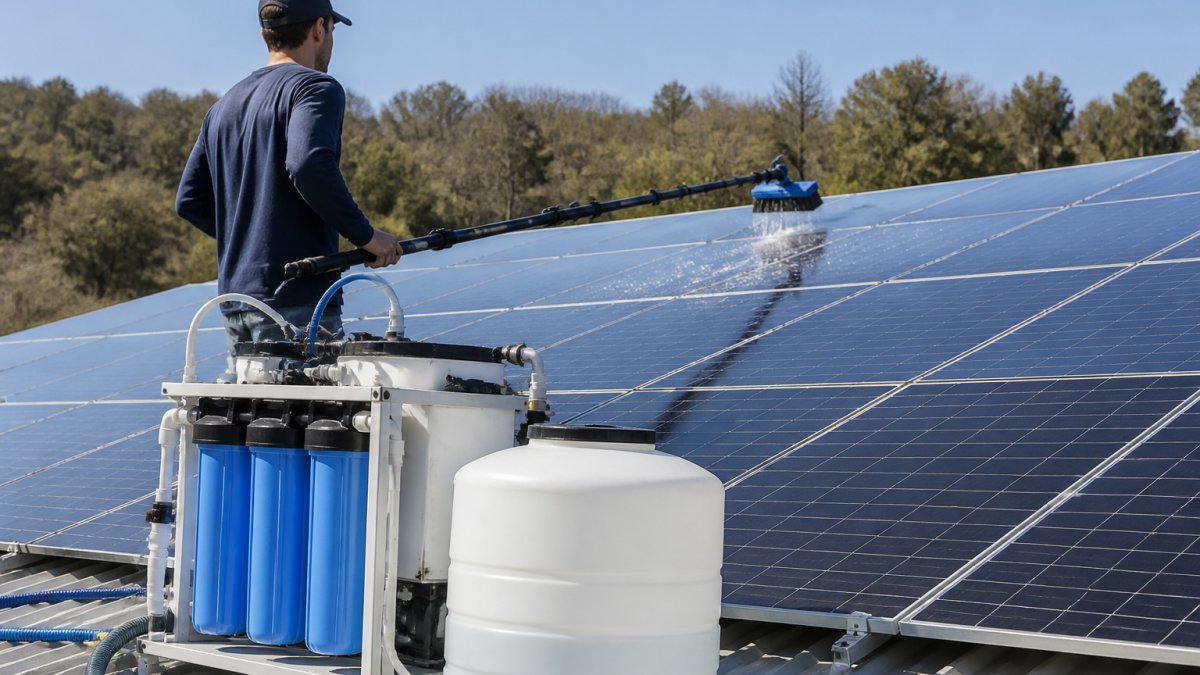
- RO-plus-DI (reverse osmosis, then deionizing resin). Reverse osmosis removes the bulk of dissolved solids, then the DI stage polishes to near-zero TDS. This is standard for professional solar cleaning because it stretches resin life and handles hard feed water. The trade-off is more equipment, more setup, and a waste stream from the RO membrane.
A practical rule: the higher your feed-water TDS, the more you benefit from putting RO ahead of DI. If your tap water reads in the hundreds of mg/L, DI-only resin exhausts fast; RO-plus-DI keeps the polishing stage cheap.
Resin capacity, filters, and when to change them
Resin and filters are consumables, and knowing when they're spent is the difference between streak-free glass and a re-clean.
- Resin exhaustion shows up as rising output TDS. When it climbs above your target, the resin is done. Some cartridges change color, but a TDS meter is the reliable signal.
- Sediment and carbon pre-filters protect the RO membrane and resin from grit and chlorine. Chlorine degrades many resins, so a carbon stage ahead of DI is common in municipal-water setups.
- RO membrane performance is judged by rejection rate, the percentage of feed TDS it removes. A membrane that has lost rejection passes more minerals downstream and loads the DI stage.
Delivery: poles, pumps, and tanks
How you get water to the panel matters as much as what is in it.
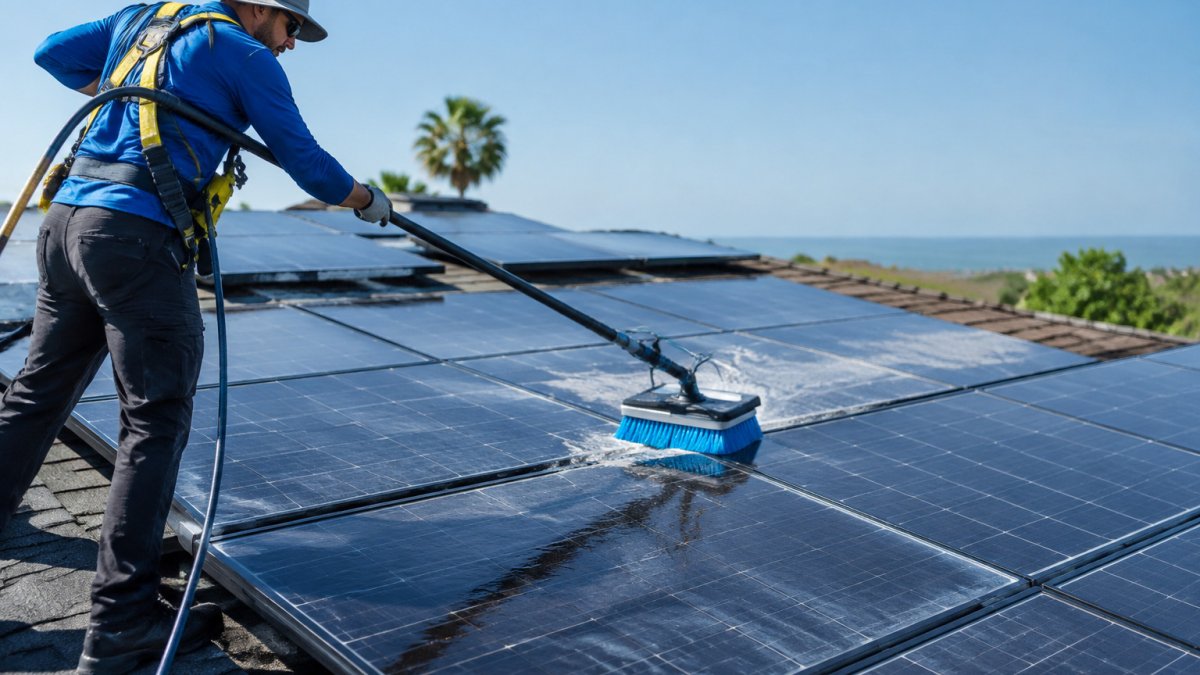
- Water-fed poles let you reach panels from the ground or a low ladder, the single biggest safety win. A pole with a soft-bristle head and controlled rinse jet lets you scrub and rinse without leaning over an edge.
- Pumps and tanks are needed when you're not plumbed to a supply. A small transfer pump and tank carry produced water to the array; gravity feed works for short runs but loses pressure at height.
- Flow control matters more than pressure: enough flow to carry away loosened grime, not enough force to drive water into seals. A gentle, steady rinse is the goal.
The brush end
Soft bristles are non-negotiable on tempered glass with anti-reflective coatings. Look for solar-glass brushes with flagged or gently splayed bristles that lift grime without concentrated pressure points. Avoid abrasive pads, steel wool, and stiff deck brushes, they scratch coatings and cause warranty disputes.
| Component | What it does | What to watch |
|---|---|---|
| DI resin cartridge | Polishes water to low TDS | Output TDS rise = resin spent |
| RO membrane | Removes bulk of dissolved solids | Falling rejection rate loads the DI stage |
| Sediment/carbon pre-filter | Protects RO and resin | Replace on schedule; chlorine degrades resin |
| Water-fed pole | Reaches panels safely from ground | Match pole length to array height |
| Soft-bristle head | Lifts grime without scratching | Solar-glass-specific bristles only |
| TDS meter | Verifies water quality | Check feed and output, not just one |
| Transfer pump/tank | Delivers water off-supply | Size to array and run length |
A simple workflow
- Test feed-water TDS and note it.
- Run water through RO (if used) and then DI; test output TDS.
- Confirm output is at or below your target before it touches glass.
- Pre-rinse loose dust, agitate with the soft brush, then rinse clean.
- Let panels air dry, do not towel dry.
- Re-test output TDS during the job; swap resin if it climbs.
Safety, Warranties, and Best Practices for DIY Cleaning
Your solar panel warranty likely has specific cleaning requirements, and improper cleaning can void coverage. Most manufacturers prohibit pressure washing and require gentle methods.
Warranty protection tips:
- Check your warranty documentation before cleaning
- Use only soft-bristle brushes and low pressure
- Never use abrasive cleaners, vinegar, or harsh chemicals
Pressure washing is the most common cause of solar panel damage and warranty claims.
Mr Clean Solar Cleaning's OSHA-trained team follows manufacturer guidelines on every job, using soft-bristle systems and deionized water to protect your warranty while restoring efficiency.
Safety considerations for DIY work:
- Work during cool hours, early morning or late afternoon
- Wear non-slip footwear if accessing a roof
- Use a safety harness and fall protection if working at height
If you're uncomfortable working at height or dealing with electrical equipment, professional cleaning is the safer choice.
When Professional Cleaning Delivers Better ROI
Professional cleaning makes sense when the cost is less than the energy you recover, a threshold most homeowners reach within one cleaning cycle.
Here's the math: if your system normally produces $100 per month in electricity but is operating at 75% efficiency due to buildup, you're losing $25 per month.
Mr Clean Solar Cleaning provides detailed performance reports before and after each cleaning, showing exactly how much energy recovery you achieved, ROI in real dollars, not promises.
Consider professional cleaning if:
- Your panels show visible dust, dirt, or bird droppings
- You haven't cleaned them in over 6 months
- You live in a dusty or coastal area where buildup is frequent
DIY cleaning makes sense if:
- Your panels are relatively clean with minimal buildup
- You're comfortable and experienced with roof work
- You have access to deionized water and proper equipment
Dirty solar panels cost you money every day.
Whether you choose to clean your panels yourself or hire professionals, use deionized water and soft-bristle equipment. Our detailed performance reports show exactly how much energy you recover. Book Now to schedule your cleaning and restore your system to peak efficiency.
Frequently Asked Questions
What type of water should you use to clean solar panels?
Deionized water or reverse osmosis water are the best choices for solar panel cleaning. These purified water types contain minimal dissolved minerals, which prevents mineral deposits and streaks after the water dries. Tap water contains dissolved salts and minerals that leave visible residue. If your area has hard water, deionized water becomes even more critical to avoid mineral buildup that reduces panel efficiency.
Can you use tap water to clean solar panels?
Tap water is not recommended for solar panel cleaning because it contains dissolved minerals and salts that leave streaks and spots as the water evaporates. Hard water is especially problematic, leaving visible mineral deposits on the panel surface. These residues block sunlight and reduce energy output. Deionized water or purified water ensures a spot-free rinse and protects your panels from long-term mineral buildup.
Does deionized water prevent mineral spots on solar panels?
Yes. Deionized water has had minerals and salts removed through purification processes like reverse osmosis, so it leaves no residue when it dries. This creates streak-free, spot-free results that protect your panels from mineral deposits. If you've already cleaned with tap water and see mineral spots, deionized water can help remove those deposits during a subsequent cleaning, though stubborn buildup may require gentle scrubbing with a soft brush.
How often should solar panels be cleaned?
Cleaning frequency depends on your environment and dust accumulation. Most residential systems benefit from cleaning once or twice per year. Areas with significant dust, pollen, bird droppings, or hard water deposits may need quarterly cleaning. Monitor your energy output, if production drops noticeably, cleaning is likely needed. Professional cleaning services typically recommend assessment-based schedules tailored to your location and system size.