 how-to
How to Clean Solar Panels Safely: Step-by-Step Guide
Table of Contents
- Why Clean Solar Panels?
- Best Solar Panel Cleaning Tools and Materials
- Solar Panel Cleaning Safety Precautions
- Step-by-Step Process for How to Clean Solar Panels Safely
- How Often to Clean Solar Panels for Peak Performance
- What to Avoid When Cleaning Solar Panels
- Best Time of Day to Clean Your Panels
- Frequently Asked Questions
Last Updated: September 27, 2026
Why Clean Solar Panels?
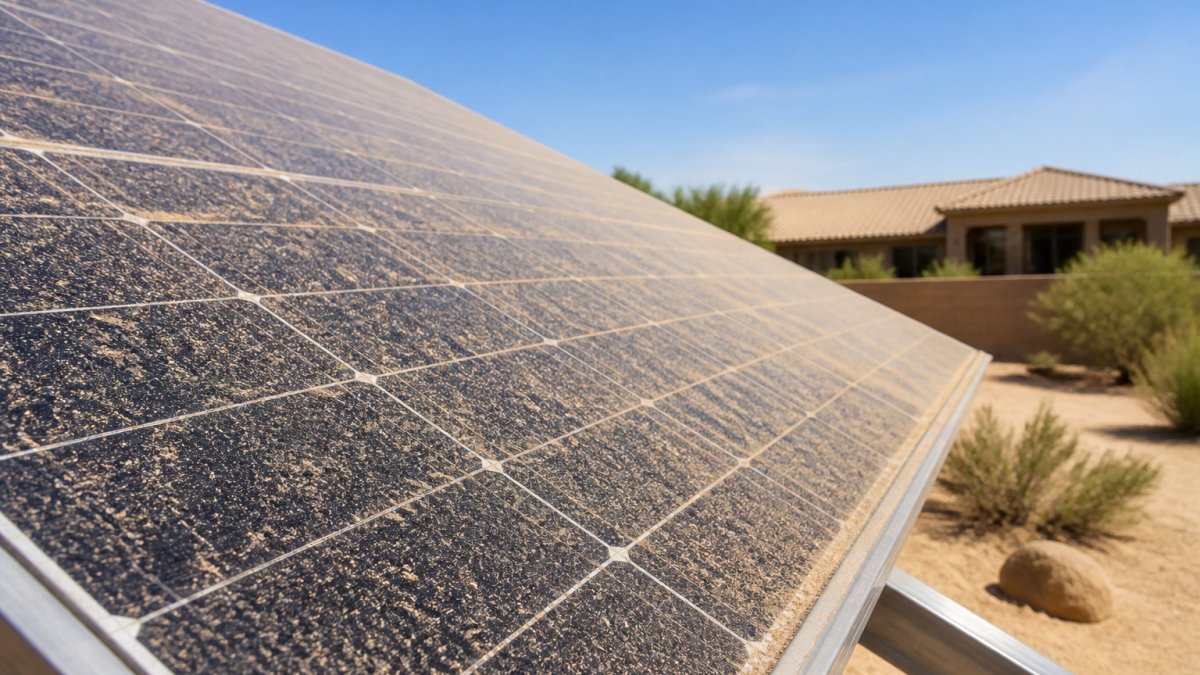
Dust, pollen, bird droppings, and mineral deposits accumulate on your solar panels over time. This buildup blocks sunlight and reduces energy production. Even a thin layer of grime can cut your output by 15-25%. The good news: regular cleaning restores your system to peak performance.
Clean panels generate more electricity, lowering your energy bills and extending your system's lifespan.
Rain helps but doesn't remove stubborn deposits. In hard-water areas, rain leaves mineral spots that reduce efficiency further, making intentional cleaning essential.
Best Solar Panel Cleaning Tools and Materials
The right tools prevent damage and deliver streak-free results when you clean solar panels safely.
Essential Equipment Checklist
Start with these basics:
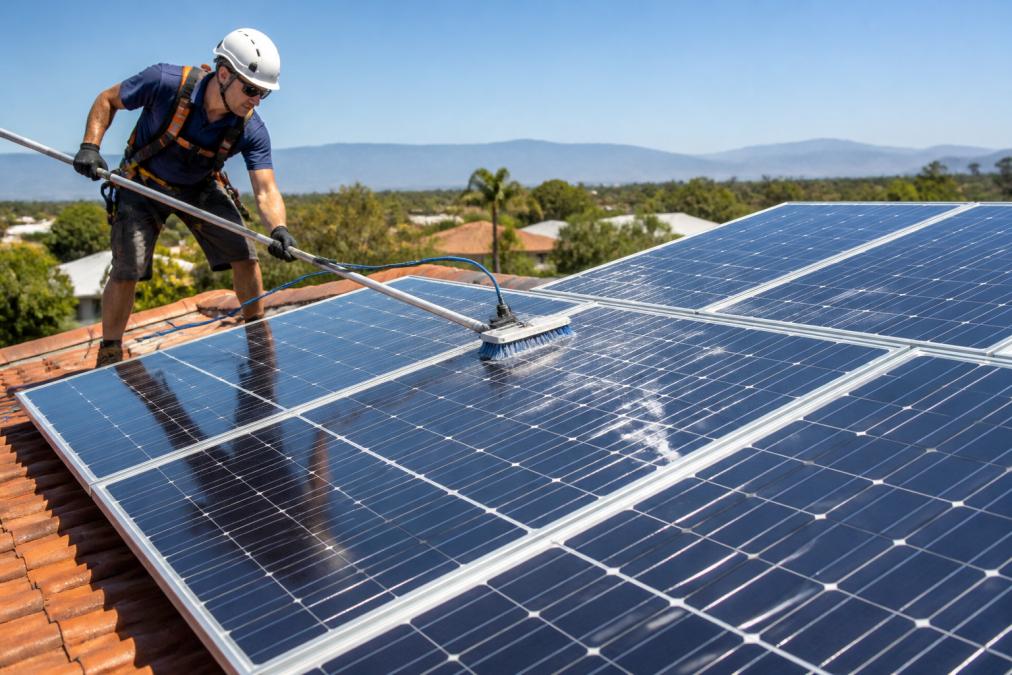
- Soft-bristle brush with extension pole (non-abrasive, designed for solar glass)
- Squeegee (rubber blade only, no metal frames)
- Deionized water (prevents mineral spots and streaking)
- Mild dish soap (biodegradable, no harsh chemicals)
- Bucket for mixing solution
- Safety harness and rope (if accessing a roof)
- Ladder (sturdy, properly positioned)
- Gloves (protect your hands from chemicals and sharp edges)
- Eye protection (sunglasses or safety glasses)
Avoid pressure washers, abrasive sponges, and vinegar solutions. These can scratch the glass or damage the frame.
Deionized water removes minerals that tap water leaves behind, preventing spotting that reduces light transmission.
Solar Panel Cleaning Safety Precautions
Roof work is dangerous. Falls, electrical hazards, thermal shock, and structural damage can cause serious injury or equipment failure.
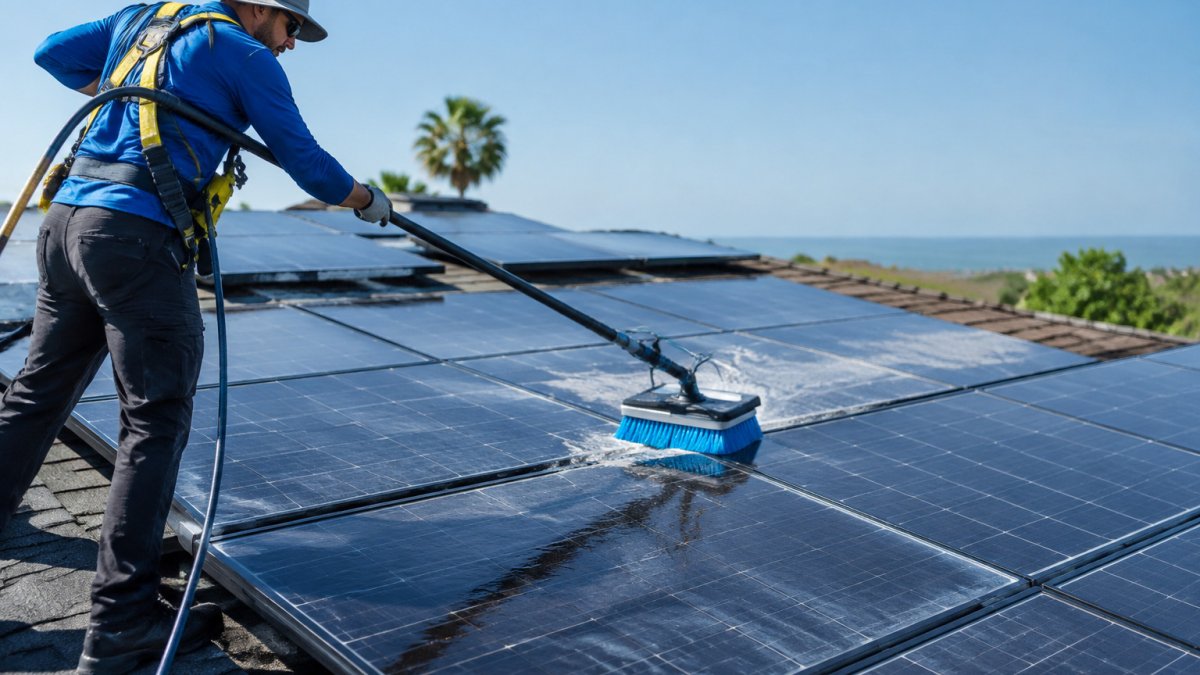
Personal Safety Gear and OSHA Compliance
OSHA requires fall protection systems for any work at heights of 6 feet or more. This applies to residential DIY work as well.
Required safety gear includes:
- Safety harness (ANSI/ASSE A10.32 certified, rated for at least 5,000 pounds)
- Lanyard or shock-absorbing retractable lifeline (maximum 6-foot free fall distance)
- Anchor point (roof-mounted, rated for at least 5,000 pounds holding capacity, or a structural beam rated for fall arrest)
- Hard hat (ANSI Z89.1 Type I or II, protects against falling objects and bumps)
- Non-slip footwear (ASTM F1679 rated, with rubber soles and good grip)
- Rubber gloves (nitrile or latex, protects against chemicals and electrical hazard)
- Eye protection (ANSI Z87.1 rated safety glasses, not sunglasses)
- High-visibility vest or clothing (helps spotters see you)
Do not improvise with ropes or homemade harnesses.
Micro-Cracking and Structural Damage Risks
Solar panels are not designed to support human weight or aggressive pressure. Walking on panels or applying concentrated force causes invisible micro-cracks that grow over time, leading to cell failure and reduced output.
How micro-cracking happens:
- Stepping on the panel surface or kneeling on panels
- Using a pressure washer
- Scrubbing hard with a brush
- Dropping tools onto the array
Prevention:
- Work from a ladder next to the array, not on top of it
- Use an extension pole with soft-bristle brush; apply gentle pressure
- Avoid pressure washers; use a garden hose on gentle spray
- Secure tools with a tether; step on roof surface or frame, never on glass
Electrical Safety Considerations
Solar systems generate electricity even on cloudy days. Shut off your inverter before cleaning and wait 10 minutes for capacitors to discharge. If your system has battery backup, turn that off too. Keep water away from electrical components. Wear rubber gloves and shoes with good grip; avoid metal jewelry.
Step-by-Step Process for How to Clean Solar Panels Safely
Here's how to clean solar panels safely from start to finish. Follow each step carefully to avoid damage and ensure streak-free results.
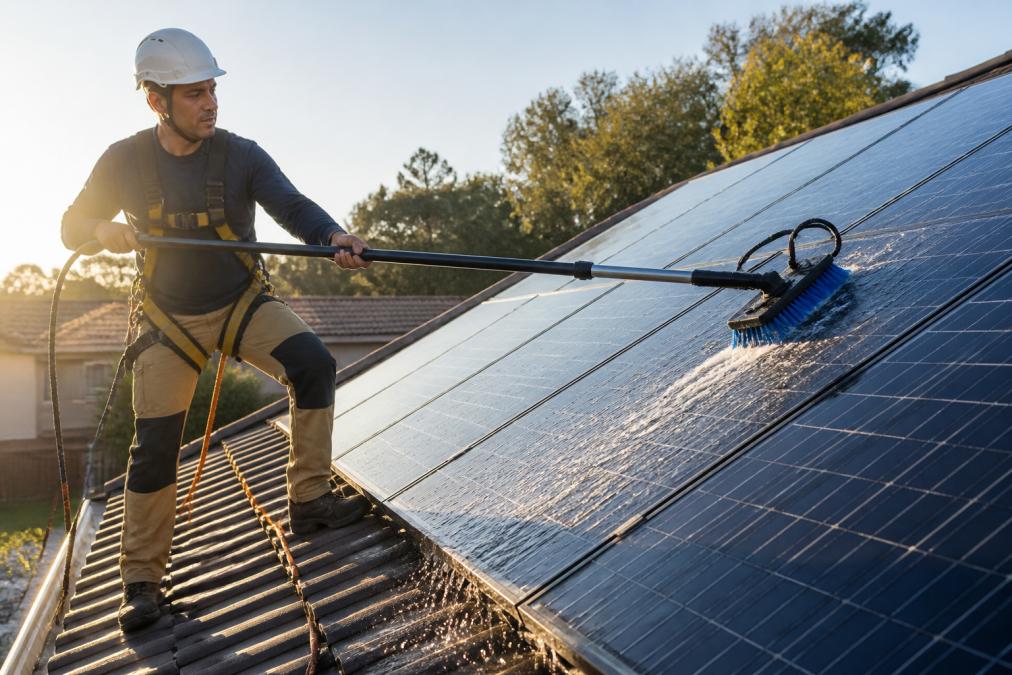
Step 1: Inspect Your System and Plan Your Approach
Walk around your panels and note heavy bird droppings, dust, or mineral deposits. Check for visible damage: cracks, loose wiring, or corrosion. If you spot damage, call a professional. Plan your route and work systematically to avoid missing spots.
Step 2: Prepare Your Cleaning Solution
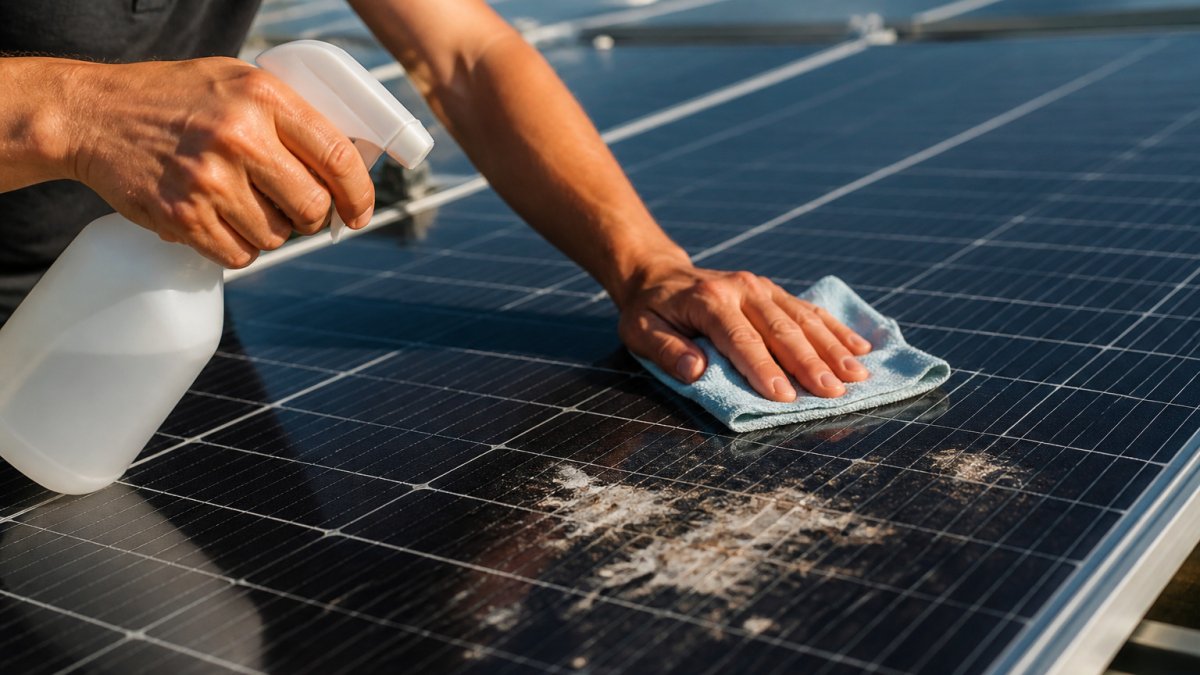
Mix one part mild dish soap with 10 parts deionized water. Test on one panel first, checking for streaks. Never add vinegar, bleach, or abrasive cleaners, as these damage the glass coating and void warranties.
Step 3: Apply and Rinse with Deionized Water
Apply the solution gently using circular motions; let the soap do the work. Rinse immediately with deionized water using a gentle spray, working top to bottom. For stubborn deposits, let soapy water sit 2-3 minutes before rinsing.
Step 4: Dry and Inspect for Streaks
Use your squeegee to remove excess water with smooth, overlapping strokes from top to bottom. Let panels air-dry completely and check for streaks. Turn your inverter back on once dry and monitor output for improved performance.
How Often to Clean Solar Panels for Peak Performance
Cleaning frequency depends on your environment, water quality, and seasonal weather patterns.
Water Hardness and Mineral Buildup
Hard water contains dissolved minerals that remain on glass after evaporation, creating a hazy film. Mineral deposits can reduce panel output by 5-10% depending on severity. In hard-water regions with low rainfall, this buildup accelerates.
- Soft water: 0-60 ppm (minimal mineral deposits)
- Moderately hard: 61-120 ppm (noticeable spotting after 4-6 weeks)
- Hard: 121-180 ppm (spotting visible within 2-3 weeks)
- Very hard: 181+ ppm (spotting visible within 1-2 weeks)
Regional and Seasonal Cleaning Schedules
Instead of a generic "clean every 3-6 months," tailor your schedule to your environment:
High-dust regions (Southwest, Great Plains, agricultural areas):
- Clean quarterly (every 3 months)
- Dust accumulation is rapid due to low rainfall and wind
- Monitor inverter output monthly; clean if output drops more than 10% from baseline
Coastal regions (salt spray environments):
- Clean every 2-3 months
- Salt spray corrodes frames and etches glass faster than inland dust
- After storms, inspect panels for salt residue and clean within 48 hours
Rainy climates (Pacific Northwest, Southeast):
- Clean 1-2 times per year
- Rain naturally removes dust and pollen
- Focus cleaning after spring pollen season (April-May) and fall leaf drop (September-October)
Moderate climates (Midwest, Mid-Atlantic):
- Clean twice yearly: spring (after pollen season) and fall (after dust accumulation)
- Spring cleaning removes pollen buildup; fall cleaning prepares for winter
Snowy regions (Northeast, Mountain states):
- Clean in early spring after snow melt (March-April)
- Clean again in late summer (August-September) before fall leaves drop
- Snow naturally covers panels in winter; focus on spring cleanup when snow melts and reveals accumulated dust and pollen
Performance-Based Cleaning Triggers
Don't rely solely on a calendar. Use your inverter's monitoring data to trigger cleaning:
- Baseline output: Record your system's output on a clear, sunny day with no clouds. This is your reference point.
- 10% drop: If output falls 10% below baseline on a clear day, cleaning is needed.
- Visible debris: Bird droppings, leaves, or thick dust warrant immediate cleaning, regardless of schedule.
- After storms: Inspect panels after heavy rain, wind, or dust storms. Clean if residue is visible.
Special Cases: Bird Droppings and Pollen
Bird droppings are acidic and etch glass permanently if left too long. Clean them off within 48 hours of spotting them. Don't wait for your scheduled cleaning date.
What to Avoid When Cleaning Solar Panels
Certain practices damage panels and void warranties. Know what NOT to do.
Best Time of Day to Clean Your Panels
Early morning is ideal. Panels are cool, dew has settled dust, and visibility is good. You have the whole day ahead if something goes wrong.
Frequently Asked Questions
Is it safe to clean solar panels yourself?
DIY cleaning is possible for ground-level or easily accessible panels, but roof work carries significant risk. Falls are a leading cause of serious injury. If your panels are on a roof, consider professional help. If you proceed yourself, use a safety harness, wear non-slip footwear, and never work alone. Professional teams like Mr Clean Solar Cleaning are OSHA-trained and fully insured, eliminating these risks while ensuring your panels are cleaned with deionized water and techniques that won't damage your system or void your warranty.
What should you not clean solar panels with?
Never use abrasive sponges, pressure washers, harsh chemicals, or acidic cleaners on solar panels. These can cause micro-cracks, scratch the protective glass coating, and void your warranty. Avoid steel wool, scouring pads, and commercial degreasers. Hard water from a garden hose can leave mineral deposits that reduce efficiency. Instead, use soft-bristle brushes, mild dish soap diluted in water, or deionized water for rinsing. If your panels have heavy bird droppings or stubborn buildup, professional cleaning with specialized equipment is safer than attempting aggressive DIY methods.
How often should solar panels be cleaned for optimal performance?
Most homeowners benefit from cleaning 2-4 times per year, depending on local conditions. Areas with heavy dust, pollen, or bird activity may need quarterly cleanings. Seasonal cleaning, especially before summer when energy demand peaks, maximizes output when it matters most. Monitor your inverter's performance reports; a sudden drop in energy production signals that cleaning is overdue. Professional monitoring systems can alert you when soiling reaches levels that impact efficiency, ensuring you clean at the right time rather than on a fixed schedule.
Can I use a pressure washer on my solar panels?
No. Pressure washers can cause thermal shock, crack the glass, and damage the seal around the frame. The force can also dislodge panels from their mounts. Even low-pressure washers risk pushing water into electrical connections and creating safety hazards. Use a soft-bristle brush with lukewarm water and mild soap instead. If buildup is severe, professional cleaning with specialized soft-bristle systems and deionized water is the safe choice. This approach removes grime without risk of damage or voiding your warranty.