 how-to
How to Clean Solar Panels Without Scratching
Table of Contents
- Why Scratch-Free Cleaning Matters for Solar Panel Performance
- Best Tools for Cleaning Solar Panels Safely
- Step-by-Step Process for Cleaning Without Scratching
- How Often to Clean Solar Panels for Maximum Output
- Solar Panel Cleaning Safety Tips for Homeowners
- What Not to Use When Cleaning Solar Panels
- When to Hire a Professional Solar Cleaning Service
- Frequently Asked Questions
Last Updated: September 18, 2026
Why Scratch-Free Cleaning Matters for Solar Panel Performance
Scratches on solar panels aren't just cosmetic problems. Even tiny surface damage reduces how much light reaches the photovoltaic modules underneath. When light can't penetrate properly, your panels generate less electricity. Over time, small scratches compound into significant energy losses.
Improper cleaning techniques damage expensive systems, a single aggressive scrub can cost homeowners thousands in lost energy production over the panel's lifetime. The anti-reflective coating on modern panels is delicate and doesn't repair itself once scratched.
The good news: clean solar panels without scratching is straightforward when you use the right approach. This guide covers exactly how to do it safely, what tools work best, and when to call professionals.
Best Tools for Cleaning Solar Panels Safely
The tools you choose determine whether your panels stay pristine or get damaged. Wrong equipment creates scratches that reduce efficiency permanently.
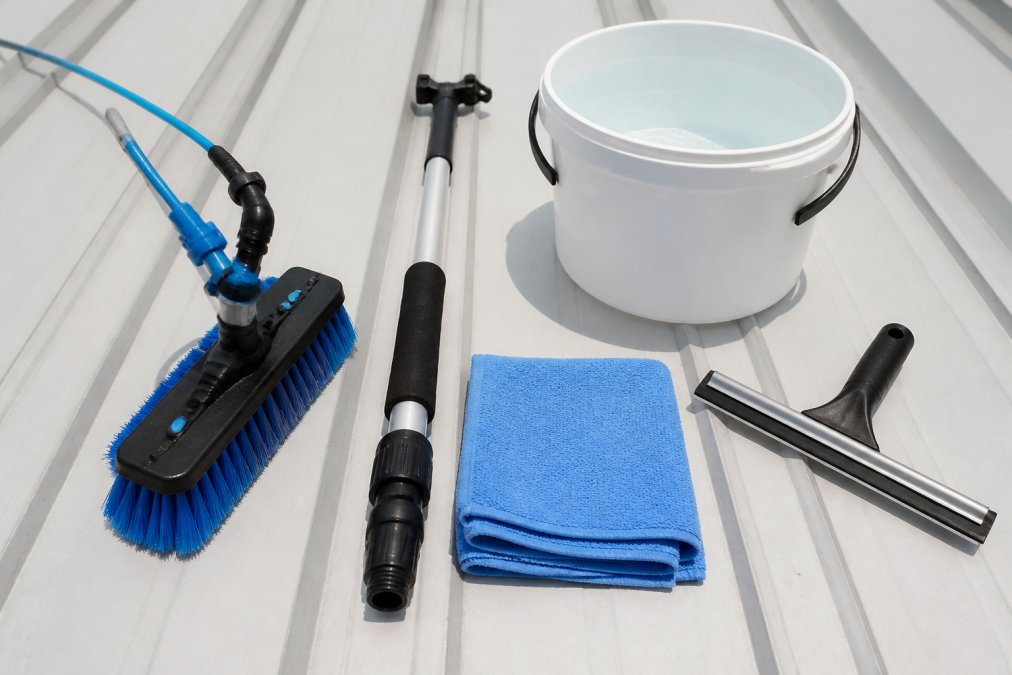
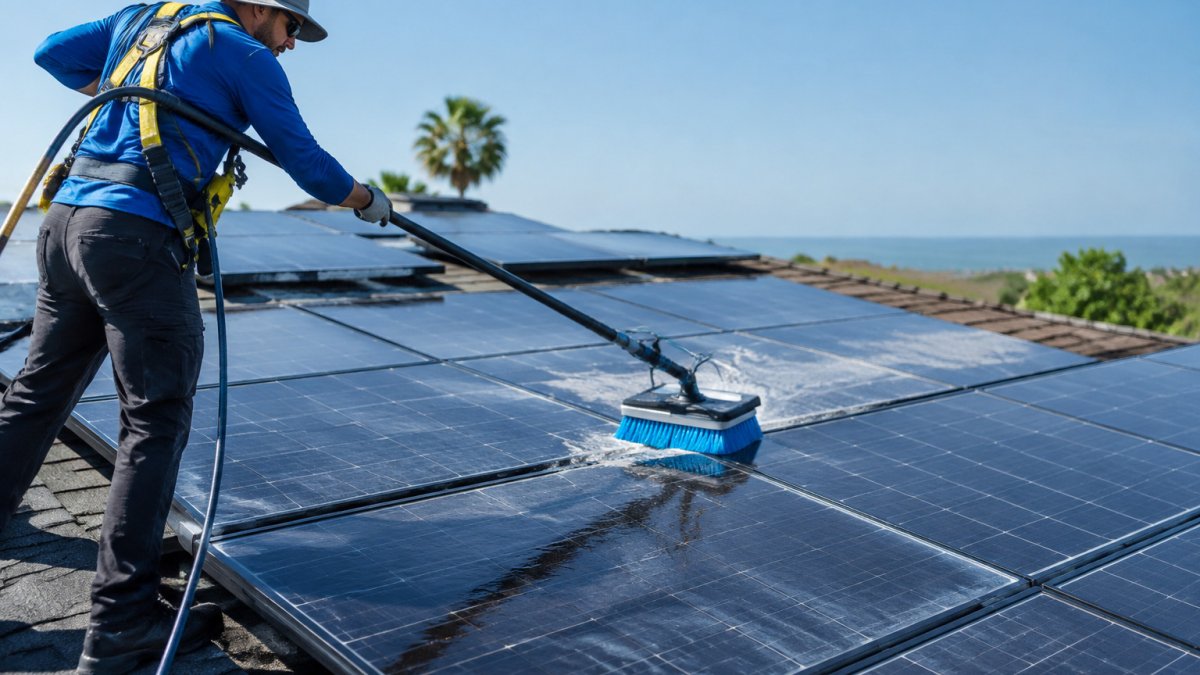
Soft-Bristle Brushes and Water-Fed Poles
Soft-bristle brushes are your safest option. Look for brushes with natural bristles or soft synthetic fibers, they won't scratch the tempered glass covering your panels.
Water-fed poles extend your reach from the ground, keeping you safer while reducing the risk of dropping hard tools. The soft brush head is gentle enough for regular use.
Deionized Water and Eco-Friendly Solutions
Deionized water is pure water with minerals removed, preventing the white residue that hard water leaves behind and blocks sunlight.
Use mild, plant-based detergents formulated for solar panels mixed with deionized water. Avoid harsh chemicals, bleach, and acidic cleaners, which damage the anti-reflective coating.
Lint-Free Cloths and Squeegees
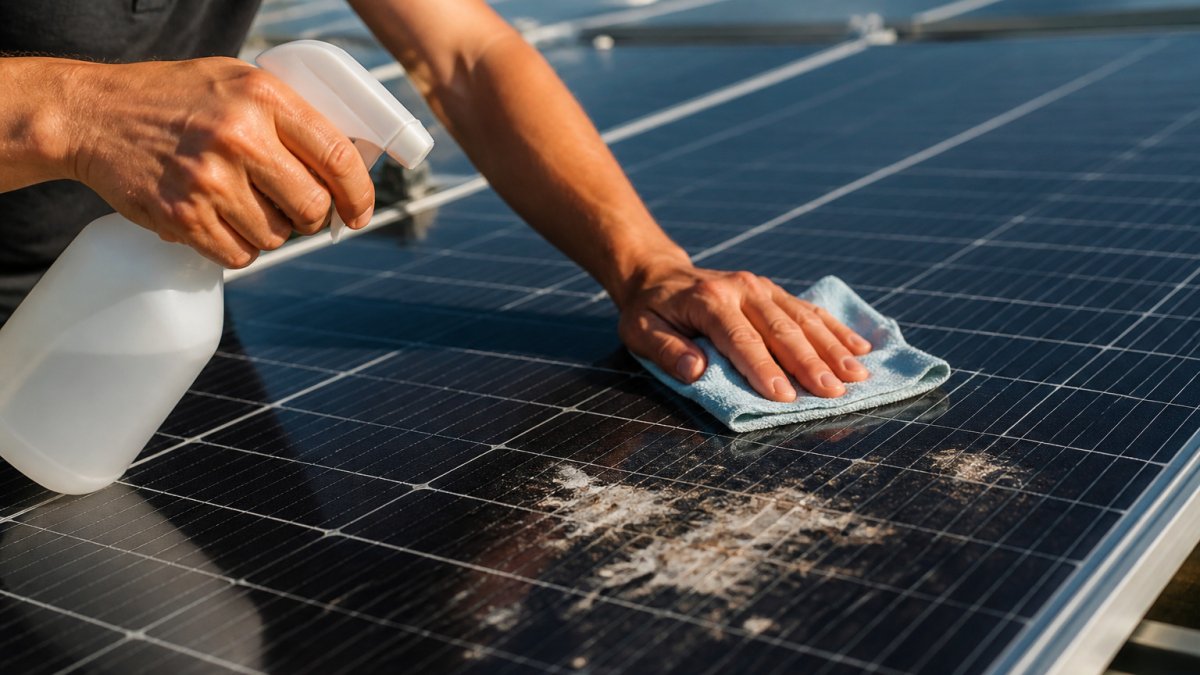
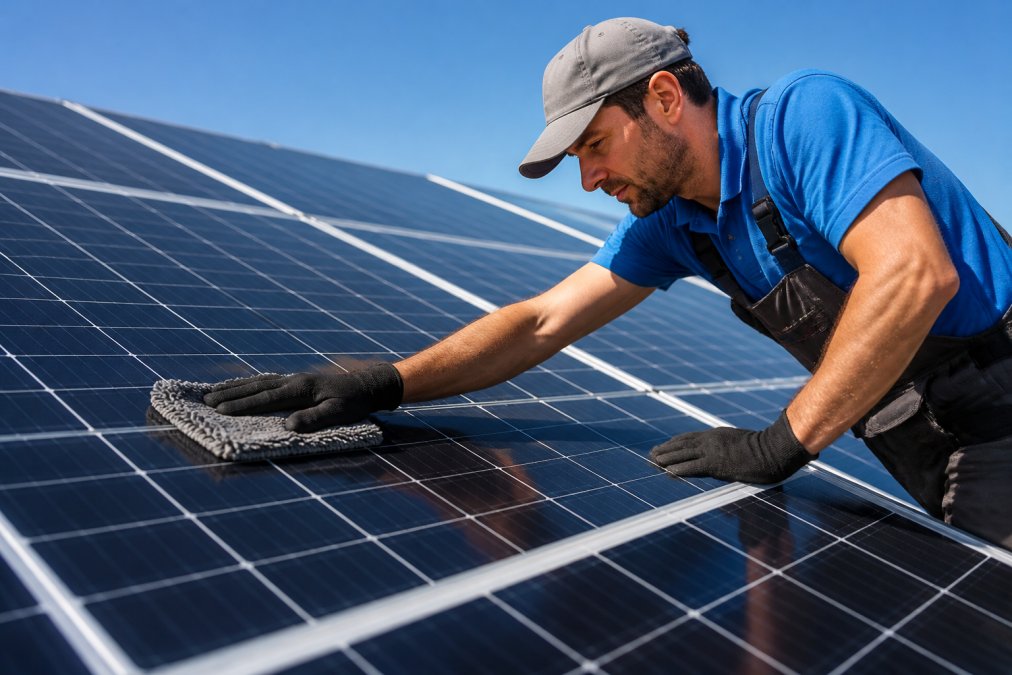
Use lint-free microfiber cloths, cotton rags shed lint that embeds in water droplets and creates scratches.
Rubber squeegees remove water gently without abrasive contact. Use a soft rubber blade, not hard plastic. Angle the squeegee at 45 degrees and pull slowly. This prevents water spots while protecting the panel surface.
Step-by-Step Process for Cleaning Without Scratching
Follow this process to clean solar panels without scratching safely. Each step matters.
Step 1: Shut Down Your System Safely
Turn off your inverter and any DC disconnect switch. Electrical safety comes first, working on live panels risks serious injury and electrical surges if water reaches connections.
Step 2: Remove Loose Debris
Use a soft brush to gently sweep away loose dust, leaves, and pollen in one direction. Removing loose debris first prevents particles from dragging across the glass during wet cleaning.
Step 3: Rinse with Low-Pressure Water
Use a garden hose on low pressure, never use a pressure washer, which causes micro-cracks and coating damage. Rinse from top to bottom to remove dust and prepare the surface.
Step 4: Apply Non-Abrasive Cleaning Solution
Mix eco-friendly cleaner with deionized water, dip your soft-bristle brush, and apply gently using light circular motions. Let the solution do the work without aggressive scrubbing.
Step 5: Gentle Brush and Squeegee Application
Work the solution across the panel with light pressure, then use your rubber squeegee to remove it slowly from top to bottom, overlapping slightly to avoid streaks.
Step 6: Final Rinse and Dry
Rinse with low-pressure deionized water and air dry or use a lint-free cloth. Avoid touching the panel surface with bare hands afterward, as skin oils reduce efficiency.
How Often to Clean Solar Panels for Maximum Output
Cleaning frequency depends on your environment, water quality, and climate.
Climate-Based Cleaning Schedules
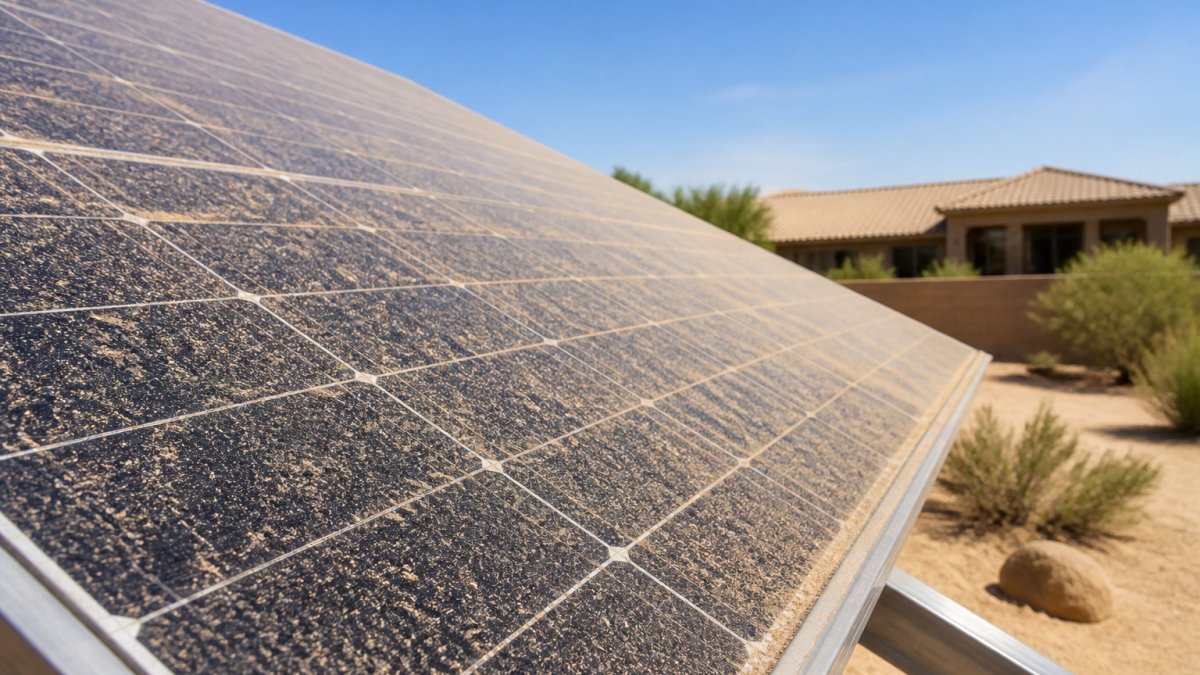
Arid and Desert Regions: Quarterly cleaning is needed. Dust accumulation reduces output by 15-25% annually if left unchecked. Monthly inspections are recommended near unpaved roads or construction zones.
Humid and Coastal Areas: Quarterly cleaning is needed due to salt spray and pollen.
Water Hardness and Mineral Buildup
Hard water leaves mineral deposits that reduce light transmission by 2-8% and cause permanent coating micro-etching. If your area has hard water (over 120 mg/L), use deionized water for final rinses and clean every 2-3 months. Check your municipal water report or purchase a hardness test kit to determine your water quality.
Performance-Based Cleaning Triggers
Monitor your system's energy output using your solar app. A sudden 10-15% drop signals soiling that cleaning will reverse. When output drops below 85% of your baseline on clear days, schedule cleaning.
Solar Panel Cleaning Safety Tips for Homeowners
Cleaning solar panels yourself carries risks. Understanding these helps you stay safe or decide when to hire professionals.
Roof Access and Fall Prevention
Never climb onto a roof without proper safety equipment. If your panels are roof-mounted, consider hiring professionals. If you must access the roof, use a safety harness, non-slip footwear, a ground spotter, and clear weather.
Electrical Safety and Inverter Shutdown
Solar systems carry electrical current even in sunlight. Switch off the inverter, check for a DC disconnect switch, and wait 5-10 minutes for full discharge. If unsure about your system's setup, hire professionals.
Avoiding Thermal Shock Damage
Thermal shock occurs when cold water hits hot panels (140-160°F), creating micro-cracks. Clean in early morning or late afternoon, or use room-temperature water instead of cold hose water.
What Not to Use When Cleaning Solar Panels
Certain materials and chemicals damage solar panels permanently. Understanding why these cause damage helps you make safer choices and recognize eco-friendly alternatives that work.
Pressure Washers and High-Pressure Water
Pressure washers deliver 1,500-4,000 PSI, causing micro-cracks, seal damage, and coating separation. Even one pass causes damage that manifests as output decline. Use garden hoses on low pressure (40-60 PSI) or water-fed poles instead.
Abrasive Materials and Hard Brushes
Steel wool, scouring pads, and hard brushes scratch the anti-reflective coating permanently. The coating is only 100-200 nanometers thick, even light abrasion removes it. Use soft natural-bristle or soft synthetic brushes, and test on a small area first.
Harsh Chemicals and Acidic Cleaners
Bleach and ammonia etch glass and corrode frames. Vinegar and acidic cleaners attack the coating and sealants. Petroleum-based degreasers leave oily residue that blocks light. Avoid all three.
Eco-Friendly Cleaning Solutions You Can Make
Simple Water + Mild Soap: Mix 1 tablespoon plant-based dish soap with 1 gallon deionized water for pollen and dust. Deionized Water + Rubbing Alcohol: Mix 1 part 70% isopropyl alcohol with 3 parts deionized water for faster drying in hard-water areas. Baking Soda Paste: For stubborn deposits, apply gently and let sit 5-10 minutes. Citric Acid Solution: For severe mineral buildup, mix 1 tablespoon food-grade citric acid with 1 gallon deionized water for final rinses only.
Materials to Avoid at All Costs
- Tap water for final rinses (in hard-water areas): Leaves mineral deposits that etch the coating over time.
- Hard plastic squeegees: Use only soft rubber. Hard plastic scratches the coating.
- Paper towels or cotton rags: Shed fibers that embed in water droplets and create micro-scratches. Use only lint-free microfiber cloths.
- Abrasive sponges: Even "soft" kitchen sponges are too rough. Stick to soft brushes.
When to Hire a Professional Solar Cleaning Service
Professional cleaning makes sense in several situations. Professionals have equipment and training homeowners lack.
Hire professionals if:
- Your panels are roof-mounted and you're uncomfortable with heights
- You have more than 10-15 panels (the job becomes time-intensive)
- Your area has heavy dust, pollen, or salt spray requiring quarterly cleaning
- You want detailed performance reports showing before-and-after efficiency gains
- Your warranty requires professional cleaning
- You've had previous damage from improper cleaning attempts
Frequently Asked Questions
What should you not clean solar panels with?
Never use harsh chemicals, abrasive materials, or high-pressure washers on your photovoltaic modules. Avoid dish soap, Windex, WD-40, and steel wool, these damage the anti-reflective coating and tempered glass. Don't use hot water on cold panels or cold water on hot panels, as thermal shock causes micro-cracks. Stick to deionized water, soft-bristle brushes, and non-abrasive cleaning solutions designed for solar panels.
How often should solar panels be cleaned for maximum efficiency?
Most homeowners benefit from cleaning solar panels 2-4 times per year, depending on local conditions. Areas with heavy dust, pollen buildup, or bird droppings may need quarterly cleanings. Desert climates and regions near agricultural land require more frequent maintenance. Check your panels monthly and clean whenever soiling loss visibly reduces energy production efficiency. Professional inspection reports help determine the ideal maintenance schedule for your system.
Is it safe to walk on solar panels while cleaning?
Walking on solar panels is risky and not recommended. Panels are fragile and can crack under foot traffic. Instead, use a water-fed pole system to clean from the ground or hire a certified professional with proper safety harness and roof access training. If roof work is necessary, follow OSHA guidelines, use fall protection equipment, and shut down your inverter before starting any cleaning work.
Can cleaning solar panels void my warranty?
Improper cleaning can void your warranty, but gentle, scratch-free cleaning does not. Use only non-abrasive methods with deionized water and soft-bristle brushes. Avoid pressure washers, harsh chemicals, and abrasive scrubbing. Most manufacturers require regular maintenance to keep warranties valid. Professional solar cleaning services use certified techniques that protect your panels and warranty, and many provide detailed performance reports documenting that cleaning improved your energy output without causing damage.