 how-to
Prevent Solar Panel Degradation From Dust
Table of Contents
- How Dust Degrades Solar Panels and What It Costs You
- Solar Panel Degradation Causes Beyond Dust
- How Often Should Solar Panels Be Cleaned?
- Does Rain Clean Solar Panels?
- How to Clean Solar Panels: A Safe Step-by-Step Procedure
- How to Verify Cleaning Actually Improved Output
- Prevention Beyond Washing: Coatings, Tilt, and Smart Scheduling
- Frequently Asked Questions
Last Updated: October 18, 2026
How Dust Degrades Solar Panels and What It Costs You
Dust is the quiet thief of solar savings. To prevent solar panel degradation from dust, you need to understand how soiling works, when it becomes permanent, and how to clean safely. At Mr Clean Solar Cleaning, we have cleaned more than 50,000 panels, and the pattern is always the same: dirty glass means lost energy.
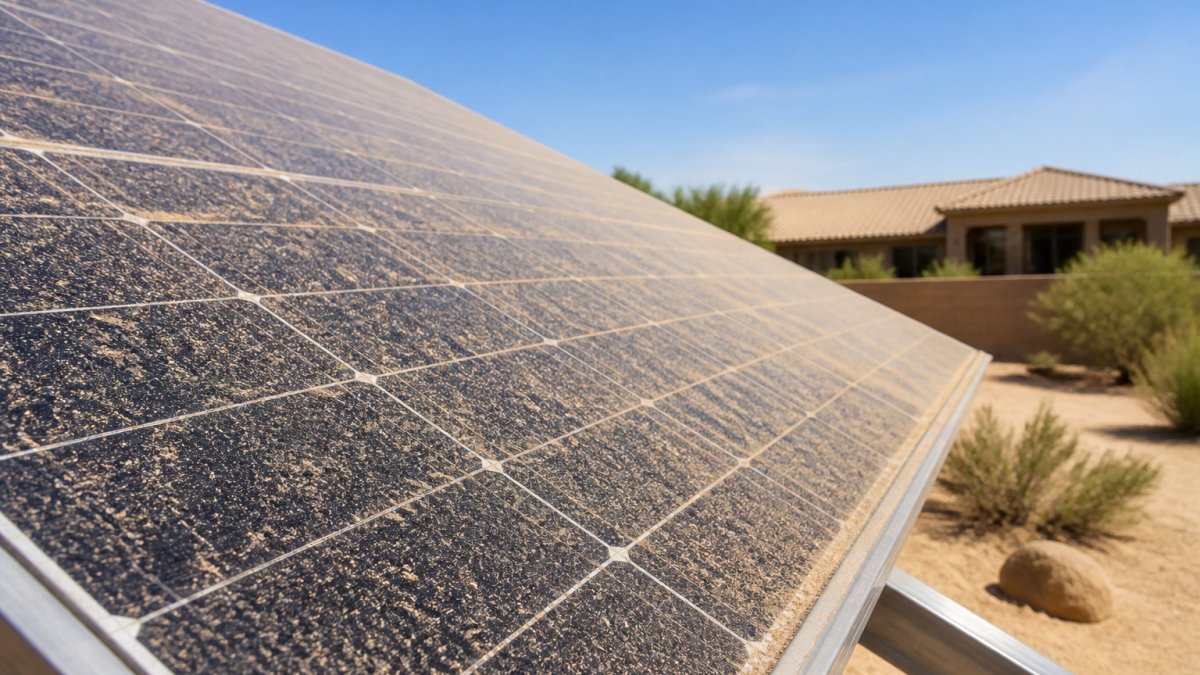
Solar panel degradation from dust happens when airborne particles settle on the glass surface and block sunlight from reaching the solar cells. Less light means less power. Over months, that lost output adds up on every utility bill.
How Dust Blocks Sunlight From Reaching Solar Cells
Photovoltaic (PV) modules depend on light transmission. When dust deposition coats the panel glass, solar irradiance drops before it ever hits the cells. Even a thin film of grime scatters light away from the silicon.
The result is a direct drop in energy output. A dirty array still runs, but it works harder for less. Many homeowners describe it as "the system just seems tired." It is not tired. It is shaded.
When Soiling Becomes Permanent Damage
Temporary soiling is reversible. Permanent damage is not. The line between them matters.
- Dry dust mostly rinses away and causes short-term losses.
- Wet dust (dust mixed with dew or rain) can bake into a crust that bonds to the glass.
- Bird droppings and ash are acidic and can etch the surface if left for weeks.
Once staining etches the glass, no cleaning restores it. That is true degradation, and it is avoidable.
Solar Panel Degradation Causes Beyond Dust
Dust gets the blame, but it is not the only cause of solar panel degradation. Heat, age, and electrical faults all play a role. Separating them keeps you from cleaning a problem that cleaning cannot fix.
Here is how the main causes stack up:
| Cause | Typical Sign | Reversible? |
|---|---|---|
| Dust and grime | Even, dull coating on glass | Yes, with cleaning |
| Bird droppings | White streaks, hot spots | Usually, if cleaned early |
| Heat stress | Gradual yearly output decline | No |
| Micro-cracks | Isolated dead spots on cells | No |
| Inverter faults | Sudden output drop | Yes, with repair |
Monocrystalline panels and other modern modules are built to last decades. Most of the output you lose year to year comes from soiling, not from the cells wearing out. That is good news, because soiling is the one factor you control.
How Often Should Solar Panels Be Cleaned?
Most homes need cleaning once or twice a year. Commercial rooftops often need quarterly service. The honest answer is that cleaning frequency depends on your local conditions, not a calendar.
Ask yourself these questions:
- How much dust, pollen, or ash does your area get?
- Are there trees overhead dropping sap or attracting birds?
- Has it been a long dry spell with no real rainfall?
- Is your roof pitch shallow, under 15° to 30° tilt?
Flat or low-tilt arrays collect more dust because rain cannot sheet it off. Homes near farmland, construction, or wildfire zones need more frequent visits. A simple rule: if you can see a dull film on the glass from the ground, it is time.
Does Rain Clean Solar Panels?
Rain helps, but it does not clean solar panels on its own. Light rainfall actually makes things worse by mixing with dust to form mud that dries into spots. Heavy, sustained rain does rinse away loose dust, but it leaves the stubborn film behind.
Rainwater also carries minerals. As it dries, those minerals stay on the panel surface and cause water spots and staining. That is why a "self-cleaning" roof is mostly a myth in dusty regions.
Natural cleaning works best on steeply tilted arrays during real storms. For most rooftops, rain is a light rinse, not a wash.
How to Clean Solar Panels: A Safe Step-by-Step Procedure
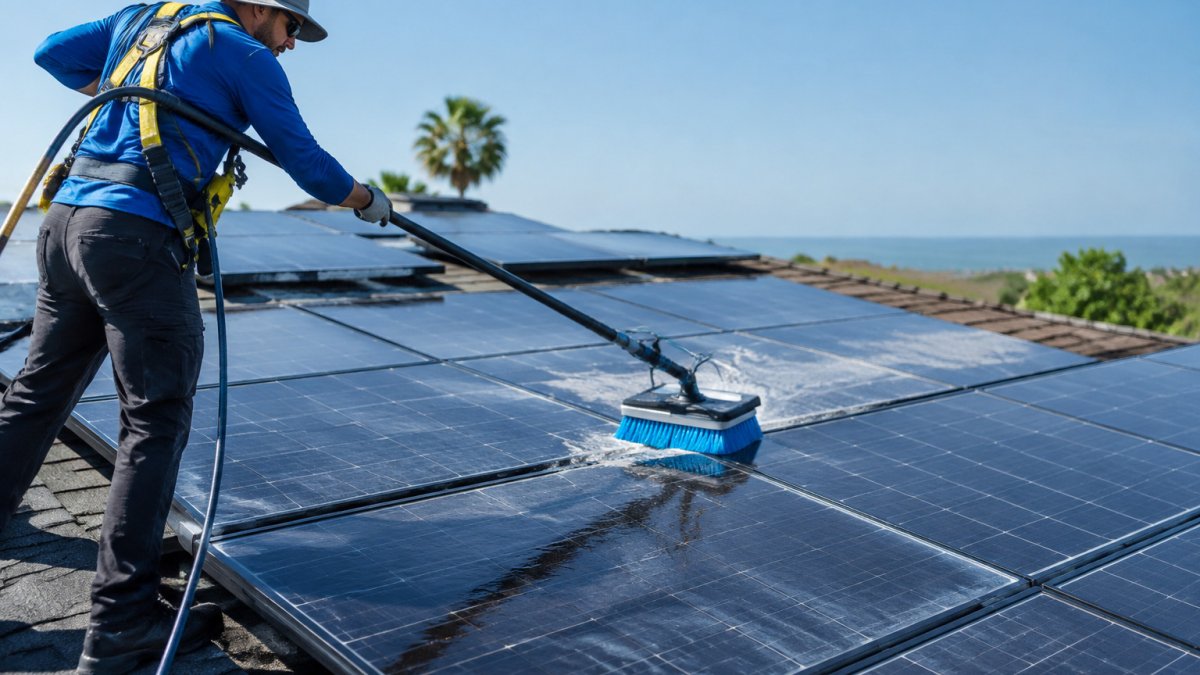
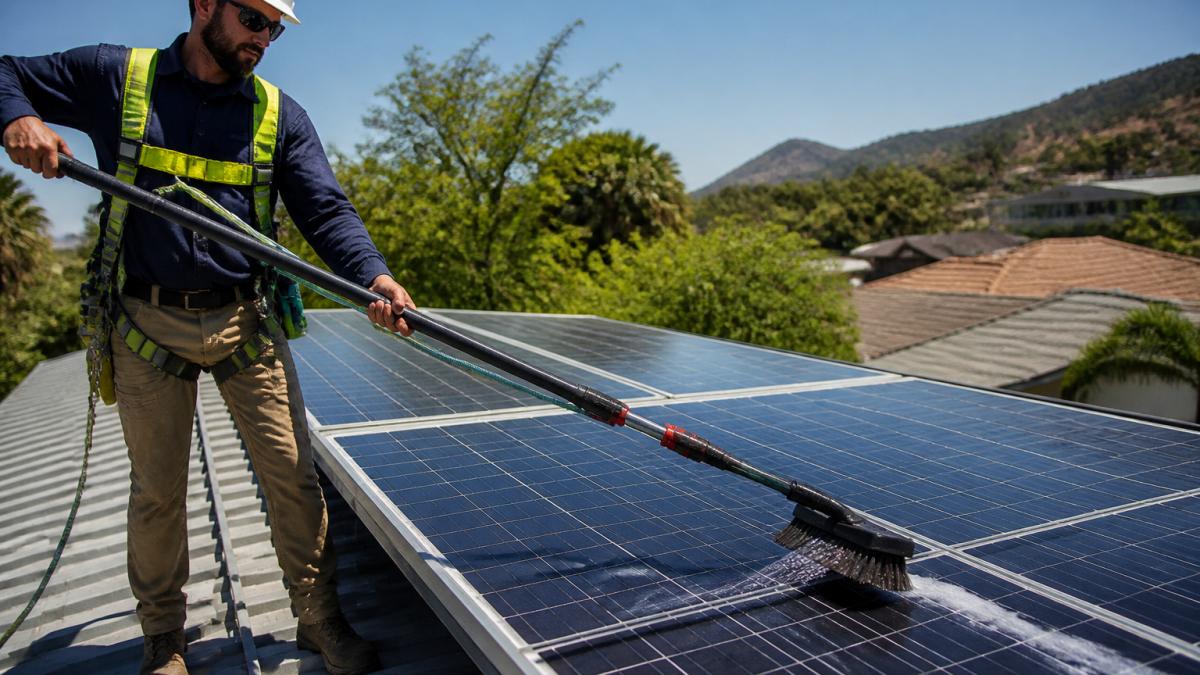
Cleaning is simple when you follow the right order. Skip a step and you risk scratches, water spots, or a shock. The procedure below is the same sequence our OSHA-trained crews use, adapted so a careful homeowner can follow it safely.
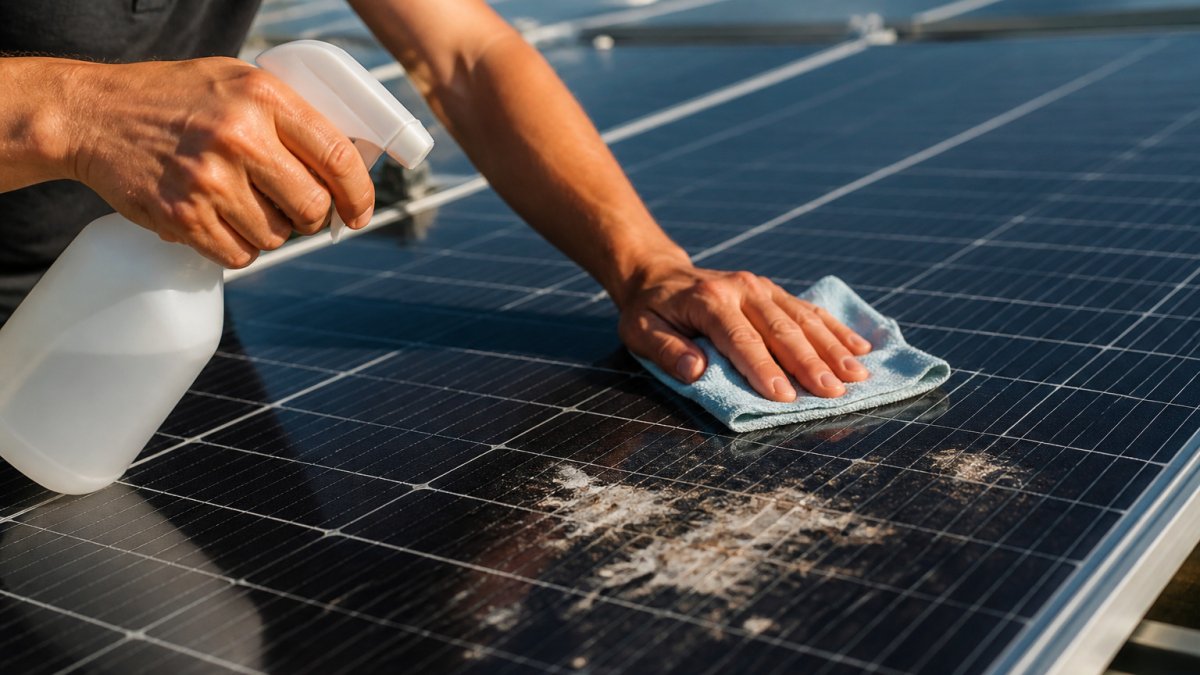
What you'll need: soft-bristle brush or microfiber mitt, pure or demineralized water, a gentle soap-free cleaner, a squeegee with a clean rubber blade, and a stable ladder or lift. Avoid abrasive pads, scouring powders, and any cleaner with ammonia or harsh solvents.
- Confirm you should be doing this at all. Check the manufacturer's manual for cleaning guidance and warranty conditions. If the array is on a steep roof, above a story, or near power lines, hire a professional. Never clean panels while standing on the glass.
- Shut down only if your manual requires it. Most residential inverters do not require shutdown for glass cleaning, but some commercial systems and manufacturers do. Follow the manual, not a forum post.
- Work early morning or evening. Cool glass cleans better, dries without streaks, and reduces thermal shock risk from cold water on hot glass.
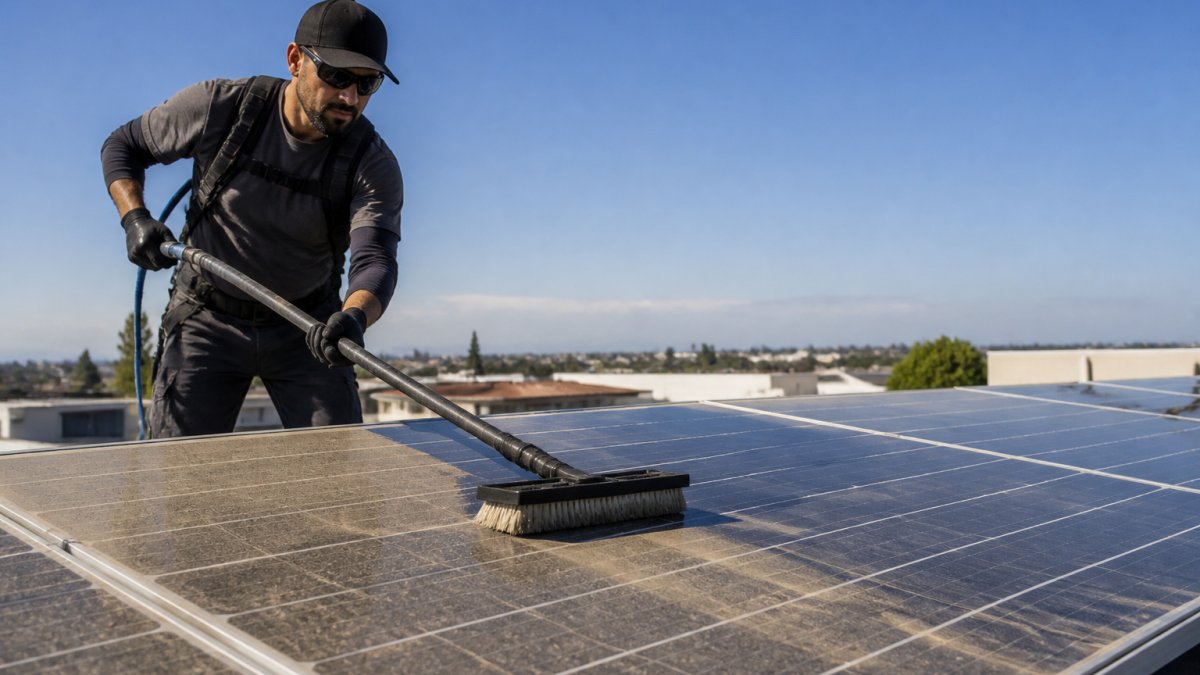
- Rinse loose dust first. Flush the surface with low-pressure water before any contact. This removes the abrasive grit that causes micro-scratches when brushed dry.
- Wash with a soft brush or mitt. Use gentle, overlapping passes. Never scrub dry dust into the glass, and never use a pressure washer, high-pressure jets force water past seals and can pit the surface.
- Rinse with demineralized water. This is the step most homeowners skip. Tap water carries calcium and magnesium that dry into white spots and etch the glass over time. A final rinse with demineralized water prevents that residue.
- Squeegee or air-dry. Remove standing water so minerals do not settle. Work top to bottom and wipe the blade between passes.
Safety First: Electrical, Fall, and Warranty Checks
Never walk on panel glass. It cracks underfoot and creates a fall hazard. Use a stable ladder, harness, and non-slip footwear, and stay off wet roofs. Even a clean-looking roof can be slick.
Electrical hazards are real but often overstated for simple glass cleaning. The bigger risks are falls and warranty voiding. Check your warranty before you start: many manufacturers require professional cleaning or specify approved methods, and abrasive pads, hard water, and pressure washers can all void coverage. When in doubt, call a certified specialist.
Water Use and Cleaning Trade-Offs
Water use is a real trade-off in dry regions. Demineralized water cleans better and dries spot-free, but it costs more than a garden hose. Hard water is cheaper but leaves mineral stains that defeat the purpose. The balance: use just enough purified water to rinse clean, and skip the hose-down. A focused rinse beats a flood every time.
Dry brushing is the cheapest option, but it is also the riskiest: dry grit acts like sandpaper between the brush and the glass. Rinsing first, then brushing, then rinsing again with demineralized water is the safest sequence for the glass. Professional cleaning costs more upfront but typically includes demineralized water, proper safety gear, and a performance report, and it avoids the most common DIY mistake, which is scratching the glass while trying to save a service call.
How to Verify Cleaning Actually Improved Output
You cannot manage what you do not measure. Before cleaning, record your inverter's daily output and note the weather. After cleaning, compare the same time window on a similar sunny day.
A few practical checks:
- Inverter app: screenshot daily energy yield before and after.
- Irradiance sensor: if you have one, compare output against measured sunlight.
- Visual check: clear glass with no streaks or spots.
- Performance report: a professional clean should come with before-and-after numbers.
At Mr Clean Solar Cleaning, every job includes a detailed performance report so you can see the difference, not just take our word for it. One customer reported their energy bill dropped by $45 a month after a single cleaning.
Prevention Beyond Washing: Coatings, Tilt, and Smart Scheduling
Cleaning fixes the past. Prevention protects the future. A few moves reduce how fast dust builds up again, and some of them cost nothing.
Site planning and dust-source management. The cheapest prevention happens before installation. If you are planning a system, keep arrays away from unpaved driveways, gravel pads, and prevailing dust sources. Trim vegetation that drops sap or attracts birds, and move gravel or mulch piles downwind if you can. For existing systems, a windbreak or a shift in landscaping can cut deposition noticeably.
Panel tilt. Steeper arrays shed dust and rain better than flat ones. A common pattern is that arrays under 15° tilt collect more dust because rain cannot sheet it off, while steeper pitches self-rinse more effectively. If you are designing a new system, tilt is one of the few soiling variables you can set at the outset.
Anti-soiling coatings and advanced glass. Anti-soiling coatings and advanced glass with nanotechnology are emerging options. They help dust and water slide off, though results vary by climate, and coatings degrade over time. Treat them as a supplement to cleaning, not a replacement. Ask the manufacturer for real-world performance data in your climate before paying a premium.
Smart scheduling. The simplest prevention is timing. Clean before dry season, after pollen peaks, and ahead of wildfire smoke season. Pair that with regular professional service, and dust never gets the chance to become permanent damage. A simple rule: if you can see a dull film on the glass from the ground, it is time.
Frequently Asked Questions
Can dust permanently damage or degrade solar panels?
Dust itself usually causes temporary soiling losses that return once the glass is cleaned. The permanent risk comes from what sits in the dust: bird droppings, ash, and pollution residue that hold moisture against the panel glass and, over long dry spells, can stain or etch the surface. Heavy buildup also creates hot spots where shaded solar cells work harder than their neighbors. Regular cleaning removes both the temporary output loss and the conditions that lead to lasting solar panel dust damage.
How can you tell if dust is reducing solar panel output?
Compare your system's daily energy output against a nearby irradiance reading or your inverter's expected production curve. A steady drop that does not track with weather usually points to soiling. Look at the panel surface at a low angle in morning light: a visible film, streaks, or droppings mean light transmission is already reduced. A before-and-after output measurement around a cleaning gives you the clearest proof of how much dust was costing you.
What should you avoid when cleaning solar panels?
Skip pressure washers, abrasive pads, dish soap, and hard water straight from the hose. High pressure can crack panel glass and force water past seals, while abrasives and harsh detergents can scratch the anti-reflective coating. Never clean panels that are hot from direct sun, and never walk on the glass. Use a soft cloth or soft-bristle brush with pure or demineralized water, work early in the day, and stay off the roof unless you have proper fall protection.
Do solar panels need cleaning more often in dusty areas?
Yes. Homes near farmland, construction, unpaved roads, or regularly hit by ash and pollen see dust accumulation faster than open suburban rooftops. In those conditions, a quarterly check with cleaning every three to six months is common, while cleaner areas may stretch to once or twice a year. Watch your output between cleanings; a measurable dip after a long dry spell tells you the schedule needs tightening.
Dust will always find your panels. The question is whether it stays long enough to cost you real money. Mr Clean Solar Cleaning uses ultra-pure deionized water, soft-bristle systems built for solar glass, and an OSHA-trained, fully insured team to restore output safely. We back every visit with detailed performance reports so you can see the results. Book Now with Mr Clean Solar Cleaning and protect your solar investment before the next dry spell.