 how-to
Signs Your Solar Panels Need Cleaning
Table of Contents
- Visual Signs Your Solar Panels Need Cleaning
- Performance Monitoring: Energy Output Drops
- How Often Should Solar Panels Be Cleaned
- The Impact of Dirt on Photovoltaic Efficiency
- Benefits of Professional Solar Panel Cleaning
- Solar Panel Cleaning Cost and ROI
- DIY vs. Professional Cleaning: Safety and Warranty
- Frequently Asked Questions
Last Updated: September 23, 2026
Visual Signs Your Solar Panels Need Cleaning
When dirt builds up on solar panels, efficiency drops fast. The first step to knowing when solar panels need cleaning is to look at what's actually sitting on top of them.
Bird droppings, dust, pollen, and environmental debris accumulate gradually or suddenly after events like dust storms. Learning to spot these visual cues helps you catch problems before they tank your energy output.
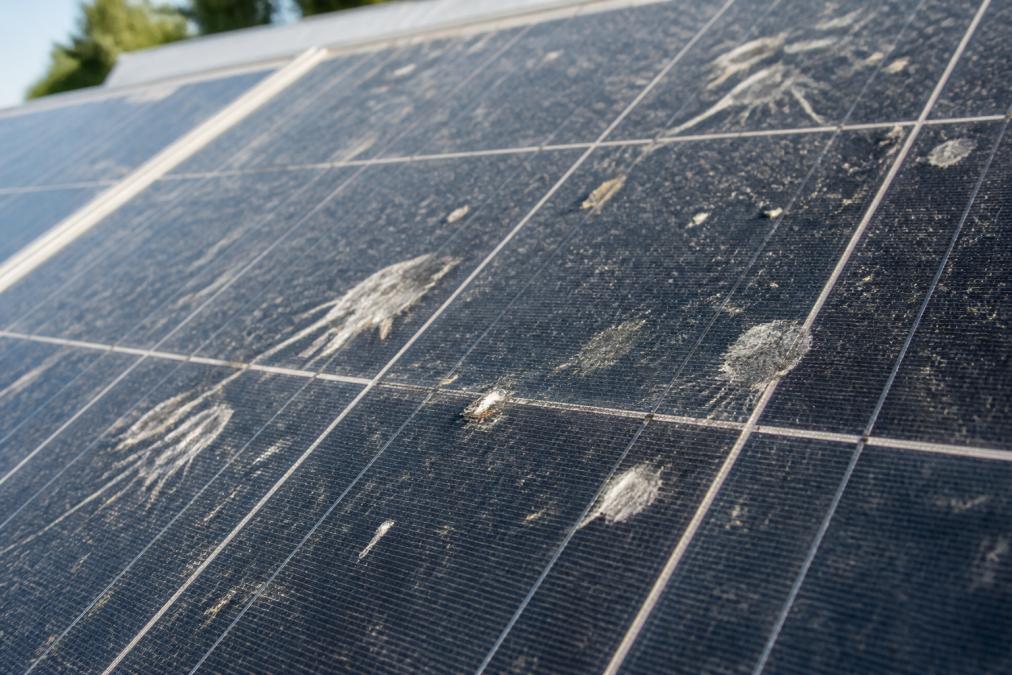
Bird Droppings and Animal Debris
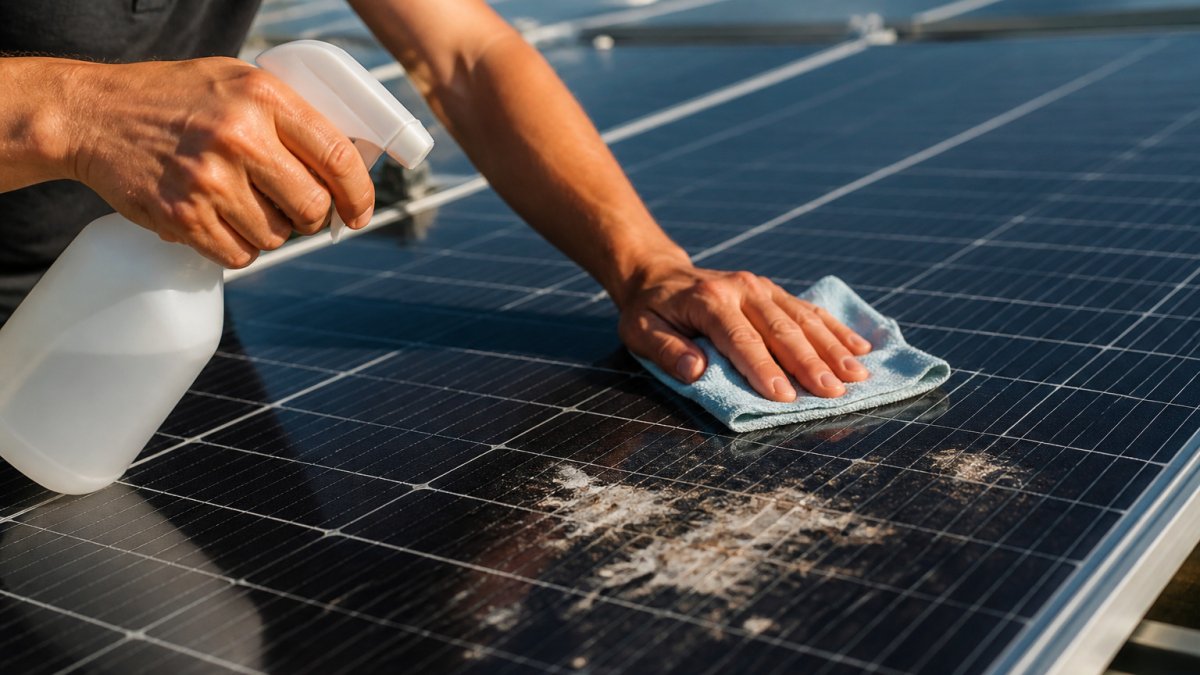
Bird droppings are one of the most obvious signs your solar panels need cleaning. A single large dropping can shade a significant portion of a panel, reducing output substantially.
Squirrels, raccoons, insects, tree branches, and leaves also create barriers between the sun and your panels.
Animal debris often clusters in one spot, creating hotspots that can lead to micro-cracking if left untreated. Professional cleaning removes debris thoroughly without damaging the glass.
Dust Buildup and Pollen Accumulation
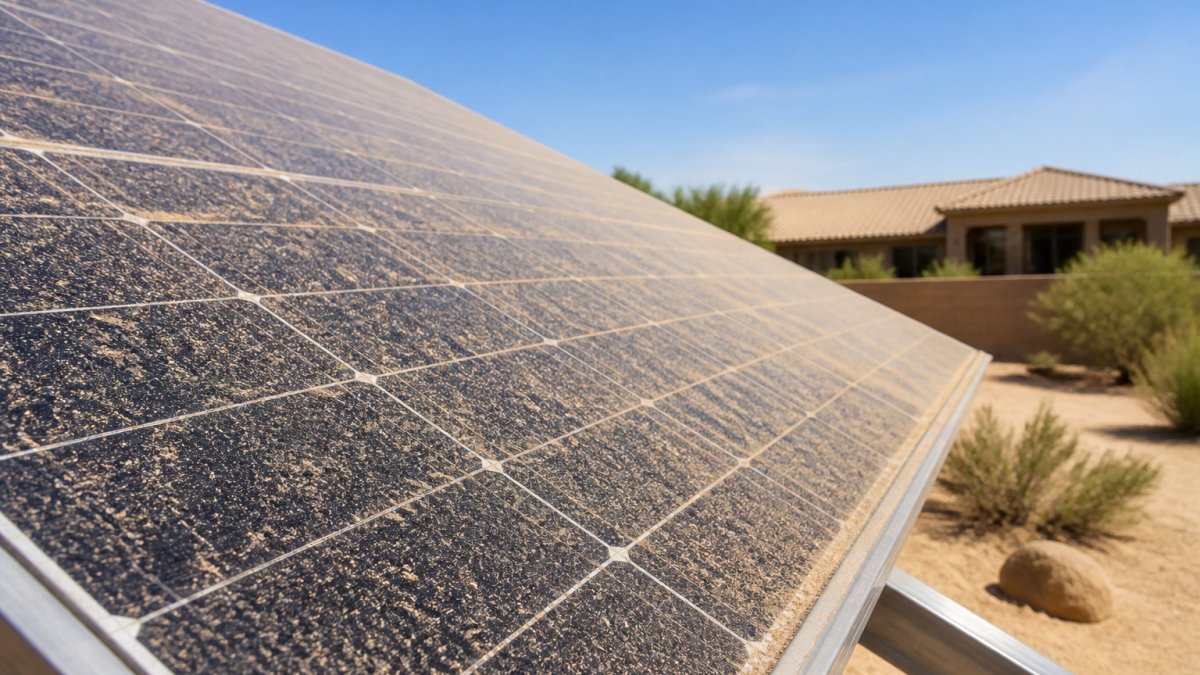
Dust settles constantly on solar panels, accelerating in dry climates and windy seasons. Pollen adds another layer of grime.
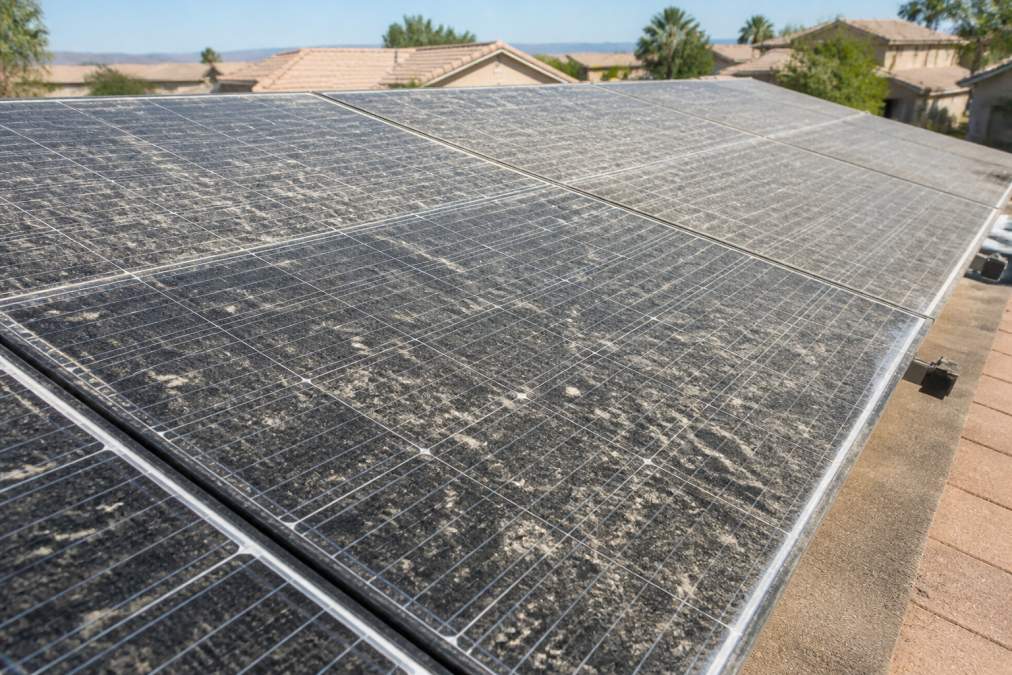
Unlike bird droppings, dust buildup is gradual. Over weeks and months, a thin film develops on the glass surface, reducing light reaching your cells.
Check your panels from the ground with binoculars. Clean panels have a bright, reflective shine; dusty panels look matte or cloudy.
Grime, Leaves, and Environmental Debris
Grime accumulates from atmospheric pollution, salt spray (especially near coastal areas), and leaves that stick in fall and winter.
Environmental debris varies by geography: highways contribute exhaust residue, agricultural areas have fertilizer dust, and coastal regions experience hardened salt spray.
This buildup requires specialized cleaning techniques and equipment to avoid scratching the glass or creating streaks.
Performance Monitoring: Energy Output Drops
Monitor your energy output using your system's app or dashboard to track kilowatt-hour production in real time.
Watch for unexplained drops in daily energy yield. If your system produced 25 kilowatt-hours yesterday but only 18 today with similar weather, grime is likely blocking your panels.
A 10-15% drop in performance compared to historical data indicates cleaning will restore efficiency.
Many modern inverters flag performance issues or reduced output compared to expected production, pointing to soiling loss from dirt on panels.
How Often Should Solar Panels Be Cleaned
Cleaning frequency depends on your climate, geography, and soiling rate. Establish a baseline by monitoring energy output and adjust intervals based on actual performance loss.
Geographic and Climate-Based Cleaning Matrix
Different regions experience vastly different soiling rates. Understanding your climate zone helps you avoid unnecessary cleanings while catching real efficiency losses:
Desert and Arid Regions (Southwest, parts of California, Nevada, Arizona): Dust accumulates within 2-3 weeks of rain or wind events. Quarterly or bi-annual cleaning (spring and fall) is typical, as rain provides minimal natural cleaning.
Coastal Areas (California coast, Florida, Gulf states): Salt spray hardens on glass and cannot be removed by rainfall alone. Clean every 2-3 months, with more frequent cleaning during windy seasons. Use deionized water to avoid hard water mineral deposits.
High-Pollen Regions (Southeast, Midwest during spring): Clean before and after peak pollen season (April-June) and in fall for leaf debris. Most homeowners benefit from 2-3 cleanings annually.
Temperate and Rainy Climates (Pacific Northwest, Northeast): Regular rainfall naturally clears dust and light grime. Annual or bi-annual cleaning is typically sufficient.
Agricultural Areas (Midwest, Central Valley): Clean before and after planting and harvest seasons. Bi-annual cleaning (spring and fall) is standard.
Performance-Based Cleaning Triggers
Use your monitoring data to trigger cleaning decisions rather than following a calendar.
Set a 10% efficiency loss threshold: When output drops 10% below expected baseline for similar weather, cleaning will likely pay for itself.
Track seasonal patterns: Monitor output month-to-month for the first year to identify when soiling accelerates in your location, then schedule cleaning accordingly.
Calculate the ROI threshold: A 10% efficiency loss can lead to significant lost production, so cleaning can pay for itself quickly.
Rainfall and Natural Cleaning Limits
Rain cleans panels partially. Heavy rain (over 1 inch) clears loose dust and pollen, but cannot remove:
- Bird droppings, hard water mineral deposits, salt spray buildup, and baked-on grime
If your region averages less than 1 inch of rain per month during your peak production season, plan on manual cleaning. If you average 3+ inches monthly, you can extend cleaning intervals.
Seasonal Maintenance Schedule
Spring (March-April): Clean before peak production season and after winter debris accumulation. This is the highest-ROI cleaning for most homeowners.
Summer (June-July): Optional second cleaning in dusty or high-pollen regions. Skip if spring cleaning showed minimal resoiling.
Fall (September-October): Clean after summer dust accumulation and before leaf season. Coastal areas should clean to remove salt spray buildup from summer winds.
Winter (December-February): Generally unnecessary unless you live in a coastal region or experienced unusual dust storms. Winter production is lower, so efficiency gains are smaller.
Track your own energy output through these seasons for the first 12 months. You'll develop a data-backed cleaning schedule tailored to your location rather than following generic advice.
The Impact of Dirt on Photovoltaic Efficiency
Soiling loss is the technical term for energy lost due to dirt and debris on panels. The impact varies based on how much buildup accumulates and what type of soiling it is.
Light dust reduces efficiency by 2-5%. Heavy dust or pollen accumulation can reduce efficiency by 10-15%. Bird droppings or concentrated grime can cause 20-30% losses in the affected area.
The photovoltaic cells underneath need direct sunlight to generate electricity. Any material blocking that sunlight, whether it's dust, leaves, or bird droppings, reduces the number of photons reaching the cells. Fewer photons means less electricity generated.
Soiling loss compounds over time. If your panels lose 15% efficiency due to grime, that's 15% less energy every single day until you clean them. Over a month, that's significant lost production and lost savings on your energy bill.
Benefits of Professional Solar Panel Cleaning
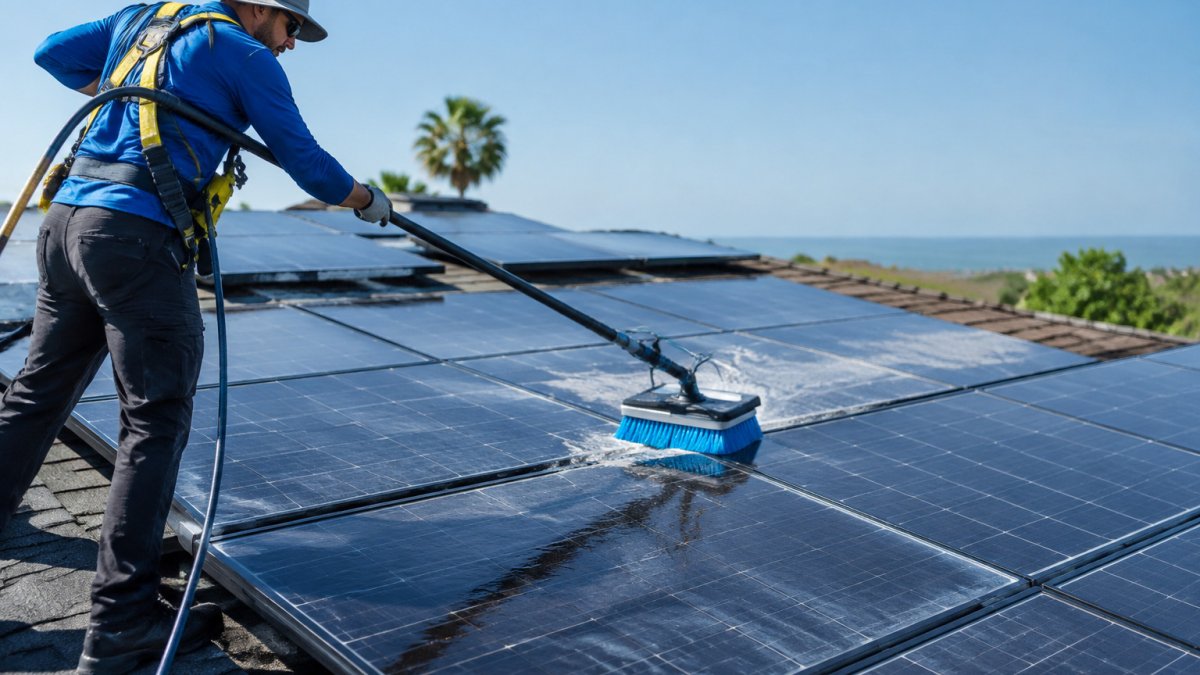
Professional cleaning removes all types of soiling efficiently. Trained technicians use soft-bristle systems and deionized water to clean without damaging your panels or creating streaks.
The biggest benefit is restoring your system to peak efficiency. Mr Clean Solar Cleaning uses ultra-pure deionized water and specialized soft-bristle systems engineered for solar glass. This approach removes grime, dust, and bird droppings without harsh chemicals or abrasive methods that risk micro-cracking.
Professional services also provide detailed performance reports. This documentation proves the value of cleaning and helps you plan future maintenance.
Safety is another major advantage. Cleaning solar panels often requires roof access and working at height. Professional teams are OSHA-trained and fully insured. They handle the physical risks so you don't have to.
Professionals also spot potential problems during cleaning. They notice damaged panels, loose connections, or other issues that need attention. Catching these early prevents bigger problems down the road.
Solar Panel Cleaning Cost and ROI
The cost of professional cleaning varies based on system size, roof complexity, and your location. Contact Mr Clean Solar Cleaning for a quote tailored to your specific installation.
The return on investment is clear when you compare cleaning costs against the energy you recover. If your system produces significant extra energy value over the following months, that's a strong ROI.
Many homeowners recoup the cleaning cost within 2-4 months through reduced energy bills.
DIY vs. Professional Cleaning: Safety and Warranty
DIY solar panel cleaning carries two major risks: physical safety hazards and warranty voiding. Understanding both is essential before attempting to clean your system yourself.
Warranty Implications of DIY Cleaning
Most solar panel manufacturers include specific cleaning requirements in their warranties. Violating these requirements can void coverage, a costly mistake if panels fail or degrade prematurely.
- Pressure washers or high-pressure water jets (above 1,500 PSI)
- Abrasive brushes, scouring pads, or steel wool
- Harsh chemicals, acidic cleaners, or solvents
- Thermal shock (spraying cold water on hot panels)
- Walking or standing on panels
Physical Safety Hazards
Roof work is inherently dangerous. Falls from heights are the leading cause of serious home injuries, according to the CDC. Solar panels are typically installed on pitched roofs 15-35 feet above ground.
Why Professional Cleaning Protects Your Investment
Professional solar cleaning services use equipment and methods specifically designed for solar glass:
- Soft-bristle brush systems with water flow rates that clean without scratching
- Deionized water that leaves no mineral residue
- Controlled water temperature to avoid thermal shock
- OSHA-trained technicians with safety certifications and liability insurance
- Before-and-after performance monitoring that documents energy recovery
Frequently Asked Questions
What are the visible signs your solar panels need cleaning?
The most obvious signs your solar panels need cleaning include visible bird droppings, dust accumulation, pollen buildup, and general grime on the glass surface. You may also notice streaks, leaf debris, or a dull appearance compared to when they were new. Performance drops in your monitoring app or inverter readings are equally important indicators, even when panels look relatively clean, soiling loss can reduce energy output by 15-25%. Check your kilowatt-hour production against seasonal averages to catch performance degradation early.
How often should solar panels be cleaned to maintain peak efficiency?
Most residential systems benefit from professional cleaning 2-4 times per year, depending on your environment. Areas with high dust, pollen, or bird activity may need quarterly cleanings. Regions with regular rainfall may require less frequent service since rain provides some natural cleaning. Monitor your energy output monthly using your inverter app, if production drops 10% or more without weather changes, schedule a cleaning immediately. Annual maintenance inspections help catch issues before they impact your ROI.
How much energy efficiency is lost when solar panels are dirty?
Dirt, dust, and bird droppings can reduce photovoltaic efficiency by 15-30%, depending on the severity and type of soiling. Even light dust accumulation causes measurable energy yield loss. Professional cleaning can restore your system to near-peak output. The longer debris sits on your panels, the greater the performance degradation, and the higher your energy bills climb. Real-time monitoring helps quantify exactly how much cleaning will improve your return on investment.
What makes professional solar panel cleaning better than DIY cleaning?
Professional cleaning services use deionized water, soft-bristle systems, and specialized techniques that protect your panels and warranty. DIY cleaning with tap water leaves mineral deposits, abrasive cleaners risk micro-cracks in the glass, and pressure washing can damage seals and void manufacturer coverage. Certified technicians understand proper safety protocols for roof access and know how to avoid thermal shock from cold water on hot panels. Professional services also provide performance reports showing before-and-after energy output, proving the value of the investment.