 how-to
Solar Panel Maintenance Frequency for Homes
Table of Contents
- How Often Should You Schedule Solar Panel Maintenance at Home?
- Signs Solar Panels Need Cleaning (and What They Look Like)
- How to Clean Solar Panels Without Damaging Them
- Your Solar Panel Inspection Schedule, Season by Season
- Solar Panel Maintenance Checklist for Homeowners
- When to Hire Professional Solar Panel Maintenance
- Conclusion
- Frequently Asked Questions
Last Updated: October 4, 2026
How Often Should You Schedule Solar Panel Maintenance at Home?
Most homes need a full solar panel maintenance visit once or twice a year, plus a quick visual check every few months.
Solar panel maintenance is the routine care that keeps a home solar array producing at its rated capacity: cleaning, visual inspection, and monitoring for damage. Frequency is not one-size-fits-all, where you live changes everything.
Below: the baseline schedule, warning signs you are overdue, a safe cleaning method, and a season-by-season inspection plan.
The Baseline Schedule Most Homes Should Follow
Twice a year works for most households: one clean in spring after pollen season, one in late summer or fall. High-dust or rural areas often need quarterly cleaning; mild, rainy regions can stretch to once a year.
The table below shows the baseline by condition:
| Home Condition | Cleaning Frequency | Inspection Frequency |
|---|---|---|
| Mild climate, regular rain | Once a year | Twice a year |
| Average suburban home | Twice a year | Twice a year |
| High-dust or rural area | Quarterly | Quarterly |
| Coastal or heavy bird activity | Quarterly | Quarterly |
Why Frequency Changes With Your Environment
Your surroundings decide how fast grime builds up: a home near farmland sees more dust, and a home under trees sees more leaves and droppings. Rain helps, but it is not a cleaning service, light rain leaves a film, and heavy rain rarely clears sticky deposits. Before you pick a schedule, look at what lands on your roof each week.
Signs Solar Panels Need Cleaning (and What They Look Like)
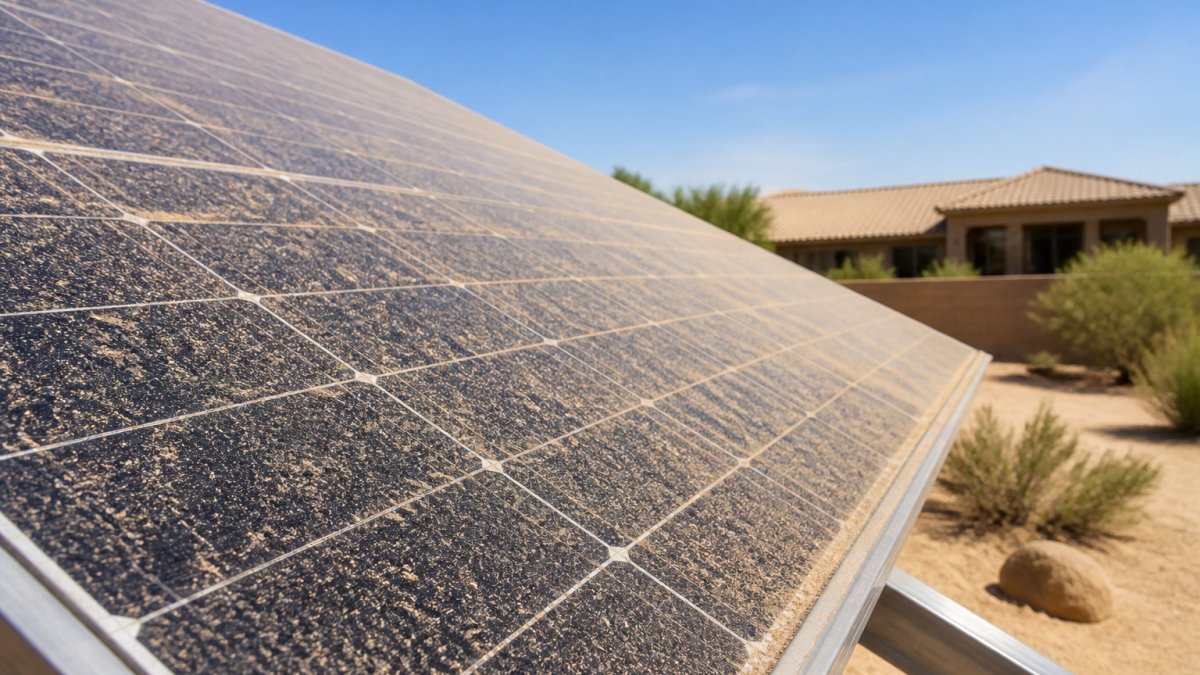
The clearest sign is a drop in power output. If your monitoring system shows production falling below your normal curve, soiling is a likely cause.
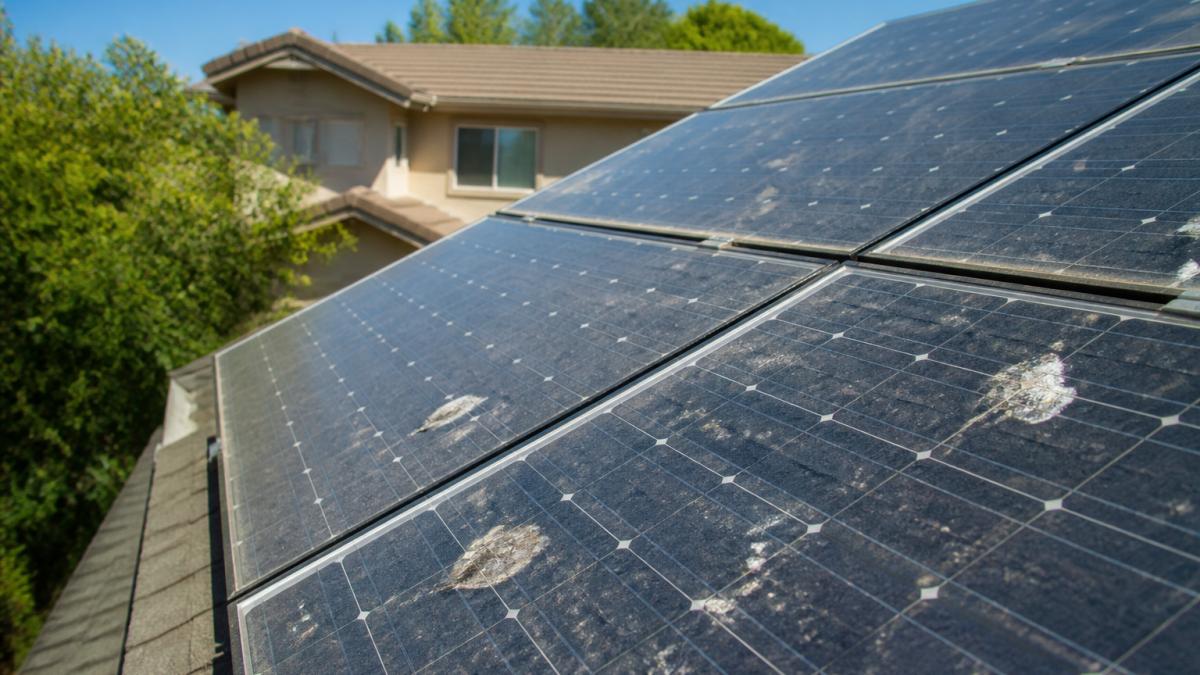
Look for these signs during a visual inspection:
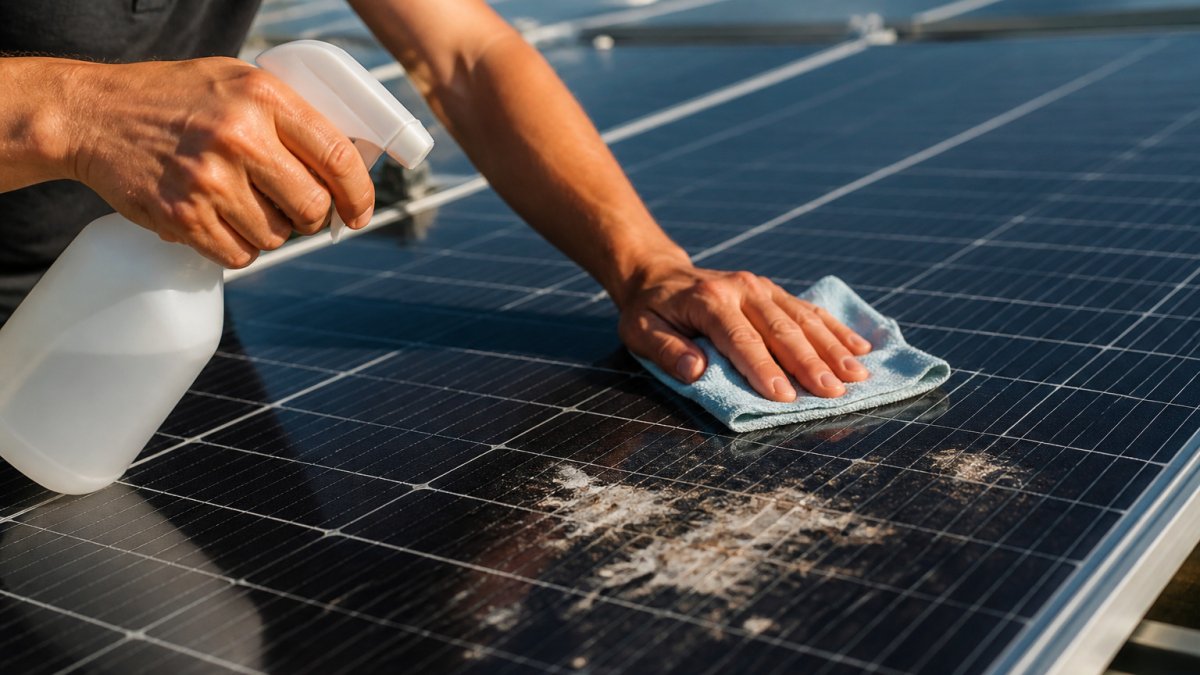
- A dull, gray film across the glass
- White or dark streaks from dust and pollen
- Bird droppings, which block light in small but stubborn spots
- Fallen leaves or twigs resting on the panels
- Nesting material near the edges of the array
Bird droppings deserve special attention. They are acidic and can stain the glass if left in place. Nesting activity near the array also means more droppings over time.
A common mistake is waiting for a big output drop before acting. Small losses add up month after month.
How to Clean Solar Panels Without Damaging Them
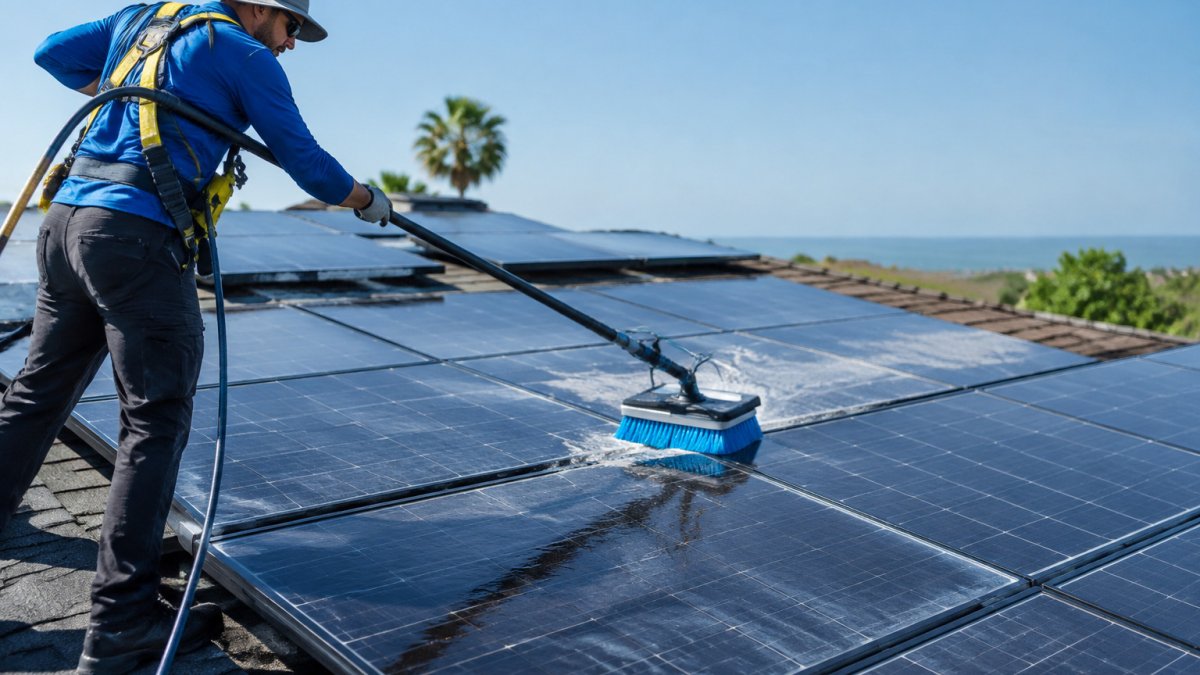
Clean panels with soft tools, gentle rinsing, and plain water. Never use abrasive pads or high-pressure spray.
Follow these steps:
- Turn off the system if your manufacturer recommends it.
- Rinse the panels with water to lift loose dust.
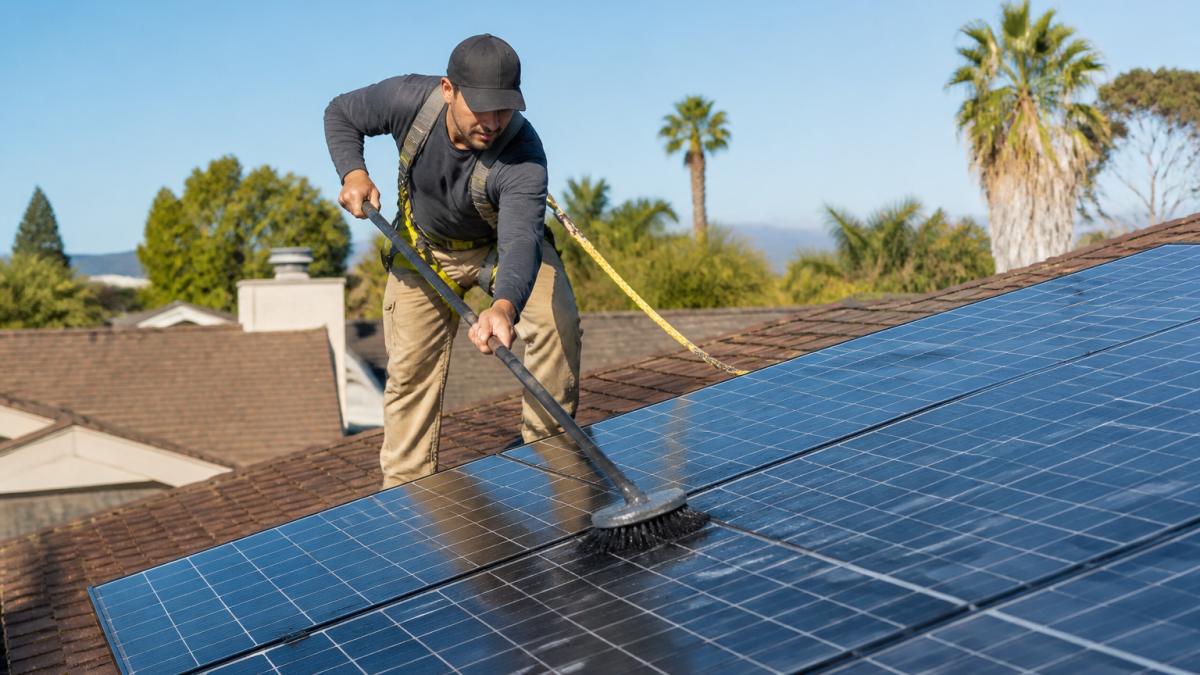
- Use a soft brush with a long handle to wipe the surface.
- Rinse again from the top down.
- Let the panels air-dry in daylight.
Work early in the morning when panels are cool. A hot panel plus cold water can stress the glass.
What to Use and What to Avoid
Use soft brushes, purified water, and a gentle rinse. Avoid hard water, which leaves mineral spots.
Things to avoid:
- Pressure washers, which can crack glass and seals
- Abrasive sponges and scouring pads
- Harsh soaps and detergents
- Metal tools of any kind
- Cleaning during peak heat
If your panels are very dirty or you are not comfortable on a roof, call a professional.
Your Solar Panel Inspection Schedule, Season by Season
A solar panel inspection schedule should be risk-based, not calendar-based: the seasons set the timing, your local conditions set the frequency.
Spring (March-May): pollen and winter-damage check. Pollen dominates soiling now.
Fall (September-November): debris and shading check. Peak debris season for homes near deciduous trees.
Winter (December-February): storm and low-sun check. After each significant storm, look for debris, cracked glass, and displaced panels.
Adjusting the Calendar to Your Conditions
Start with the seasonal anchors above, then apply these modifiers:
| Condition | Adjustment |
|---|---|
| High dust, farmland, or construction nearby | Add a mid-cycle visual check between each seasonal inspection |
| Coastal salt exposure | Inspect mounting hardware and racking for corrosion at every seasonal check |
| Heavy bird activity or nesting | Inspect monthly during nesting season; droppings are acidic and stain glass |
| Tree cover within 30 feet | Inspect after every wind event in fall |
| Ground-mounted array | Add a walk-around for ground contact, weed growth, and animal burrowing |
| Battery-equipped system | Check battery status indicators and ventilation at each seasonal visit |
What to Actually Check at Each Visit
A useful inspection has four targets, in order:
- Production data first. Pull your monitoring app before you go outside. A production drop with no visible soiling points to an inverter, wiring, or utility issue, not a cleaning problem.
- Visual soiling. Look for the dull gray film, streaks, droppings, and debris listed earlier.
- Physical condition. Check for cracked or chipped glass, loose wiring, corrosion on racking, and panels out of alignment with their neighbors.
- Inverter and disconnects. Confirm no error lights and that the AC and DC disconnect switches are in their normal positions.
When to Escalate From Inspection to Service
Most homeowners can inspect from the ground with binoculars and a monitoring app. Escalate to a qualified technician for cracked glass, a hot spot or discolored cell, loose or exposed wiring, corrosion on racking or grounding hardware, a persistent production drop that does not track with weather, or an inverter fault that will not clear. These are not cleaning issues or DIY fixes.
Solar Panel Maintenance Checklist for Homeowners
Use this checklist to stay on track, covering cleaning and wider system care.
- Check production data against your normal curve
- Walk the yard and look for shading from new growth
- Inspect panels for dust, pollen, and droppings
- Clear leaves and debris from the array
- Look for cracks, chips, or loose wiring
- Check the inverter for error lights
- Confirm mounting hardware is secure
- Schedule cleaning if buildup is visible
The inverter is worth a monthly glance, it turns solar power into usable home electricity and warns you early if something is off.
When to Hire Professional Solar Panel Maintenance
Most guides treat this as a cleaning question. It is really a safety and warranty question, driven by two hazards: falling from the roof and contact with energized DC conductors. Both are reasons to hand the work off and to check your paperwork before anyone, including you, touches the array.
Roof-Access Safety: When to Stay Off the Roof
Falls are the leading cause of serious injury in residential exterior work, and a solar array adds trip hazards, slick glass, and obscured roof edges. Stay off the roof and call a professional if any of these apply:
- Pitch. A roof steeper than roughly 6:12 (a 6-inch rise per 12 inches of run) is difficult to walk safely even when dry.
- Height. Single-story roofs are manageable for many homeowners; two-story and above raise the consequence of any slip sharply.
- Surface condition. Wet, mossy, frost-covered, or aging shingles are a no-go. So is any roof with visible sagging or soft spots.
- Weather. Never work on a roof in wind, rain, snow, or ice, or within a day of a storm.
- Access. If you cannot safely set and climb a ladder, level ground, three points of contact, ladder extending about three feet above the roof edge, do not attempt it.
- Age or health. Balance, vision, and medication effects matter more on a roof than on the ground.
If you do inspect from the roof, use fall protection, keep both hands free, and never walk on the glass, most residential panels are not designed for it, and the glass can crack under a concentrated load.
Electrical Hazards: The Part Most Guides Skip
Solar panels produce DC electricity whenever light hits them. You cannot simply flip a switch to make an array safe. The DC conductors between the panels and the inverter remain energized during daylight even when the system is "off" at the inverter.
That means:
- Do not open junction boxes, combiner boxes, or disconnect enclosures unless you are qualified and using appropriate PPE.
- Do not cut, splice, or reconnect any wiring. DC arcs do not self-extinguish the way AC arcs can.
- Treat all exposed conductors as live during daylight hours.
- Turn the system off at the inverter and the AC disconnect before any cleaning, if your manufacturer recommends it, but understand that the array-side DC wiring may still be energized.
- Watch for damaged conduit, chewed wiring, or rodent activity near the array. These are common causes of ground faults and are a job for a licensed electrician, not a homeowner.
Warranty and Manufacturer Guidance
Before you clean, climb, or hire anyone, read your panel manufacturer's installation manual and your system warranty. Many warranties require "reasonable care," and some specify approved cleaning methods, water quality, or prohibited tools. A pressure washer, abrasive brush, or hard water can void coverage on a glass or coating claim.
A few practical steps:
- Keep a dated log of cleanings, inspections, and any service work.
- Save receipts and reports from any professional visit.
- Photograph any damage before and after service.
- Ask your installer whether your specific warranty requires professional service for certain tasks.
When Professional Service Is Worth the Cost
Professional cleaning and inspection is worth paying for when one or more of these is true:
- The array is on a steep, tall, or difficult-to-access roof.
- Soiling is heavy or includes bird droppings and nesting material.
- You see damage, corrosion, or wiring problems.
- Production has dropped and you cannot explain it from weather or monitoring data.
- Your warranty requires documented professional care.
- You are not comfortable or equipped to work safely at height.
For a routine, lightly soiled, ground-level array on a mild roof, monitoring plus occasional DIY rinsing is often enough. The decision is a match between the risk of the job and your ability to do it safely.
Conclusion
The right solar panel maintenance frequency for homes comes down to your environment and habits: twice a year suits most homes, quarterly suits dusty or coastal areas, and a quick look every few months catches problems early.
If you would rather leave the roof work to trained hands, Mr Clean Solar Cleaning can help. Our certified specialists use deionized water and soft-bristle tools, deliver streak-free results, and send detailed performance reports after every visit.
Get started with Mr Clean Solar Cleaning and protect your solar investment for the long run.
Frequently Asked Questions
How often should residential solar panels be cleaned?
Most homes need cleaning once or twice a year. If you live in a high-dust area, near farmland, or close to the coast, quarterly cleaning keeps output steady. Rainfall helps but does not remove baked-on dust, pollen, or bird droppings. Check your panels visually each month and book a cleaning when you see a dull film or visible spots.
Does rain clean solar panels well enough?
Light rain rinses loose dust but leaves sticky residue, pollen, and bird droppings behind. In arid climates with infrequent rain, soiling builds up for months. Rain also cannot reach panels tilted at low angles or shaded by trees. Treat rainfall as partial help, not a replacement for a cleaning schedule.
Is it safe to clean solar panels yourself?
Cleaning ground-mounted or easily reachable panels with a soft brush and plain water is generally safe. Roof access is the real risk: falls, electrical hazards near wiring, and scratched glass from abrasive tools are common mistakes. If your panels sit on a steep or two-story roof, hire an insured, OSHA-trained crew instead.
How can I tell if my solar panels need cleaning?
Watch your monitoring system for a production drop of 5% or more against similar sunny days. Then look at the panels: dust film, pollen streaks, bird droppings, or leaves trapped along the frame all signal soiling. A visual inspection takes two minutes and confirms whether the drop is dirt or a system fault.