 how-to
What Happens If You Never Clean Solar Panels?
Last Updated: November 8, 2026
Quick Summary
Dirt, pollen and bird droppings block sunlight, so solar panels lose output that grows the longer they go uncleaned. Over years the loss compounds, bird droppings can etch the glass permanently, and shaded cells can overheat and degrade.
- Bird droppings cause the biggest problems because they create hard shade in one spot.
- Output loss is often gradual, so owners may blame panel aging instead of soiling.
- Etched glass cannot be restored by cleaning, but a merely dusty panel can be.
- Most homes should clean solar panels once or twice a year, more often near trees or in dusty areas.
- Compare output on sunny days before and after cleaning to see if the service paid off.
Table of Contents
- Does Dirty Solar Panels Affect Efficiency?
- What Factors Make Solar Panels Get Dirty Faster?
- What Happens Long-Term If You Never Clean Solar Panels?
- How Often Should You Clean Your Solar Panels?
- Is Solar Panel Cleaning Worth It?
- DIY Solar Panel Cleaning Kit vs. Professional Service
- Booking Your Solar Panel Cleaning in Northern California
- Frequently Asked Questions
Dirty solar panels lose output, and the loss grows the longer they go uncleaned. For a homeowner in Woodland, that can mean a higher electric bill every month. This guide explains what dust, pollen and bird droppings do to a system, how to tell whether your panels need attention, and when it makes sense to call a professional.
Does Dirty Solar Panels Affect Efficiency?
Yes, dirt on a panel reduces the sunlight that reaches the solar cells, which lowers power output. Even a thin film can cut production, and the effect is often larger than most owners expect.
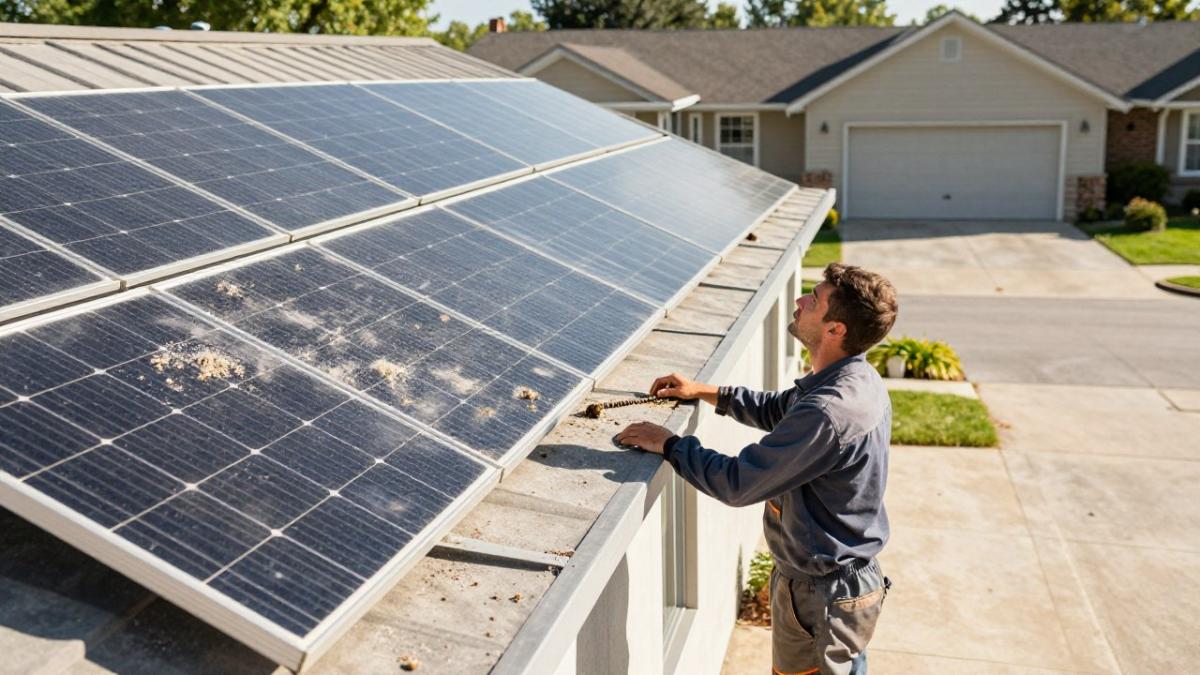
How Dust, Pollen, and Bird Droppings Reduce Energy Production
Each type of debris blocks light in a different way:
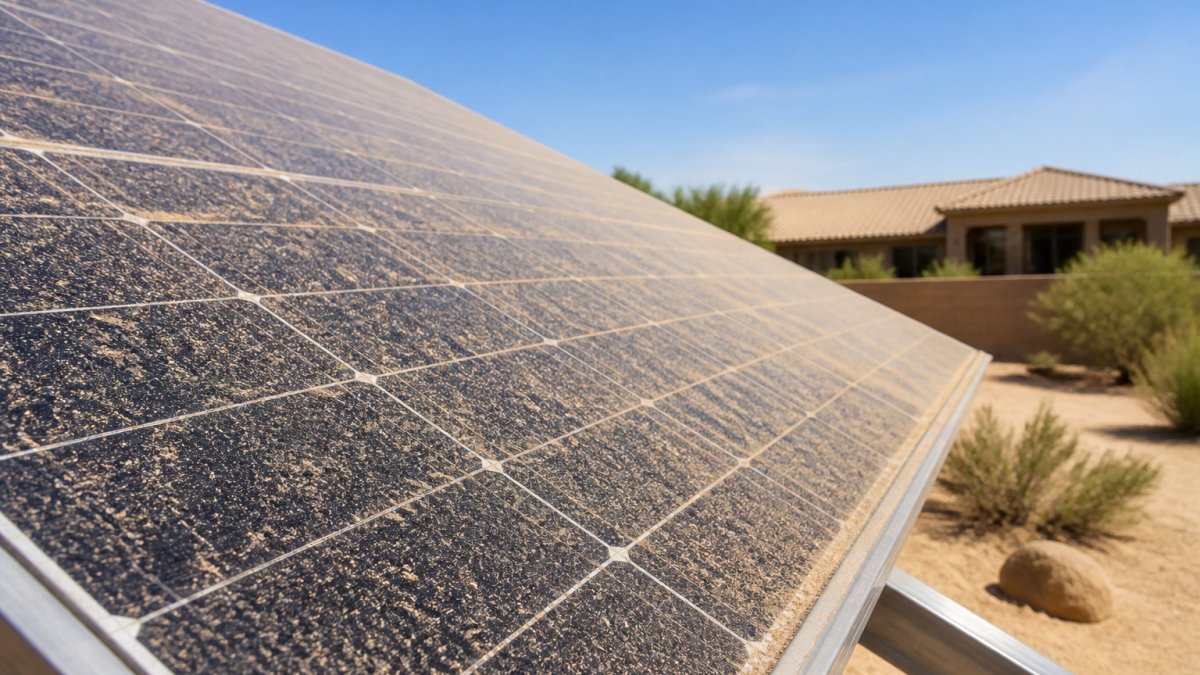
- Dust and dirt: A fine layer spreads evenly and dims the whole panel.
- Pollen: Seasonal pollen can form a yellow-green film that is hard to see from the ground.
- Bird droppings: A single dropping can shade a full cell, and the shaded cell can drag down the output of the whole string.
- Leaves and debris: Fallen leaves can cover entire sections of a panel.
Bird droppings cause the biggest problems because they create hard shade in one spot. Many panels are wired in series, so one shaded section can limit the power of the entire row.
How Much Output a Dirty Panel Can Lose
The amount depends on how dirty the panels get, the local climate and the system design. Some owners see small losses, while heavily soiled arrays can lose a noticeable share of their output. Results after a professional clean vary by site. Your inverter's monitoring app is the best way to check your own numbers over time.
What Factors Make Solar Panels Get Dirty Faster?
Some homes collect grime much faster than others. Location, climate, and how the panels are mounted all play a role.
Soiling by Location, Climate, and Panel Tilt
- Dry, dusty areas: Dust builds up quickly when there is little rain.
- Near trees: Pollen, leaves and sap can coat the glass.
- Near busy roads or farms: Dust and debris from traffic or fields settle on the surface.
- Low tilt angles: Flatter panels hold more dirt because water runs off them more slowly.
- Steep tilt angles: Steeper panels tend to shed dust and rain more easily.
Panel tilt matters because rain can only wash away debris if it runs off the surface. Flat or lightly tilted panels often need more help.
Whether Rain Cleans Panels Well Enough
Rain helps, but it rarely does the full job. Light rain can leave a film of mud or dried residue behind, and bird droppings often stick until they are removed by hand. Many homeowners find that rain cleans the top layer of dust while leaving the stubborn grime in place.
What Happens Long-Term If You Never Clean Solar Panels?
Most advice about dirty panels focuses on this month's output. The more important question is what happens over years. When panels are never cleaned, the consequences compound in ways that are easy to overlook until they become expensive.
Persistent Yield Loss That Compounds
A light film of dust might cost a few percent of output. That sounds minor until you multiply it across a 25-year system life. A common pattern is a slow, steady decline that owners may attribute to panel aging rather than soiling. Because the loss accumulates gradually, there is no single moment when the system suddenly underperforms, which is exactly why it goes unaddressed. The result is that the system never produces what the original payback estimate assumed, and the shortfall is invisible unless you compare against a clean baseline.
Buildup That Bakes On and Becomes Permanent
Dust and pollen that sit through repeated heat cycles can bond to the glass. Bird droppings are worse: their acidity and mineral content can etch the surface if left through enough sunny cycles. Once etching occurs, no amount of cleaning restores the glass, the damage is physical. A panel that is merely dusty can be restored; a panel with etched glass cannot.
Hot Spots and Cell Stress
Hard shade from bird droppings, leaves, or concentrated debris does more than reduce output in the moment. A persistently shaded cell can become a hot spot, it dissipates power as heat instead of producing it, and the surrounding cells work harder to compensate. Over years, this localized stress can degrade the affected cell and, in severe cases, damage the panel's internal connections. The practical sign is a panel that underperforms even after cleaning, which is why inspection matters as much as washing.
Hidden Damage and Missed Inspections
Dirty glass hides the early signs of problems that are cheap to fix and expensive to ignore: microcracks, discoloration, delamination at the edges, and failing junction boxes. A yearly cleaning doubles as an inspection,
The Maintenance Cost Curve
There is a financial pattern worth understanding. A lightly soiled array cleans quickly with standard equipment. An array that has gone years without cleaning often needs more time, more water, and sometimes specialized removal of bonded residue, which means the service costs more precisely because it was deferred.
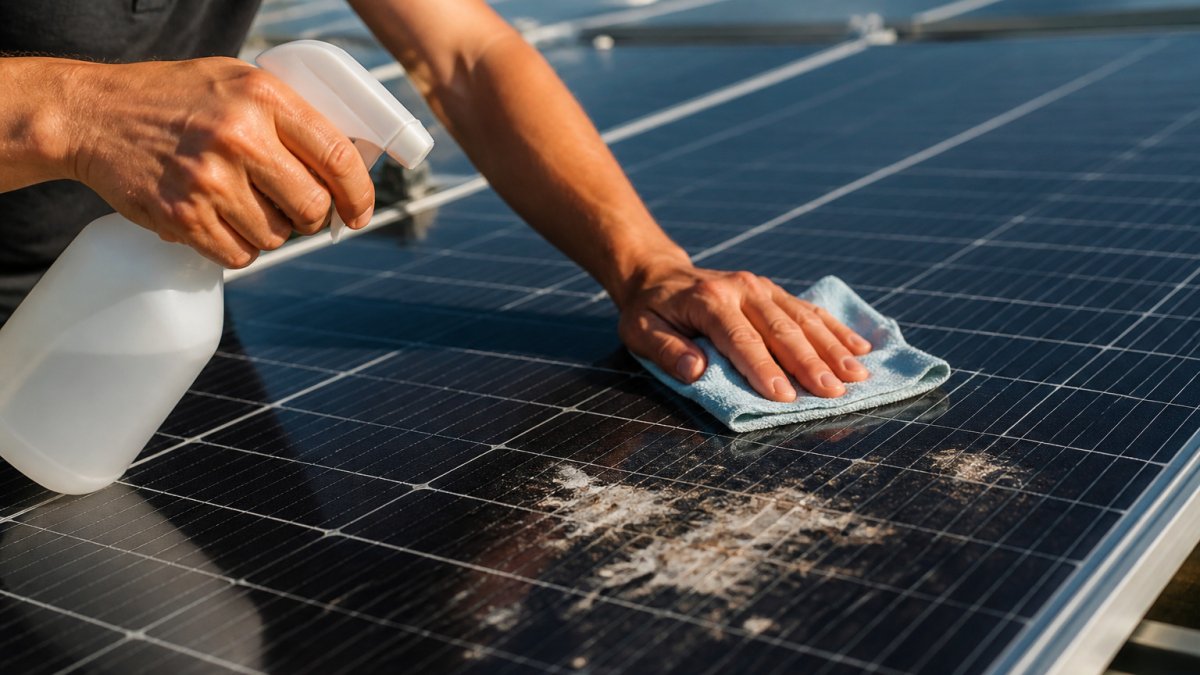
Watch out: if your panels have visible white or chalky patches that do not come off with normal cleaning, they may be etched glass rather than dirt, so get an inspection before assuming a wash will fix the output.
How Often Should You Clean Your Solar Panels?
For most homes, cleaning once or twice a year is a reasonable starting point. Homes in dusty areas, near trees or near farms may need more frequent cleaning. Watch your monitoring data, since a drop in output that does not match the weather is often a sign of soiling.
Use this simple schedule as a guide:
| Situation | Suggested Cleaning Frequency |
|---|---|
| Typical suburban home | 1-2 times per year |
| Near trees or farmland | Every 3-4 months |
| Dry, dusty climate | Every 2-3 months |
| Steep tilt, good rain runoff | Once per year |
Is Solar Panel Cleaning Worth It?
Cleaning is worth it when the lost output costs more than the service. The honest answer is that it depends on your system and your local conditions. A quick check helps you decide.
How to Measure the Actual Production Impact
- Find a clear, sunny day and note your system's output.
- Compare it with a similar day after recent rain.
- Check whether the drop lines up with the weather, or whether it points to soiling.
- Schedule a cleaning and compare output again the next sunny day.
If output rises noticeably after a clean, the service paid off in production.
Safety and Warranty Considerations
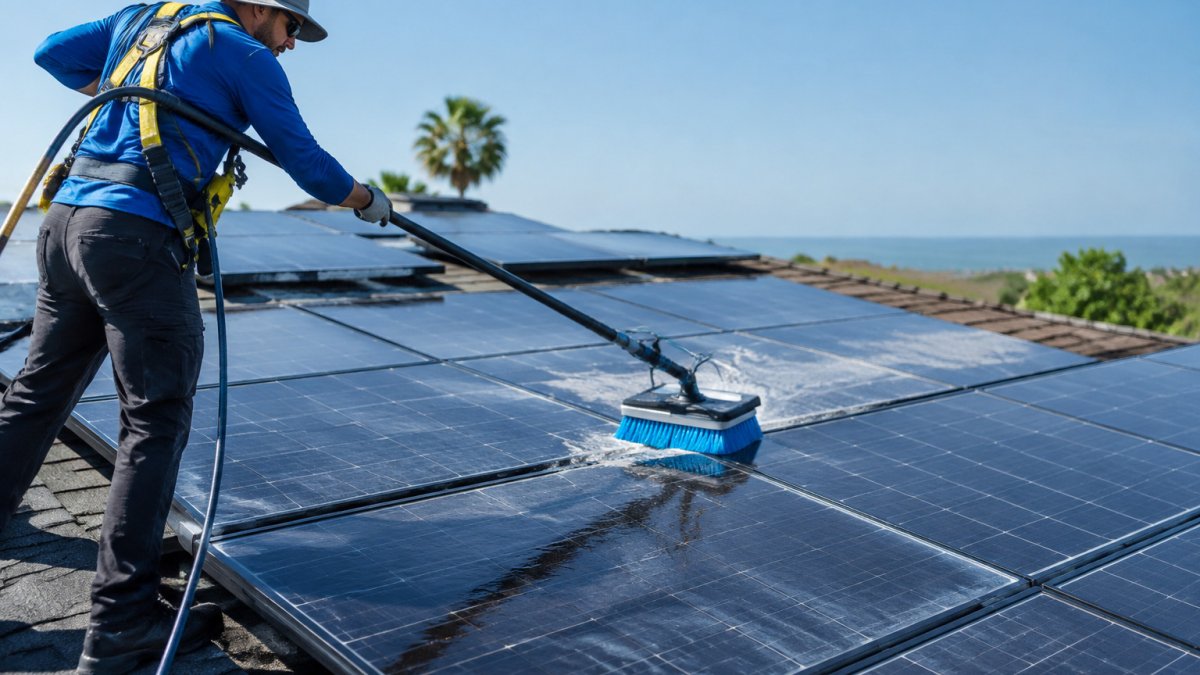
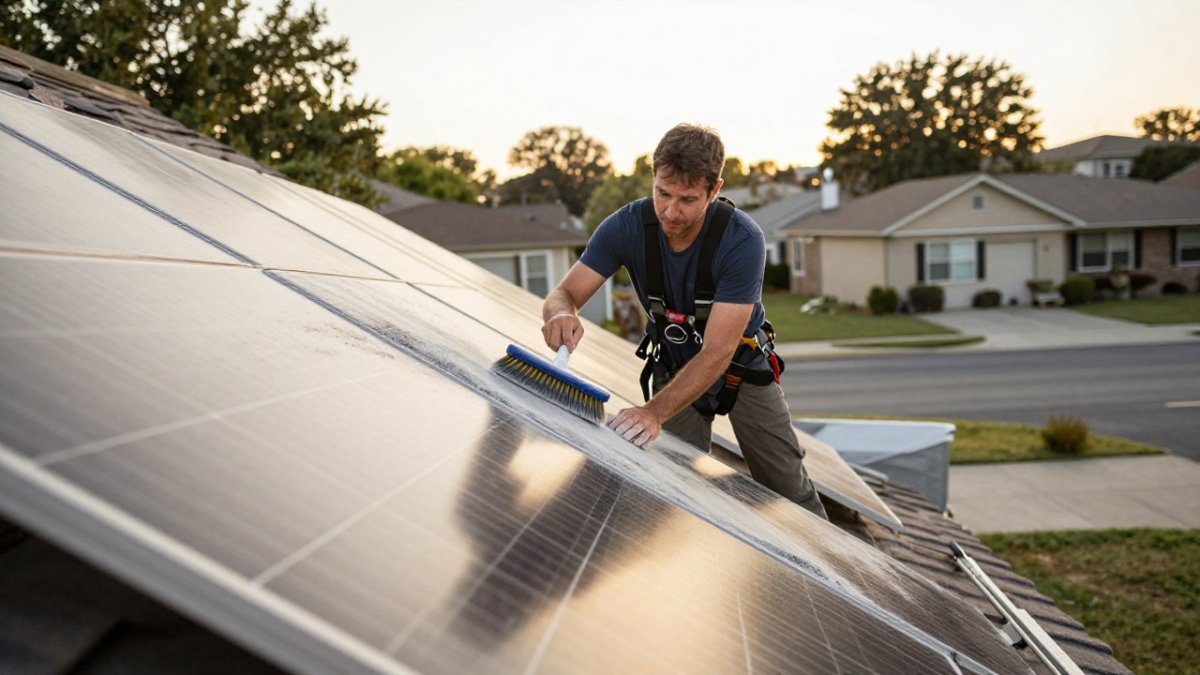
Roof work carries real risk, so most homeowners should leave it to trained professionals. Pressure washers and harsh chemicals can scratch glass or damage seals, which may affect your warranty. Ask any cleaner what methods they use and whether they are insured. Mr Clean Solar Cleaning uses purified deionized water and soft-bristle tools, is fully insured, and has an OSHA-trained team.
DIY Solar Panel Cleaning Kit vs. Professional Service
A DIY kit can work for ground-level panels you can reach safely. Use a soft brush, plain water and a mild soap, and never use abrasive pads or strong chemicals. Roof panels are a different story: climbing and cleaning at height is dangerous, and a misstep can damage the glass. A professional service with the right equipment is usually the safer choice for roof systems.
Booking Your Solar Panel Cleaning in Northern California
If your panels are visibly dirty or your output has dropped, a professional clean is a simple next step. Mr Clean Solar Cleaning serves homeowners and commercial sites in Northern California, with streak-free results. Pricing depends on system size, access and how often you need service, so visit our website for a quote.
Frequently Asked Questions
What happens if I don't clean my solar panels?
Dust, pollen, bird droppings and grime build up on the glass and block some sunlight from reaching the cells, so output drops gradually. The loss depends on how dirty the panels get, the climate and the panel tilt. Heavy buildup can reduce production noticeably over months, and some soiling can bake onto the glass and become harder to remove. Checking your inverter monitoring data for a steady decline is the easiest way to tell whether cleaning would help.
Is solar panel cleaning worth it?
It is worth it when the panels are visibly soiled and the production loss outweighs the cost of a clean. Compare your output after a rain or a professional clean against your baseline. Pricing depends on system size, roof access and location, so ask Mr Clean Solar Cleaning for a current quote on our website.
Can rain clean solar panels well enough?
Rain removes loose dust and some light dirt, and it often helps in areas with regular rainfall. It does not remove bird droppings, pollen films or dust that has dried into a residue, and in dry regions like Northern California long dry spells let soiling accumulate between storms. Rain alone is usually not enough to keep output at its peak.
Is a DIY solar panel cleaning kit safe to use?
A DIY kit with a soft brush, a hose and mild soap can handle light dust, but roof access carries real fall risk and abrasive cleaners or pressure washers can scratch the glass or damage the protective coating. Check your panel warranty before cleaning, and avoid working on a wet or steep roof. For full cleaning, roof work or hard-to-remove buildup, a professional service with trained, insured technicians is the safer choice.