 how-to
Will Pressure Washing Damage Solar Panels?
Table of Contents
- Will Pressure Washing Damage Solar Panels?
- How to Clean Solar Panels Safely
- Solar Panel Cleaning Tools That Protect Your System
- How Often to Clean Solar Panels
- Pressure Washing Mistakes That Cost You Money
- When to Call a Professional Instead
- Frequently Asked Questions
Last Updated: October 5, 2026
Will Pressure Washing Damage Solar Panels?
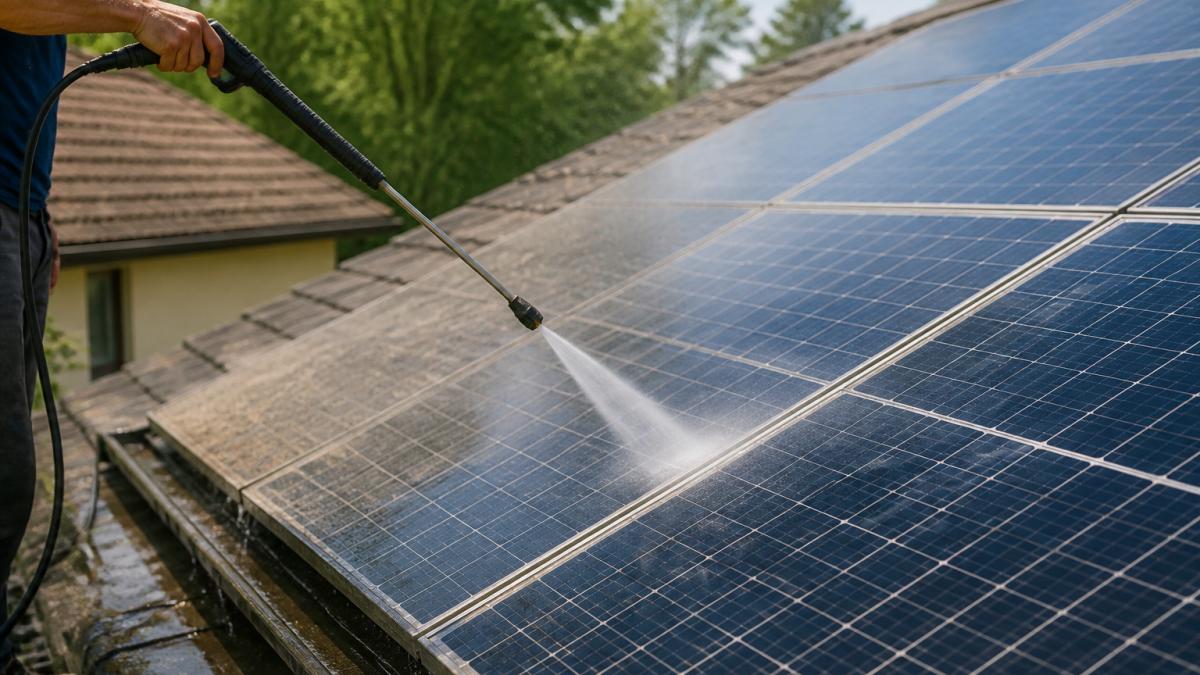
Yes, pressure washing can damage solar panels. High-pressure water can harm the protective coating on panel glass, crack the glass itself, or force water into sealed edges where it causes long-term failure.
The real risk isn't just cosmetic. Water intrusion leads to corrosion inside the panel. Damaged seals allow moisture to reach electrical components. Your warranty may become void. Understanding why pressure washing fails, and what actually works, protects your investment and keeps your system producing power at peak efficiency.
How High Pressure Damages Panel Coatings and Seals
Most solar panels have an anti-reflective coating on the glass surface. This coating is thin and fragile. Pressure washers blast water at speeds that strip it away. Once the coating is gone, the panel loses efficiency immediately.
The damage doesn't stop at the surface. High-pressure spray forces water into the seams where the glass frame meets the panel body. These seals are designed to keep moisture out. Pressure breaks them open.
A common mistake is assuming low-pressure settings are safe. Even at 1,500 PSI, concentrated water spray can damage panels. The nozzle distance matters too. Spray from two feet away concentrates force differently than spray from ten feet away.
Water Intrusion and Long-Term Panel Failure
Water inside a solar panel doesn't dry out easily. The sealed cavity traps moisture. Over weeks and months, this moisture corrodes the conductive materials that make the panel work. Corrosion spreads across solder joints and bus bars.
The worst part: you won't see the damage immediately. A panel can look perfectly fine on the outside while failing on the inside. By the time you notice lower energy production, the internal damage is already extensive.
Mineral deposits from water can also build up inside the panel. Tap water contains minerals that leave residue when water evaporates. This residue interferes with electrical connections.
Warranty Voidance and Manufacturer Guidance
Most solar panel manufacturers explicitly warn against pressure washing. Check your panel documentation. Many warranties state that damage from pressure washing is not covered.
Manufacturers recommend gentle cleaning methods instead. They specify maximum water pressure, usually 60 PSI or less. They recommend soft brushes and mild soap. They prohibit abrasive pads and harsh chemicals. Following these guidelines keeps your warranty intact.
If you've already pressure washed your panels, contact your installer or the manufacturer. Ask if the warranty is still valid. Document what happened. Some damage appears immediately, but other damage develops slowly. Early detection makes a difference.
How to Clean Solar Panels Safely
Safe cleaning restores your panels without risk. The methods are simple, inexpensive, and effective. Most homeowners can do basic maintenance themselves. For rooftop systems or large installations, professional cleaning is safer and more thorough.
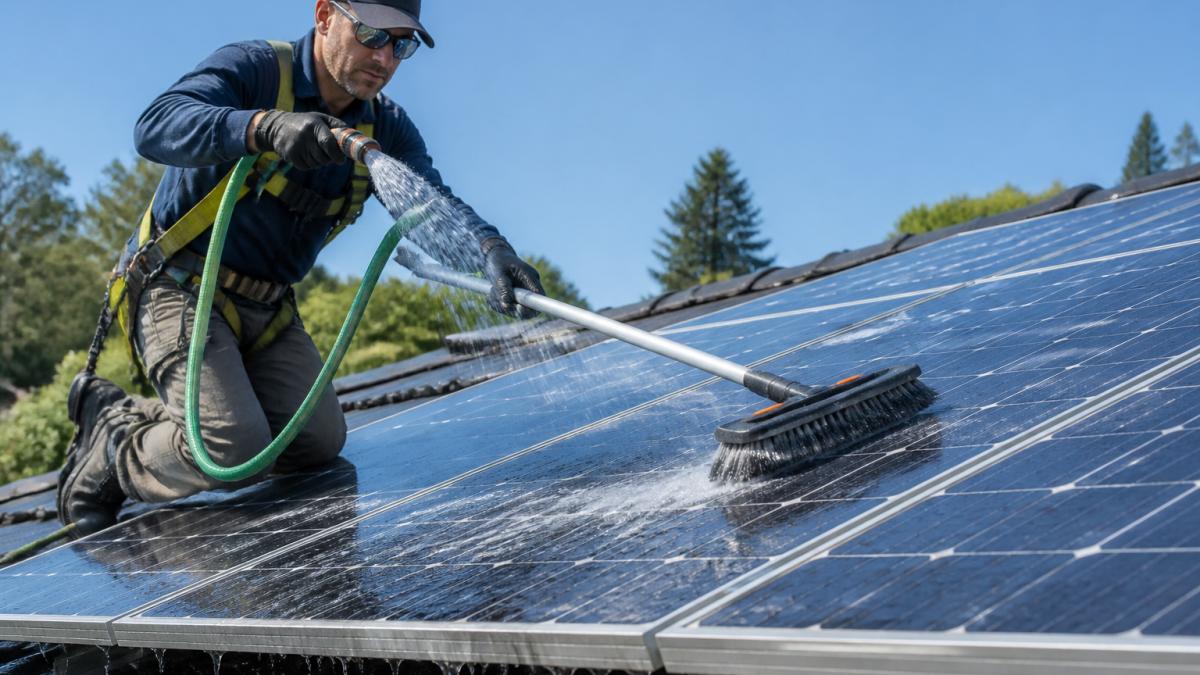
Using a Garden Hose and Low-Pressure Water
A standard garden hose delivers water at 40-60 PSI. This is safe for solar panels.
Start by turning off your system at the breaker. Water and electricity don't mix. Safety first.
Spray water across the panel surface from top to bottom. Let gravity pull the water down. Use smooth, even strokes. Don't concentrate the spray in one spot.
For stubborn dirt, let water run over the panel for a minute or two. The soaking softens debris so it rinses away without scrubbing.
Avoid spraying water directly at the edges or seams where the frame meets the glass. Water pressure can force moisture into these gaps. Spray the main glass surface instead.
Soft Brushes and Non-Abrasive Tools
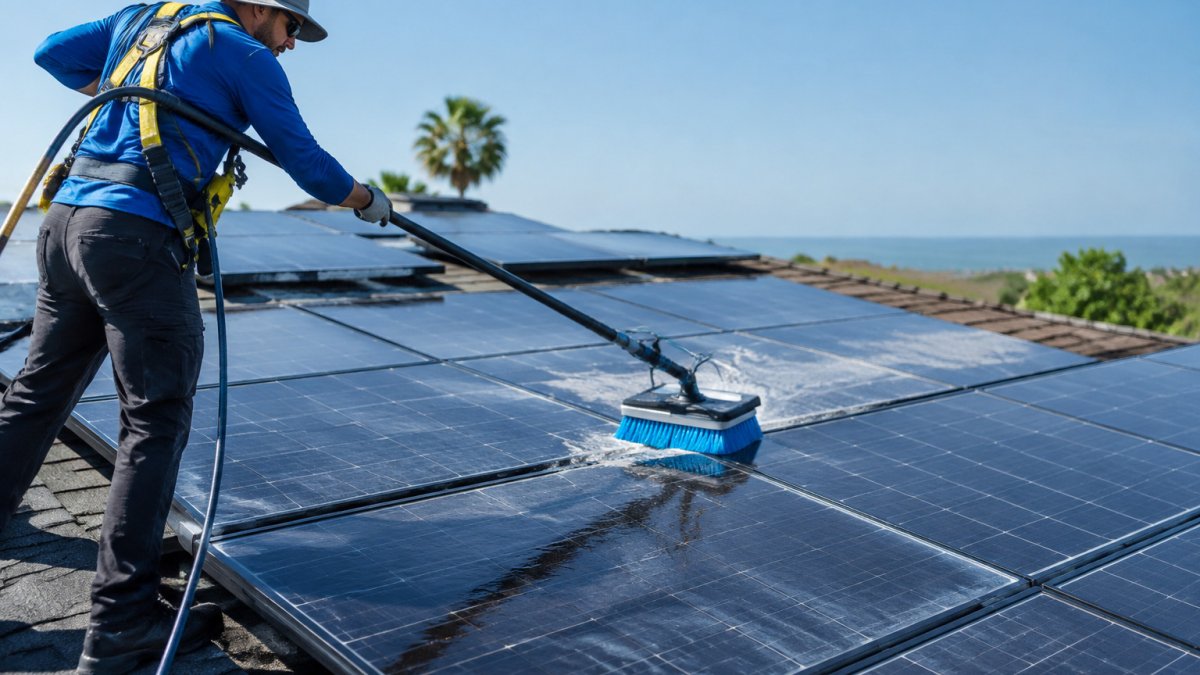
A soft-bristle brush removes dust and light buildup without scratching the glass. Use a brush with nylon bristles, not wire or stiff materials. Bristles should bend easily under hand pressure.
Wet the panel first with your garden hose. Then use the soft brush in circular motions. Apply light pressure. Let the bristles do the work, not your arm strength.
Squeegees work well for drying panels after rinsing. Use a rubber squeegee blade, not plastic or metal. Rubber won't scratch the surface.
Never use scouring pads, steel wool, or abrasive brushes. These scratch the protective coating. Once scratched, the coating can't be repaired.
Mild Soap and Avoiding Harsh Detergents
Mild dish soap mixed with water cuts through grease and grime. Use a few drops of soap per gallon of water. This ratio is strong enough to clean without being harsh.
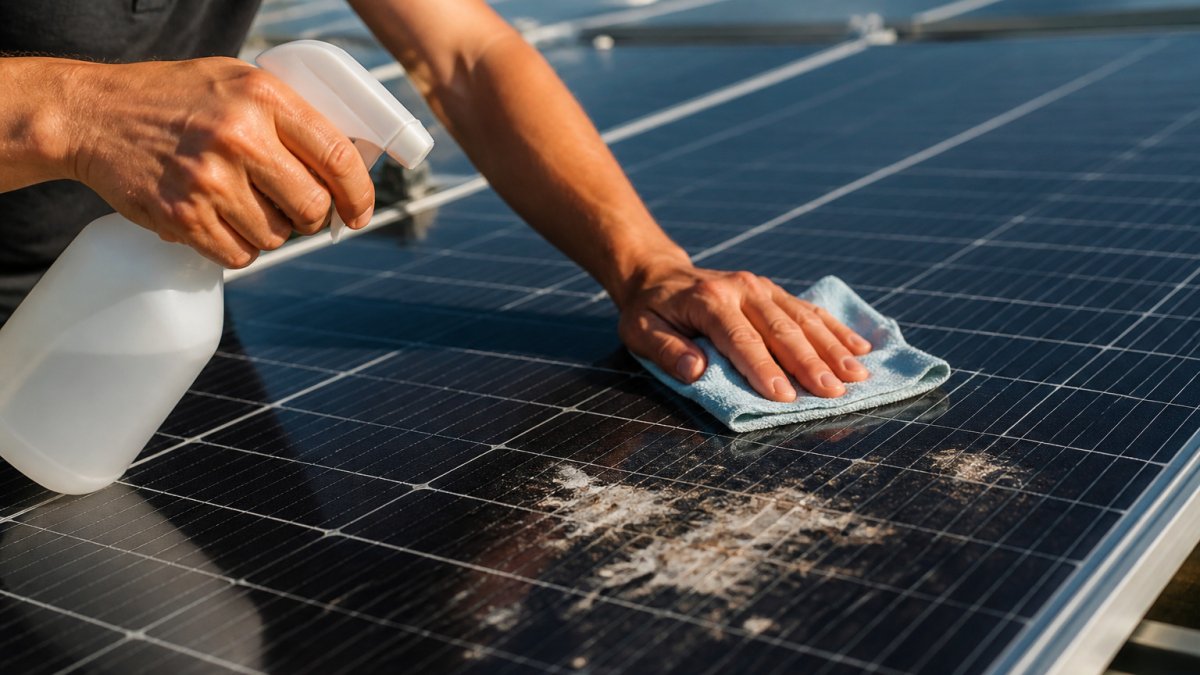
Apply soapy water with a soft brush or cloth. Let it sit for a minute. Then rinse thoroughly with clean water from your garden hose.
Avoid commercial cleaning products, degreasers, and abrasive detergents. These chemicals can damage the panel coating or seals. They also leave chemical residue that attracts dirt faster.
Avoid bleach, vinegar, and acidic cleaners. These corrode the aluminum frame and can damage the glass seal. Stick to plain water and mild soap.
Solar Panel Cleaning Tools That Protect Your System
The right tools make cleaning safer and more effective. You don't need expensive equipment. Basic tools work well for residential systems.
Soft-Bristle Brushes and Squeegees
A soft-bristle brush is your primary cleaning tool. Look for brushes labeled for solar panels or windows. Bristles should be nylon or natural fibers, not synthetic stiff materials. The brush head should be 12-18 inches wide for efficient coverage.
Squeegees with rubber blades remove water and prevent streaking. Rubber blades are gentle on the coating. They also remove mineral deposits better than cloth. A 12-inch squeegee is standard for residential panels.
Soft cloths made from microfiber work well for final drying. Microfiber doesn't scratch and absorbs water efficiently. Avoid paper towels and rough fabrics.
Deionized Water and Purified Rinsing Systems
Deionized water has minerals removed. When it dries, it leaves no white residue or streaks. This matters because mineral deposits reduce light transmission over time.
You can buy deionized water at auto parts stores or supermarkets. It's inexpensive. For a 400-square-foot residential system, a few gallons are enough.
Some cleaning services use portable deionized water systems. These filter tap water on-site and deliver purified water through a hose. The system connects to your garden hose. This approach is practical for large systems or frequent cleaning.
How Often to Clean Solar Panels
Cleaning frequency depends on your environment and panel condition. There's no one-size-fits-all answer. The goal is to keep panels clean enough that they produce at peak efficiency without over-cleaning.
Assessing Whether Your Panels Need Cleaning
Check your energy production data. Most solar systems provide a monitoring app or dashboard. Compare your current output to baseline output from when your system was new.
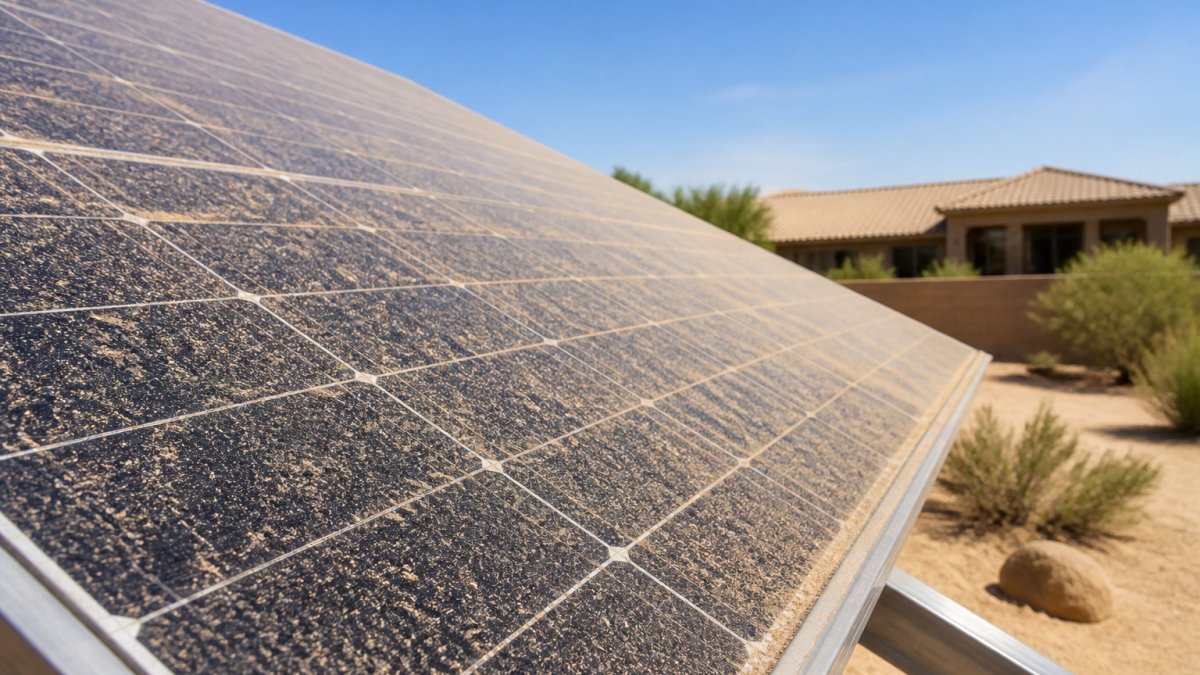
Look at your panels visually. Dust, pollen, and bird droppings are obvious. Dust appears as a light gray film. Pollen collects in corners. Bird droppings are white and crusty. If you see visible buildup, cleaning will help.
Check your energy bills. If they're higher than expected, reduced panel output could be the cause. Cleaning often brings bills back down.
In dry climates with infrequent rain, dust accumulates faster. In wet climates, rain cleans panels naturally. Your local weather patterns determine cleaning needs.
Seasonal and Environmental Factors
Rain cleans panels naturally. In areas with regular rainfall, you may not need to clean at all. Rain removes dust and light debris.
Dry seasons require more frequent cleaning. Dust settles on panels and stays there. Without rain, buildup gets worse over weeks.
Spring and fall bring pollen. Pollen sticks to panel glass and reduces light transmission. Cleaning in late spring and early fall helps offset seasonal pollen buildup.
Winter snow can cover panels completely. Once snow melts, clean the panels to remove residue left behind.
Areas near trees or highways experience more debris. Tree pollen, leaves, and dust from traffic accumulate faster. These locations benefit from cleaning every 3-6 months.
Pressure Washing Mistakes That Cost You Money
Pressure washing is the most expensive mistake homeowners make with solar panels. The damage is often irreversible. Understanding common errors helps you avoid them.
Ignoring Manufacturer Specifications
Every solar panel manufacturer publishes cleaning guidelines. These guidelines specify safe water pressure, brush types, and approved cleaning chemicals. Ignoring them voids your warranty.
Manufacturers test their panels. They know what pressure causes damage. Their recommendations are based on that testing. When you deviate from their specs, you're experimenting with your own equipment.
Some manufacturers prohibit any pressure washing, even at low pressure. Others allow gentle rinsing only. Read your documentation. If it says "do not pressure wash," that's not a suggestion.
DIY Pressure Washing on Rooftop Systems
Rooftop systems add safety risks on top of equipment damage risks. Pressure washers are heavy and awkward to handle on a ladder or roof. One slip means a fall. One mistake with the nozzle means water damage to your roof or home.
Rooftop height also means you're working near electrical lines. Pressure washers have metal components. Metal plus electrical lines equals serious hazard.
If your panels are on a roof, hire a professional. The cost is worth avoiding injury, roof damage, and panel damage. Professional crews have safety equipment, insurance, and experience working at height.
When to Call a Professional Instead
Professional cleaning is the safest option for most systems. Professionals have the right equipment, training, and insurance. They work safely and efficiently.
Mr Clean Solar Cleaning uses deionized water systems and soft-bristle tools designed specifically for solar panels.
Professional cleaning protects your warranty. Most manufacturers accept professional cleaning without warranty concerns.
For systems larger than 10 panels, professional cleaning saves time and reduces risk. For rooftop systems of any size, professionals are essential.
If you've already experienced pressure washing damage, a professional can assess the damage and recommend repairs. Early detection prevents further deterioration.
Pressure washing damages solar panels in ways you won't see until months later.
Mr Clean Solar Cleaning provides professional cleaning that protects your investment. Our deionized water systems and certified techniques restore solar output while keeping your warranty intact. Book Now to schedule a cleaning and see the difference professional care makes.
Frequently Asked Questions
Is it safe to clean solar panels with a pressure washer?
No. High-pressure water can strip protective coatings, damage panel seals, and force water into electrical connections. Pressure washers exceed 1500 PSI, which is far too forceful for solar glass. Even at lower settings, the concentrated stream risks seal degradation and water intrusion that leads to panel failure. Stick to garden hoses at low pressure or hire certified professionals using soft-bristle systems and deionized water.
What is the best way to wash your solar panels?
Use a garden hose with low pressure, a soft-bristle brush, and mild dish soap or a gentle detergent. Rinse thoroughly with deionized water to prevent mineral streaks and residue. Work early morning or late afternoon when panels are cool. Avoid abrasive pads, scouring tools, and harsh chemicals. For rooftop systems or large installations, hire certified solar cleaning specialists trained in electrical safety and manufacturer guidelines to protect your warranty and system integrity.
How often should solar panels be cleaned?
Cleaning frequency depends on your environment and soiling levels. Most homeowners benefit from 1-2 cleanings per year, though dusty, arid regions or areas with heavy bird activity may need quarterly cleanings. Monitor your energy output; a 10-15% drop signals that dirt, dust, or debris buildup is affecting performance. Rainfall naturally cleans panels in wet climates, so adjust your schedule accordingly. Professional cleaning reports help you track when cleaning improves output enough to justify the cost.
Can pressure washing void my solar panel warranty?
Yes. Most manufacturers explicitly prohibit pressure washing in their installation and maintenance guidelines. Using a pressure washer can void your warranty, leaving you responsible for repair or replacement costs. Before any cleaning method, DIY or professional, check your panel manufacturer's specifications and warranty terms. Professional certified solar cleaners know these requirements and use approved techniques like soft brushes and deionized water that preserve your warranty protection and system longevity.