 listicle
Best Residential Solar Cleaning Services 2026
Table of Contents
- Why Residential Solar Panels Need Professional Cleaning
- Best Solar Panel Cleaning Companies for Homeowners
- How Often to Clean Solar Panels for Maximum Output
- Cost of Professional Solar Panel Cleaning: What to Expect
- DIY vs. Professional Solar Panel Cleaning: When to Hire Help
- How to Choose the Right Solar Panel Cleaning Companies
- Measuring Results: Performance Reports and ROI
- Frequently Asked Questions
Last Updated: October 14, 2026
Why Residential Solar Panels Need Professional Cleaning
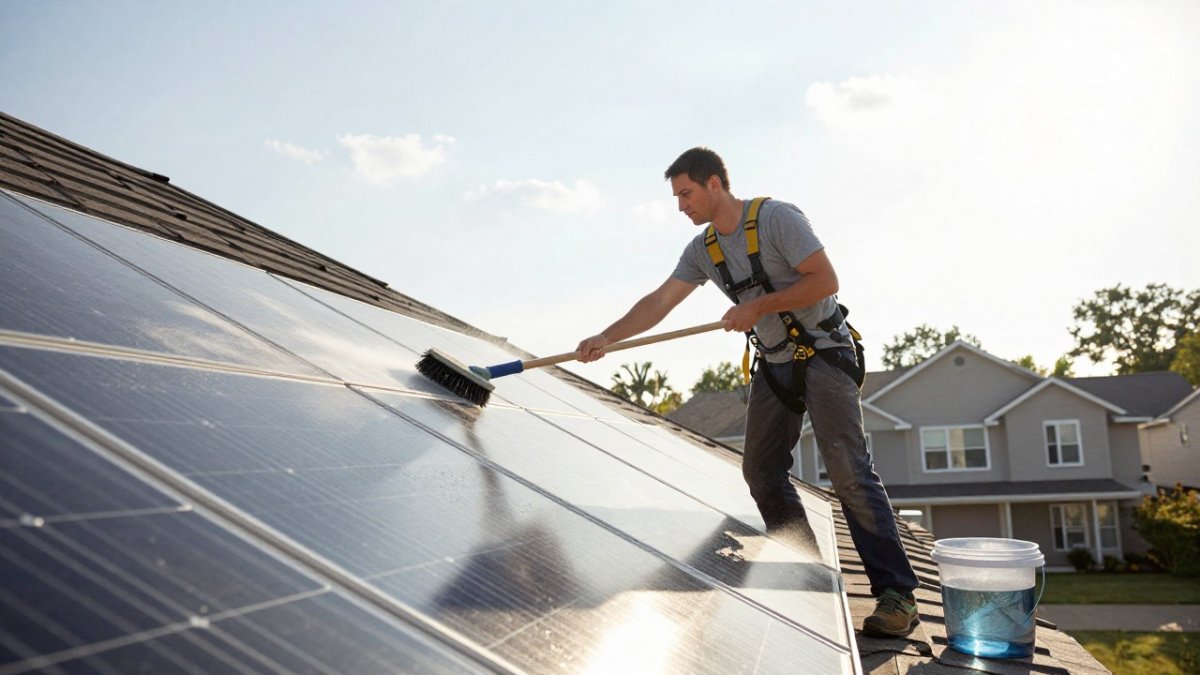
Dust, dirt, bird droppings, and debris reduce solar panels' ability to convert sunlight into electricity. Professional cleaning restores peak performance, which is why many homeowners turn to residential solar cleaning services.
At Mr Clean Solar Cleaning, we've seen how buildup degrades output: a quarter-inch of grime can reduce efficiency noticeably, and the problem worsens with high dust, coastal salt spray, or heavy bird activity. Cleaning isn't about aesthetics, it's about recovering lost production and ROI.
Whether panels need professional attention depends on location, climate, and buildup: every 3-6 months in dusty regions or areas with frequent bird activity, annually in cleaner climates. What matters most is measuring performance before and after cleaning to confirm real value.
Best Solar Panel Cleaning Companies for Homeowners
Mr Clean Solar Cleaning: Certified Specialists with Performance Guarantees
Mr Clean Solar Cleaning leads the market for residential solar panel cleaning by combining certified expertise with measurable results.
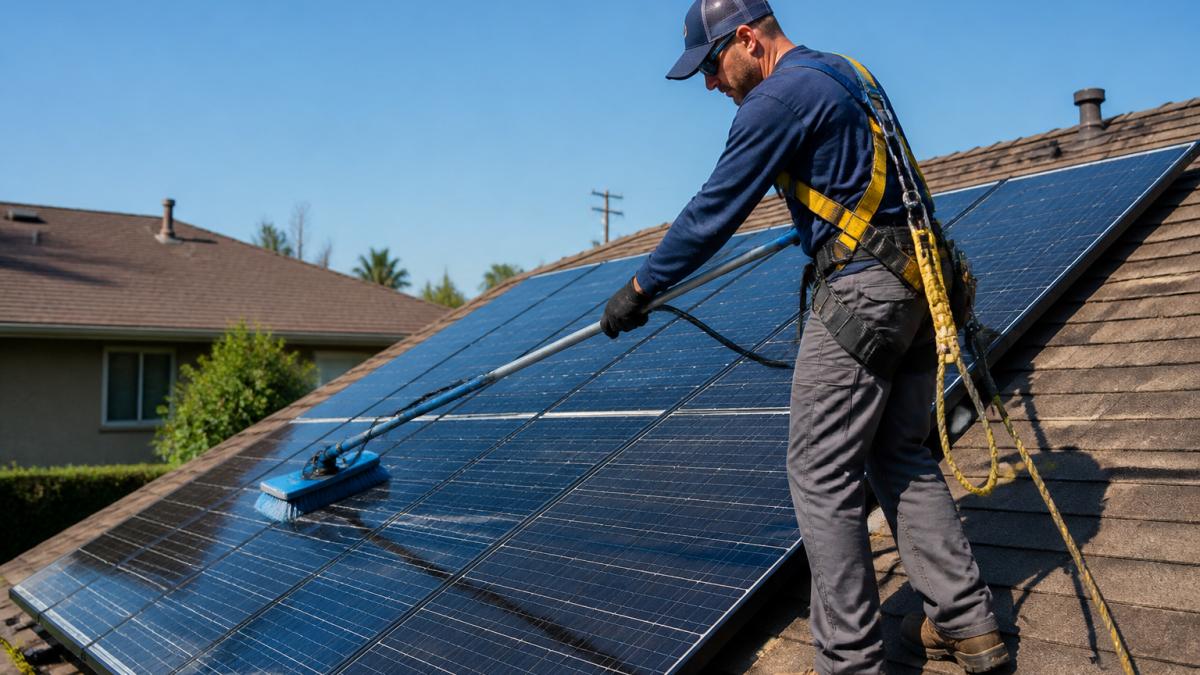
What sets us apart is performance reporting: after every cleaning we document your system's output before and after, proving the work and clarifying your ROI.
We handle everything from small residential installations to large commercial arrays, are fully insured and bonded, and have cleaned over 50,000 panels.
My Window Washing: Local Service with Transparent Methods
My Window Washing operates with a straightforward approach: deionized water and soft-brush systems that protect panel coatings, and a transparent process.
If you want a local provider with clear methods, they're solid, though they don't advertise performance reporting.
Clean Solar Solutions America: Nationwide Provider with Reporting
Clean Solar Solutions America operates as a data-driven cleaning partner, emphasizing maintenance reporting and fire-risk assessments alongside cleaning.
Their website doesn't detail residential pricing or cleaning methods, so you'll need a quote. They're best suited for larger installations or property managers overseeing multiple systems.
Time To Shine Window Cleaning: Highly Rated Regional Option
Time To Shine operates with a 5.0-star rating for solar cleaning services, understanding the desert climate where dust and intense sun are brutal on panel efficiency.
Like many regional providers, they don't publish detailed pricing or methodology. If you want a highly-rated local option, contact them for a quote.
How Often to Clean Solar Panels for Maximum Output
Most companies default to a schedule: every 3-6 months in dusty or coastal areas, annually in mild climates. That's a starting point, not an answer. The better question is whether soiling on your array has crossed the threshold where cleaning pays for itself, which depends on your soiling rate, utility rate, and system size, not a calendar.
The soiling-rate framework
Soiling rate is the percentage of production you lose per month to dust, pollen, bird droppings, and other buildup. It varies enormously by location:
- Desert Southwest (Arizona, Nevada, inland California): dust storms and construction activity can drive soiling losses of roughly 1-2% per month in dry seasons.
- Coastal areas: salt spray and marine layer moisture create a sticky film that rain does not fully rinse, often 0.5-1.5% per month.
- Agricultural regions: pollen, crop dust, and pesticide drift can push losses higher during specific seasons.
These are typical ranges, not guarantees; your actual rate depends on roof pitch, tilt angle, and how often rain rinses the glass.
How to measure your own soiling rate
You don't need special equipment: most modern inverters and monitoring apps (SolarEdge, Enphase, SunPower, and similar) log daily and monthly production. A practical method:
- Pick a clear, cloudless week with no shading changes and note daily production in kilowatt-hours.
- Compare that week to the same week last year, adjusting for known weather differences.
- Look for a downward drift that does not match seasonal sun-angle changes. A steady 1% monthly decline during a dry stretch is a strong soiling signal.
- Clean, then re-measure the same way. The gap between the pre-clean and post-clean week is your recovered production.
Turning recovered production into dollars
Once you know your recovered kilowatt-hours, multiply by your utility rate. Recovering 40 kWh at $0.15 per kWh is about $6 per month, or roughly $72 per year, so a $200 cleaning only pays if soiling is heavy enough to recover meaningfully more. High-soiling areas often justify two cleanings a year; low-soiling areas may only need annual or biennial cleaning.
When cleaning is not worth it
- You have a steep, rain-exposed array in a mild climate. Natural rinsing may keep soiling low enough that paid cleaning rarely pays back.
- Your production drop is from shading, not soiling. Tree growth, new construction, or a failing inverter will not be fixed by cleaning.
- Your panels are under a manufacturer or installer performance guarantee. Check the terms before paying for cleaning you may not need.
What rain actually does
Light rain rinses loose dust but leaves bird droppings, hard-water minerals, and pollen films behind. Heavy, sustained rain does more but isn't a substitute for cleaning in high-soiling regions, and panels often look clean after rain while still carrying a thin film that costs a few percent of production.
Cost of Professional Solar Panel Cleaning: What to Expect
Pricing for residential solar panel cleaning isn't standardized like roof or window cleaning. Most providers quote per job, and the final number depends on factors you can identify before you call. Here's what drives the quote, the common pricing models, and how to compare cost against recovered production.
Typical price ranges
Pricing for residential solar panel cleaning isn't standardized. Larger arrays, multi-story roofs, steep pitches, tile roofs, and heavy soiling push higher; ground-mounted arrays and easy-access ranch homes land lower. These are typical ranges, not a guarantee.
What actually drives the quote
- Panel count and array size. More glass means more time, more water, and more equipment setup.
- Roof pitch and height. A steep second-story roof requires fall-protection gear and slower, more careful work.
- Roof type. Tile, slate, and metal roofs are harder to walk and can require different access methods than asphalt shingle.
Common pricing models
- Flat per-job quote. The most common model. You get one number based on the factors above.
- Per-panel pricing. Less common but easier to compare. Rates often fall in the $5-$15 per panel range depending on access and soiling.
- Tiered packages. Some providers offer a basic rinse, a standard clean, and a premium clean with performance reporting. The premium tier is where before-and-after documentation usually lives.
How to compare a quote against DIY
DIY looks cheap until you price the inputs:
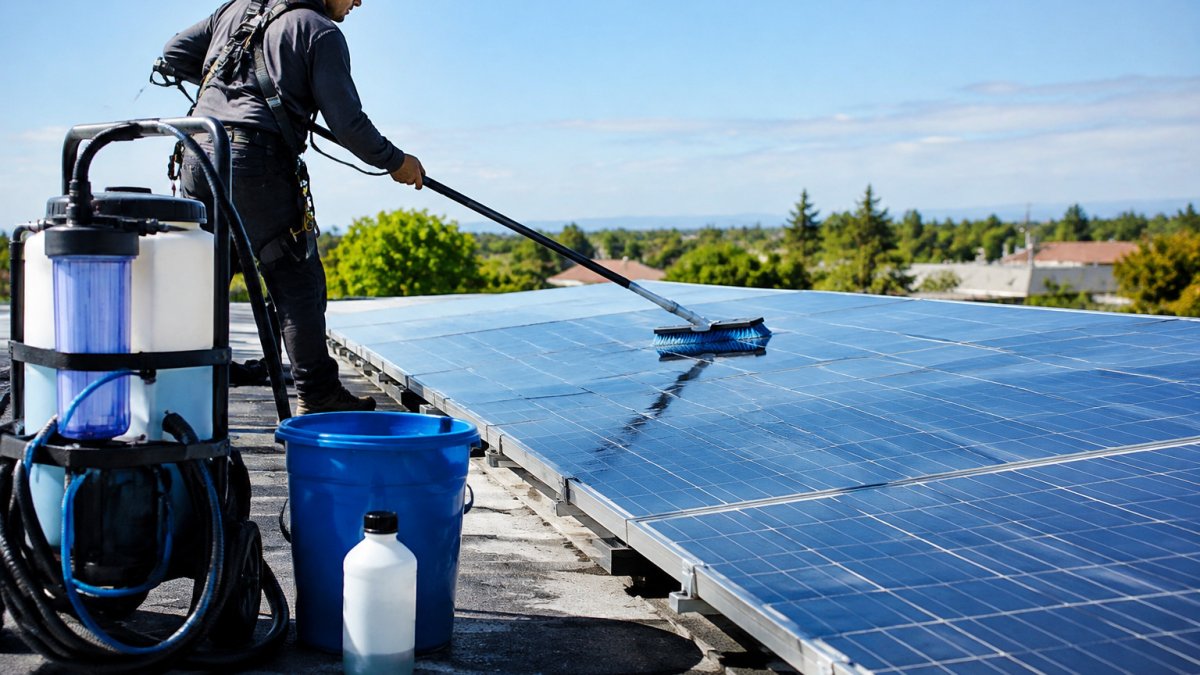
- Deionized or purified water. Tap water leaves mineral spots on solar glass. A small deionization setup or a spot-free rinse system is an upfront cost.
- Soft-bristle pole and brush. A proper solar brush runs from roughly $40 to $150 depending on reach and quality.
- Safety gear. A stable ladder, harness, and non-slip footwear are not optional on a roof.
For a ground-mounted array you can reach from the ground, DIY can be reasonable; for a rooftop array, the safety and equipment math favors hiring a professional.
How to compare a quote against recovered production
Use your monitoring app to estimate kilowatt-hours lost to soiling, then multiply by your utility rate. If a $250 cleaning recovers $300 of production over the next several months, it pays for itself; if it recovers $60, extend the interval.
Red flags in pricing
- Quotes far below the local range. Very low prices often mean pressure washing, tap water, or untrained crews, all of which risk your panels and your warranty.
- No written scope. A reputable provider will tell you what is included: which panels, what water, what method, and whether gutters or roof debris are part of the job.
- Pressure washing as the method. This is the single most common cause of panel damage and warranty disputes.
DIY vs. Professional Solar Panel Cleaning: When to Hire Help
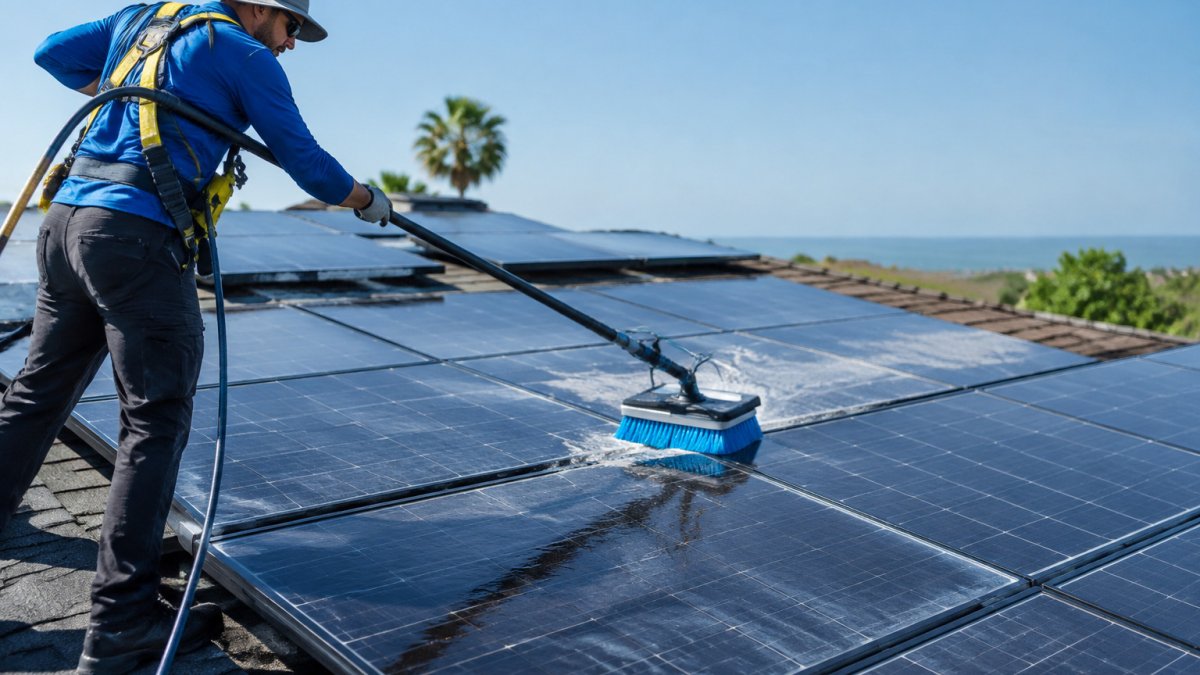
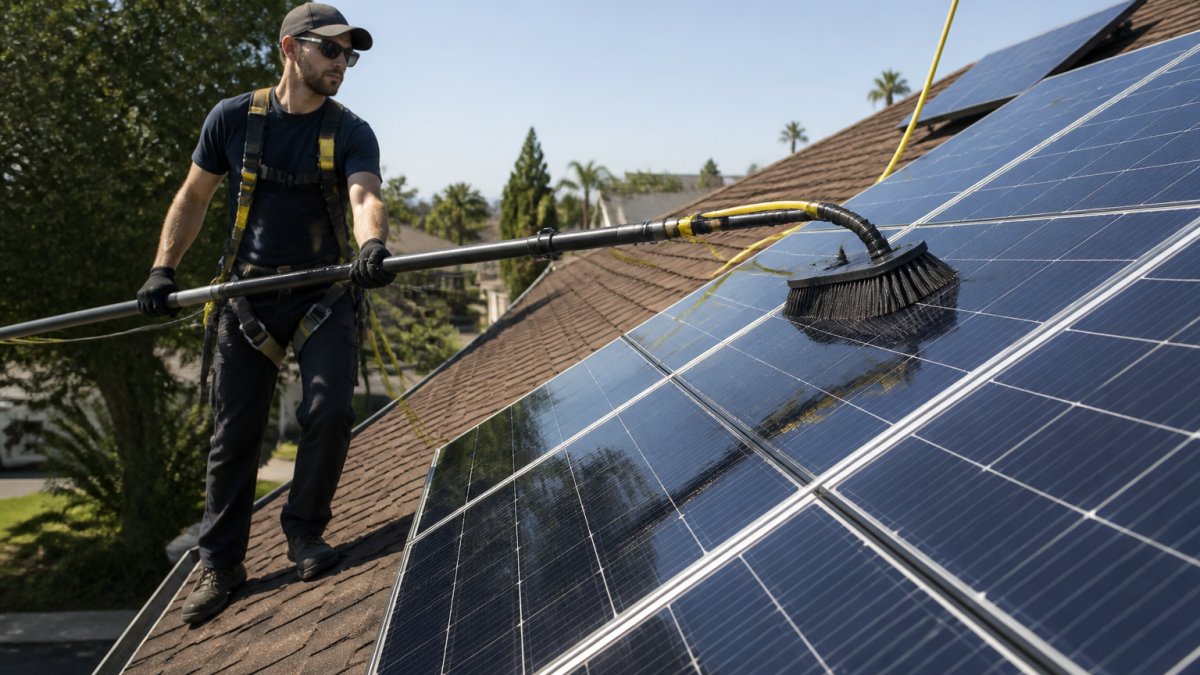
Professional cleaning eliminates these risks: certified technicians have proper safety equipment, know how to access panels safely, use the right materials, and are insured if something goes wrong.
DIY makes sense only if your system is ground-mounted and easily accessible, you're comfortable on a ladder, and you have deionized water. Even then, professional cleaning delivers better results and removes liability.
How to Choose the Right Solar Panel Cleaning Companies
When evaluating residential solar cleaning services, focus on these criteria:
- Certification and training: Look for OSHA-trained crews and certified solar specialists. This indicates serious expertise, not just window washers expanding into solar.
- Cleaning method: Deionized water and soft brushes are the gold standard. Avoid pressure washing or harsh chemicals.
- Insurance and bonding: Verify they're fully insured and bonded. This protects you if damage occurs.
| Evaluation Criterion | What to Look For | Red Flag |
|---|---|---|
| Training & Certification | OSHA-trained, certified solar specialists | Unlicensed crews, no credentials |
| Cleaning Method | Deionized water, soft brushes | Pressure washing, harsh chemicals |
| Insurance & Bonding | Fully insured and bonded | No insurance or bonding mentioned |
| Performance Data | Before-and-after efficiency reports | No performance documentation |
| Warranty Safety | Methods approved by panel manufacturers | Pressure washing or abrasive techniques |
| Customer Reviews | 4.5+ star rating, consistent positive feedback | Low ratings, complaints about damage |
| Pricing | Clear breakdown, competitive rates | Vague pricing, unusually cheap quotes |
Measuring Results: Performance Reports and ROI
The best way to know if cleaning delivered value is to measure output before and after service.
A quality cleaning can recover lost output. If grime had your system at a reduced capacity, a good cleaning might restore it, translating to real energy savings and lower utility bills.
Mr Clean Solar Cleaning provides detailed performance reports with every service, documenting output before cleaning and measuring the recovery afterward, so you can decide on future cleaning intervals.
Keeping your solar panels clean is one of the simplest ways to protect your investment and maximize energy production. Mr Clean Solar Cleaning combines certified expertise, eco-friendly techniques, and detailed performance reporting to keep your panels at peak efficiency. Book a free estimate today and discover how much energy recovery you're leaving on the table.
Frequently Asked Questions
Does cleaning solar panels really improve energy production?
Yes. Dust, dirt, bird droppings, and debris reduce the amount of sunlight reaching panel cells, which directly lowers energy output. Professional cleaning removes these obstructions, restoring panels to near-peak efficiency. Many homeowners report measurable increases in energy production after cleaning, though the exact gain depends on how dirty the panels were and your local climate. Providers that offer before-and-after performance reports can show you the specific output improvement your system experienced.
How often should residential solar panels be cleaned?
Cleaning frequency depends on your location and environment. Homes in dusty areas, near agricultural operations, or where bird activity is high may benefit from cleaning twice yearly. Most residential installations in moderate climates need cleaning annually or every 18 months. If your area experiences regular rain, natural runoff may reduce the need for professional cleaning. Monitoring your system's energy output is the best guide, if production drops unexpectedly, cleaning may be worthwhile.
What is the cost of professional solar panel cleaning?
Professional solar panel cleaning pricing depends on system size, roof complexity, and local service availability. Pricing usually reflects the number of panels and roof access difficulty rather than a per-panel rate. Many providers offer free estimates so you can get an accurate quote for your specific setup. Contact providers directly for current pricing, as costs vary by region and service scope.
Can I clean my solar panels myself, or should I hire a professional?
DIY cleaning is risky. Climbing a roof without proper safety equipment can cause serious injury, and using the wrong cleaning method, such as pressure washing or abrasive materials, can damage panel coatings and void warranties. Professional solar panel cleaning companies use specialized soft-bristle systems, purified deionized water, and OSHA-trained technicians to protect your investment. For most homeowners, professional cleaning is safer, more effective, and worth the cost to avoid costly damage or injury.
What should I look for when choosing solar panel cleaning companies?
Look for providers that are fully insured, bonded, and employ OSHA-trained technicians. Verify they use eco-friendly methods such as deionized water and soft-bristle systems rather than pressure washing or harsh chemicals. Ask whether they provide before-and-after performance reports to document the cleaning's impact. Check customer reviews and ratings, and request references from recent residential jobs. Confirm they carry liability insurance to protect your home in case of accidental damage.