 ultimate-guide
Commercial Solar Farm Maintenance Requirements: A 2026 Guide
Table of Contents
- Why Regular Solar Farm Maintenance Matters
- Building Your Solar Farm O&M Plan Template
- Commercial Solar Panel Cleaning Frequency and Best Practices
- Solar Farm Vegetation Management Best Practices
- Inverter Monitoring and Electrical System Checks
- OSHA Safety Standards for Solar Technicians
- Preventative Maintenance vs. Reactive Strategies
- Regulatory Compliance and Insurance Requirements
- Frequently Asked Questions
Last Updated: September 21, 2026
Why Regular Solar Farm Maintenance Matters
A solar farm's performance depends on consistent upkeep, and understanding solar farm maintenance requirements is essential to protecting your investment. Dust, bird droppings, vegetation overgrowth, and component degradation quietly erode returns.
Solar farm maintenance requirements are the foundation of asset management. Inverter failures, soiling loss, and vegetation encroachment are predictable consequences of deferred care. The question is whether you'll maintain strategically or scramble to fix problems after they've cost you money.
Building Your Solar Farm O&M Plan Template
An effective O&M plan establishes clear schedules, assigns responsibilities, documents everything, and creates accountability. Without one, maintenance becomes reactive instead of preventative.
Core Components of an Effective O&M Plan
Your O&M plan should address five critical areas: cleaning schedules, vegetation management, inverter monitoring, electrical safety inspections, and performance tracking.
Start with a cleaning schedule matching your site's environmental conditions. Coastal areas accumulate salt spray, desert regions see heavy dust, urban sites collect particulates and bird droppings. Document when cleaning occurs, who performed it, and conditions present.
Establish vegetation management protocols for ground-mount systems. Overgrown vegetation blocks access, traps moisture, and creates fire hazards. Define maintenance intervals, acceptable heights, and responsibility. Include seasonal adjustments, spring growth is faster than winter dormancy.
Inverter monitoring forms your early warning system. Specify how frequently inverters are checked, which metrics matter most, and what readings trigger service calls. String monitoring identifies underperforming sections before they become larger problems.
Document electrical safety and racking integrity protocols. Schedule annual electrical reviews and twice-yearly racking assessments to catch corrosion, loose connections, and degradation.
Documentation and Asset Management
Record every maintenance action with date, time, technician name, what was inspected, conditions, findings, and actions taken. This creates a maintenance history that reveals patterns, proves compliance, and protects warranty coverage.
Maintain an asset inventory listing panel count, inverter models and serial numbers, racking specifications, and installation dates. This becomes invaluable for warranty claims and replacement specs.
A structured asset management system tracks degradation patterns, revealing when inverters fail frequently or panel strings underperform. This data informs budget planning and anticipates capital expenses.
Commercial Solar Panel Cleaning Frequency and Best Practices
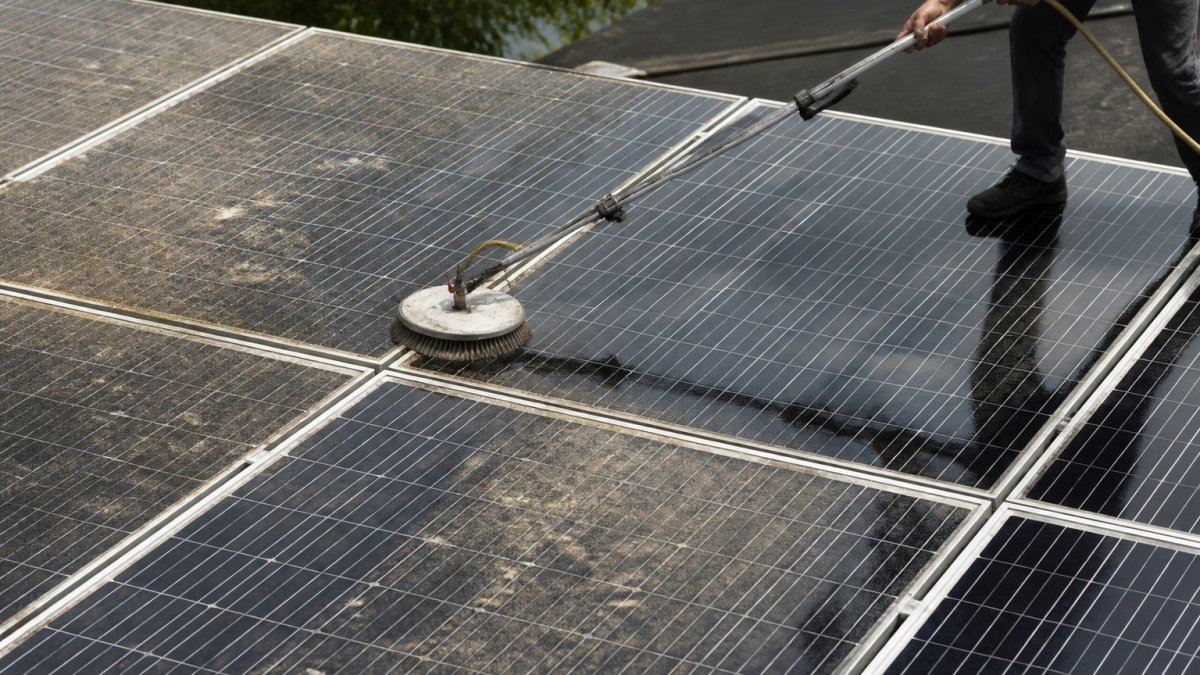
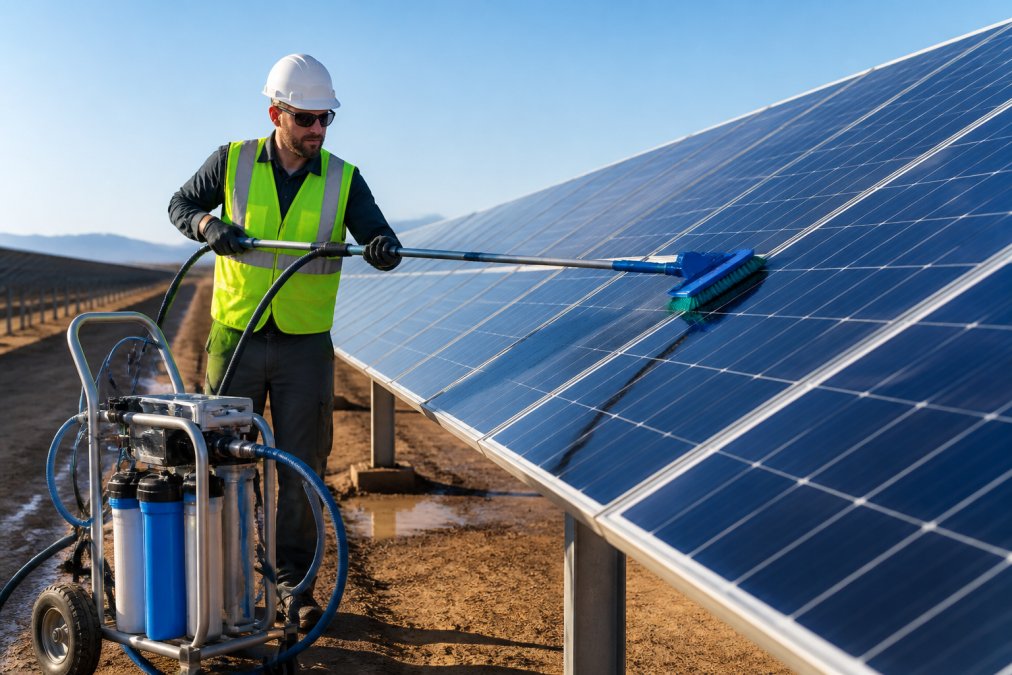
Panel cleanliness directly impacts energy output. Dust, pollen, bird droppings, and soiling create barriers between sunlight and silicon. The question is how often you actually need cleaning.
How Soiling Loss Affects Your Bottom Line
Soiling loss is measurable reduction in energy output from material accumulation. Moderate dust causes 3-5% loss; coastal sites with salt spray or bird activity experience 8-12% loss within weeks, compounding into thousands in lost revenue annually.
Determining Your Optimal Cleaning Schedule
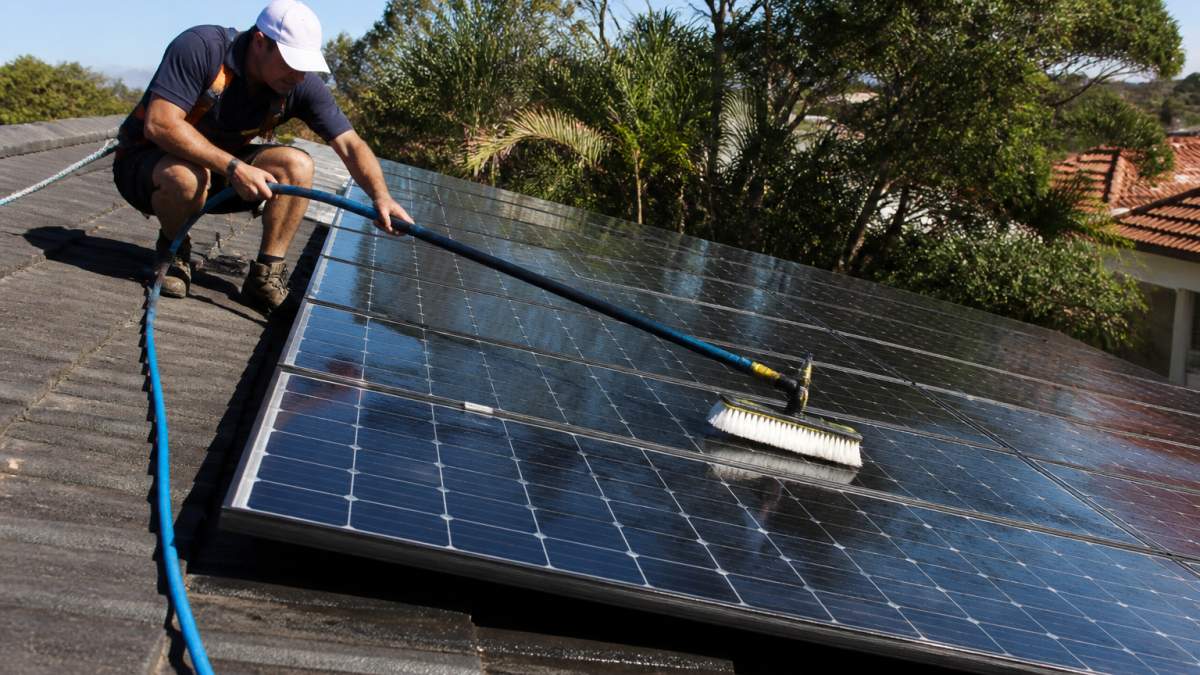
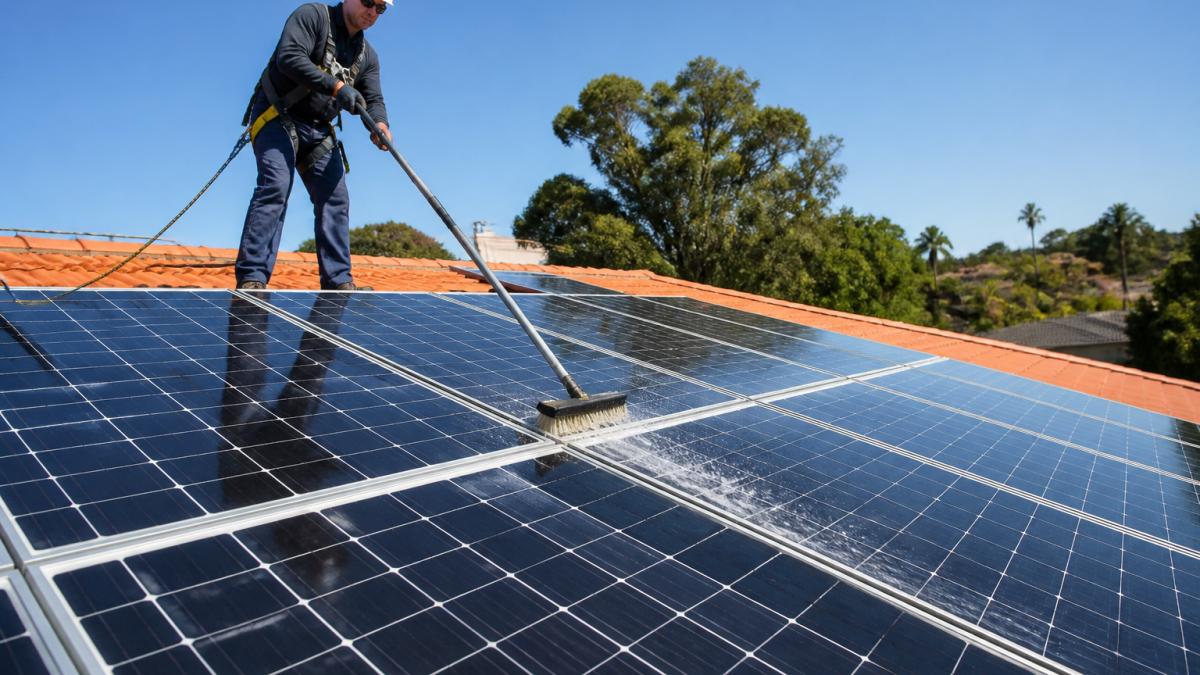
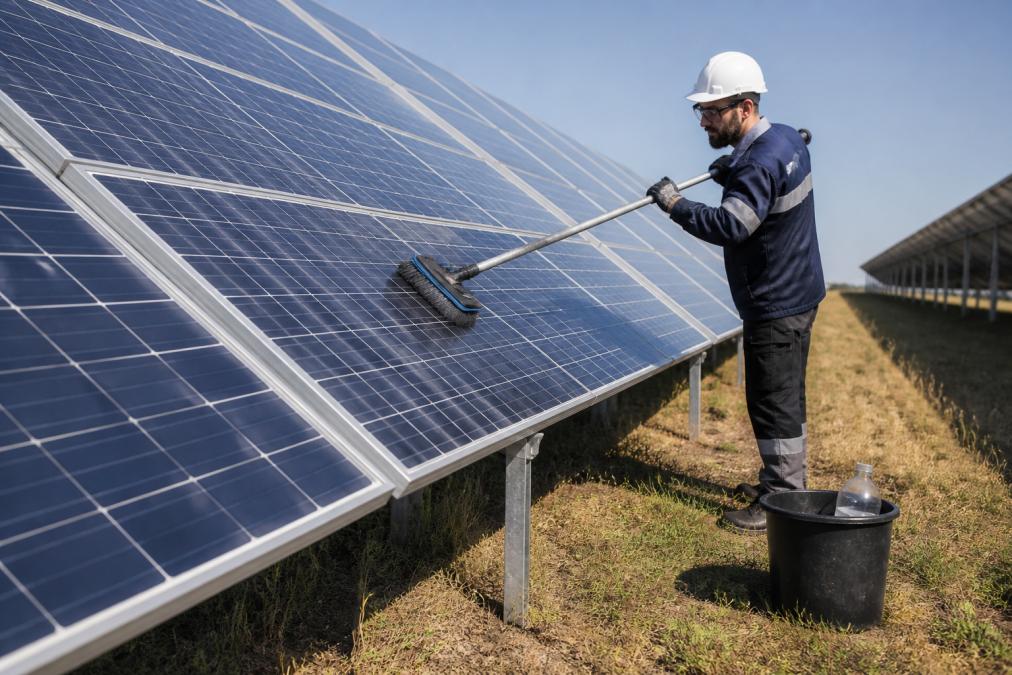
Most commercial farms need cleaning every 6-12 months; dusty or coastal sites need quarterly cleaning; high-rainfall areas may need only annual cleaning.
Solar Farm Vegetation Management Best Practices
Vegetation around a solar farm blocks sunlight, traps moisture that accelerates corrosion, creates fire hazards, and prevents equipment access. Effective management keeps your site safe, accessible, and productive.
Ground-Mount Systems and Site Access
Ground-mount systems are vulnerable to vegetation encroachment. Grass, weeds, and shrubs block air circulation and create moisture pockets. Maintenance technicians need clear site access for inspections, cleaning, and emergencies.
Inverter Monitoring and Electrical System Checks
Inverters operate continuously, converting DC power to AC power. Monitoring their performance prevents catastrophic failures and extends system life.
String Monitoring and Performance Ratio Tracking
String monitoring tracks output from each circuit independently. If one string underperforms, you've identified a specific problem, faulty panel, loose connection, or shading. Without it, underperformance hides in aggregate data.
OSHA Safety Standards for Solar Technicians
Working on solar installations involves electrical hazards, fall risks, and equipment dangers. OSHA regulations exist to protect technicians and ensure quality work.
Electrical Safety and Racking Integrity Inspections
OSHA requires technicians working with electrical equipment be trained in circuit protection, grounding, lockout/tagout procedures, and arc flash hazards. Improper work causes fires, equipment damage, and injury.
Preventative Maintenance vs. Reactive Strategies
Preventative maintenance costs upfront but prevents larger expenses later. Reactive maintenance seems cheaper initially but becomes expensive when systems fail unexpectedly.
Predictive Maintenance and Thermal Imaging
Thermal imaging detects hot spots on panels, internal damage, bypass diode failures, or manufacturing defects that don't show in standard monitoring but cause accelerating degradation. Early detection prevents panel failure.
Cost-Benefit Analysis of O&M Outsourcing
Outsourcing maintenance to specialists like Mr Clean Solar Cleaning can provide specialized expertise, proper equipment, and insurance coverage.
Regulatory Compliance and Insurance Requirements
Maintenance documentation is a legal and financial requirement. Regulatory agencies, insurers, and manufacturers demand proof of proper care. Non-compliance voids warranties, denies insurance claims, and exposes you to liability.
Electrical Code and Safety Compliance
All solar installations must comply with the National Electrical Code (NEC), Article 690. The NEC requires electrical systems be installed, maintained, and inspected by qualified personnel trained in electrical safety and competent to recognize hazards.
Insurance Requirements and Claims Protection
Insurance policies typically include maintenance clauses stating: "The insured shall maintain all equipment in accordance with manufacturer specifications and industry standards. Failure to maintain equipment as specified may void coverage for losses resulting from equipment failure."
Property insurance premiums reflect maintenance practices.
Manufacturer Warranty Compliance
Panel and inverter warranties require documented maintenance: cleaning frequency (typically annual), inspection intervals (annual or biennial), specific procedures (deionized water, no pressure washing), and qualified technicians.
Documentation Requirements and Audit Readiness
Maintenance Logs: Date, time, technician name and credentials, work performed, conditions, findings, and corrective actions. Store digitally with backups and retain for asset life (25+ years).
Regulatory Inspections and Compliance Audits
Utility-scale farms may face inspections from local building departments, state environmental agencies, OSHA, insurance carriers, and PPA counterparties, all requiring proof of maintenance compliance.
Frequently Asked Questions
What are the mandatory maintenance requirements for commercial solar farms?
Commercial solar farms must follow their O&M plan, which typically includes quarterly or bi-annual cleaning, monthly inverter efficiency monitoring, bi-annual electrical safety inspections, vegetation management around ground-mount systems, and thermal imaging to detect component degradation. Regulatory compliance with OSHA safety standards, insurance requirements, and performance monitoring through data logging are also mandatory. The specific frequency depends on your site's environmental conditions and soiling loss patterns.
How often should commercial solar panels be cleaned for optimal efficiency?
Commercial solar panel cleaning frequency depends on your location's environmental impact and soiling loss rates. Most utility-scale installations benefit from quarterly cleaning, while some high-dust or bird-dropping-heavy sites require bi-monthly service. The 20% rule suggests cleaning when soiling loss reaches 20% of expected output. Remote monitoring systems and data logging help track performance ratio changes, allowing you to determine your optimal cleaning schedule rather than following a one-size-fits-all approach.
What does a standard solar farm O&M plan template include?
A comprehensive solar farm O&M plan template covers preventative maintenance schedules, array inspection protocols, inverter monitoring procedures, string monitoring and fault detection methods, vegetation management guidelines for ground-mount systems, electrical safety checklists, racking integrity assessments, thermal imaging protocols, data logging requirements, and performance monitoring benchmarks. It should also include asset management documentation, site access procedures, component degradation tracking, system downtime response procedures, and end-of-life decommissioning preparation steps.
How do I know if professional cleaning will actually improve my solar farm's output?
Professional solar cleaning providers should deliver detailed performance reports showing before-and-after data. Performance monitoring through data logging and remote monitoring systems tracks your system's performance ratio and output. Many commercial operations see significant efficiency improvements after professional cleaning, depending on soiling severity. Request reports that document specific output gains post-cleaning so you can measure ROI against cleaning costs and make informed decisions about your preventative maintenance strategy.
What are the safety and OSHA compliance requirements for solar farm maintenance?
OSHA safety standards for solar technicians require proper fall protection on elevated installations, electrical safety training for high-voltage systems, personal protective equipment, and safe handling of deionized water systems. Technicians must understand racking integrity, electrical hazards, and thermal imaging equipment operation. Your O&M plan must document all safety procedures, maintenance schedules, and incident reporting. Insurance requirements typically mandate that all maintenance personnel be certified and fully insured, with documented training in photovoltaic system safety.
Is it more cost-effective to outsource solar farm maintenance or handle it in-house?
Outsourcing O&M can provide specialized providers with certified technicians, proper equipment (like thermal imaging and deionized water systems), and established preventative maintenance protocols. In-house teams require training, equipment investment, and ongoing certification. A cost-benefit analysis should compare your site's size, environmental conditions, and expected soiling loss against outsourcing rates. Many commercial operations find that outsourced preventative maintenance can reduce system downtime and component degradation, potentially improving overall ROI despite service fees.
How does vegetation management affect solar farm performance and maintenance schedules?
Vegetation encroachment on ground-mount systems causes shading, reduces performance ratio, and creates maintenance challenges. Best practices include establishing clear site access around arrays, managing grass and weeds to prevent moisture retention near racking, and removing branches or trees that cast shadows. Proper vegetation management reduces fault detection issues, extends component lifespan, and improves asset management efficiency. Environmental impact assessments should guide your preventative strategy, balancing ecological considerations with system performance needs.