 ultimate-guide
Solar Panel Efficiency Degradation: Causes and Fixes
Last Updated: October 28, 2026
Quick Summary
Solar panel efficiency degradation causes include UV exposure, heat and thermal stress, moisture intrusion, encapsulant discoloration, corrosion, and manufacturing defects or physical damage. Gradual loss usually reflects normal aging, while a sudden drop points to a fault.
- Mainstream panels commonly lose roughly 0.5% to 0.8% of output per year.
- Higher operating temperatures can temporarily reduce voltage, and the loss reverses as the panel cools.
- Moisture can corrode metal contacts and cause delamination when water reaches the cell layer.
- A sharp, sudden output drop suggests a physical or installation defect rather than normal aging.
- Clean and check for shading or soiling before assuming permanent module degradation.
Table of Contents
- What Solar Panel Degradation Is and How Much to Expect
- UV Exposure, Heat, and Thermal Stress
- Moisture Intrusion, Encapsulant Discoloration, and Corrosion
- Manufacturing Defects and Physical Damage to Panels
- Why Solar Panels Produce Less Electricity: Soiling, Shading, and Degradation Compared
- Diagnosing Degradation Versus Temporary Underperformance
- Keeping Panels Clean and Maintained to Limit Losses
- Booking a Performance Check for Your System
- Frequently Asked Questions
What Solar Panel Degradation Is and How Much to Expect
Solar panel degradation is the gradual, permanent decline in a module's ability to convert sunlight into electricity, and understanding its solar panel efficiency degradation causes is the first step toward protecting your investment. Most crystalline silicon panels lose a small share of their rated output each year, and that loss compounds over the life of the system. Understanding the difference between normal aging and a fault is the first step toward protecting your investment.
Homeowners may assume any drop in production means something is broken. In some cases, the cause is surface contamination rather than the panel itself.
Industry estimates commonly place annual degradation for mainstream panels in the range of roughly 0.5% to 0.8% per year, though actual rates depend on the technology, climate, and installation quality. Use these figures as a planning baseline, not a guarantee, and check your module's datasheet and warranty terms for the manufacturer's stated performance curve.
UV Exposure, Heat, and Thermal Stress
Ultraviolet radiation and heat are two of the most persistent solar panel efficiency degradation causes acting on a module. Over years of daily exposure, UV can break down the polymers used in the encapsulant and backsheet, while repeated heating and cooling cycles create mechanical stress between layers of different materials.
Higher operating temperatures can reduce voltage output, so a panel running hot may produce less power even when it is healthy (Solar Photovoltaic Performance and Efficiency Basics). This temperature-related loss is temporary and reverses as the panel cools.
Watch out: homeowners sometimes assume a hot panel is a failing one. Compare output on cool mornings against hot afternoons before drawing conclusions about permanent damage.
Moisture Intrusion, Encapsulant Discoloration, and Corrosion
Moisture is a slower but more serious threat. If water reaches the cell layer through a compromised seal or backsheet, it can accelerate corrosion of metal contacts and cause delamination, where layers separate and trap air or moisture.
Encapsulant discoloration, often seen as browning or yellowing, is a common visible sign of aging. It reduces the amount of light reaching the cells, so the loss is real even though the panel still looks largely intact. Discoloration tends to progress over time and is a reason to have a professional inspect older systems.
Manufacturing Defects and Physical Damage to Panels
Not all degradation is simply age. Defects introduced before the panel ever produces power, during cell manufacturing, module assembly, shipping, or installation, can sit dormant for years and then grow into measurable output loss. The key to understanding them is to map each defect to the component it damages, because the component determines both the symptom and the fix.
Cells and interconnects. Microcracks are hairline fractures in the silicon cell that often originate during handling, framing, or improper mounting. They are usually invisible to the naked eye and may not reduce output immediately, but thermal cycling causes them to propagate. As a crack crosses a busbar or finger, the cell loses active area, and the affected cell can become a hot spot that drags down the whole string. Solder-joint fatigue on the interconnect ribbons is a related failure: repeated heating and cooling cracks the joints, raising series resistance and shaving output gradually rather than suddenly.
Encapsulant and backsheet. Manufacturing defects in lamination, trapped air, incomplete cross-linking, or contamination, create pathways for moisture and can lead to bubbles, delamination, or premature yellowing. A backsheet with pinholes or poor UV resistance will crack and expose the encapsulant, which is often the first step toward corrosion of the cell metallization.
Glass and frame. Hail, falling debris, and improper clamping during installation can chip or crack the front glass. A cracked glass pane is not just a cosmetic issue: it can admit moisture. Frame damage or inadequate racking ventilation raises cell operating temperature, which accelerates every other degradation mode.
Junction box and connectors. Poorly sealed junction boxes, loose MC4 connectors, and undersized bypass diodes are common installation-quality failures. A failed bypass diode can take an entire substring offline, and a loose connector creates a high-resistance joint that heats up and can arc. These faults often look like sudden, sharp output drops rather than the gradual curve of normal aging.
A visual inspection alone may not reveal microcracks or solder fatigue. Documenting findings can help when reviewing manufacturer warranty terms.
The article maps each defect to the component it damages, along with its typical symptom.
| Component | Defect | Typical symptom |
|---|---|---|
| Cells and interconnects | Microcracks from handling or mounting | Hot spots; cell loses active area as cracks spread |
| Cells and interconnects | Solder-joint fatigue | Gradual output loss from higher series resistance |
| Encapsulant and backsheet | Trapped air or poor cross-linking in lamination | Bubbles, delamination, or yellowing; moisture pathways |
| Encapsulant and backsheet | Pinholes or poor UV resistance in backsheet | Cracking that exposes encapsulant and cell metallization |
| Glass and frame | Hail, debris, or improper clamping | Chipped or cracked glass that can admit moisture |
| Junction box and connectors | Poor seals, loose MC4 connectors, failed bypass diodes | Sudden, sharp output drops rather than gradual decline |
Why Solar Panels Produce Less Electricity: Soiling, Shading, and Degradation Compared
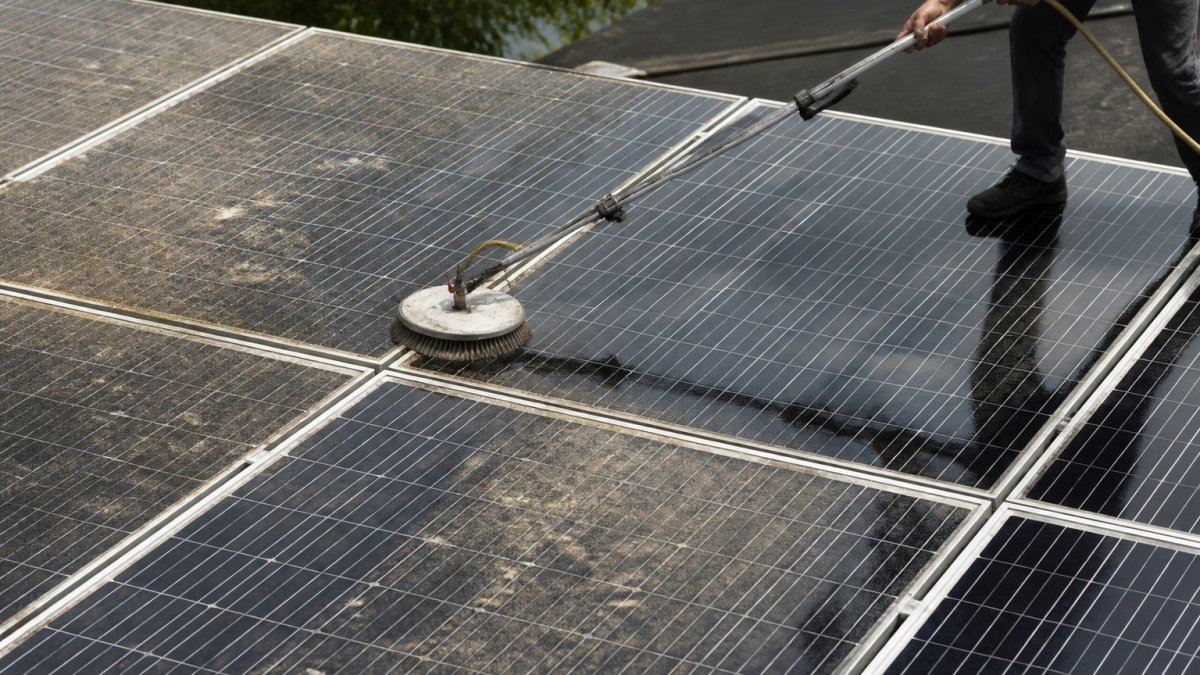
Production loss has several distinct causes, and they call for different responses. Soiling from dust, pollen, and bird droppings can reduce output.
Shading from nearby trees, vents, or neighboring structures can reduce output disproportionately because a single shaded cell can limit a whole string. Mineral buildup from hard water can also leave films that reduce light transmission.
True degradation is permanent and gradual. Soiling and shading are reversible or preventable. Separating these causes before spending money on repairs is the most cost-effective approach.
Diagnosing Degradation Versus Temporary Underperformance
Permanent module degradation is only one of several possible explanations for a production drop. A structured diagnostic workflow can help distinguish temporary underperformance from loss of module performance.
Step 1: Establish the baseline from monitoring data. Compare production for the current period against the same months in prior years. Weather can affect output without a panel fault. A gradual year-over-year decline may be consistent with normal degradation. A step change, output dropping on a specific date and staying down, can have several causes, including a fault or a new shade source.
Step 2: Rule out the reversible causes first. A maintenance checklist covering dirt, shading, and damage items can help you inspect each one. Possible causes to consider include soiling from dust, pollen, or bird droppings; new shade from tree growth, a new vent, or a neighboring structure; snow or debris on the array; and inverter error codes or fault logs.
Step 3: Compare strings and modules. If your monitoring reports per-string or per-module data, comparing production across strings under similar conditions may help identify differences in output.
Step 4: Electrical testing at the module level. Electrical measurements can be compared against a module datasheet, but interpreting results may require qualified technical assessment.
Step 5: Distinguish permanent from temporary. Temperature-related voltage loss reverses as the panel cools. Seasonal sun-angle changes, soiling, and shading can also affect output.
Documenting monitoring data, inspection notes, and test results may be useful when reviewing warranty terms.
Keeping Panels Clean and Maintained to Limit Losses
Regular cleaning can address surface buildup. How often you clean depends on your location and season.
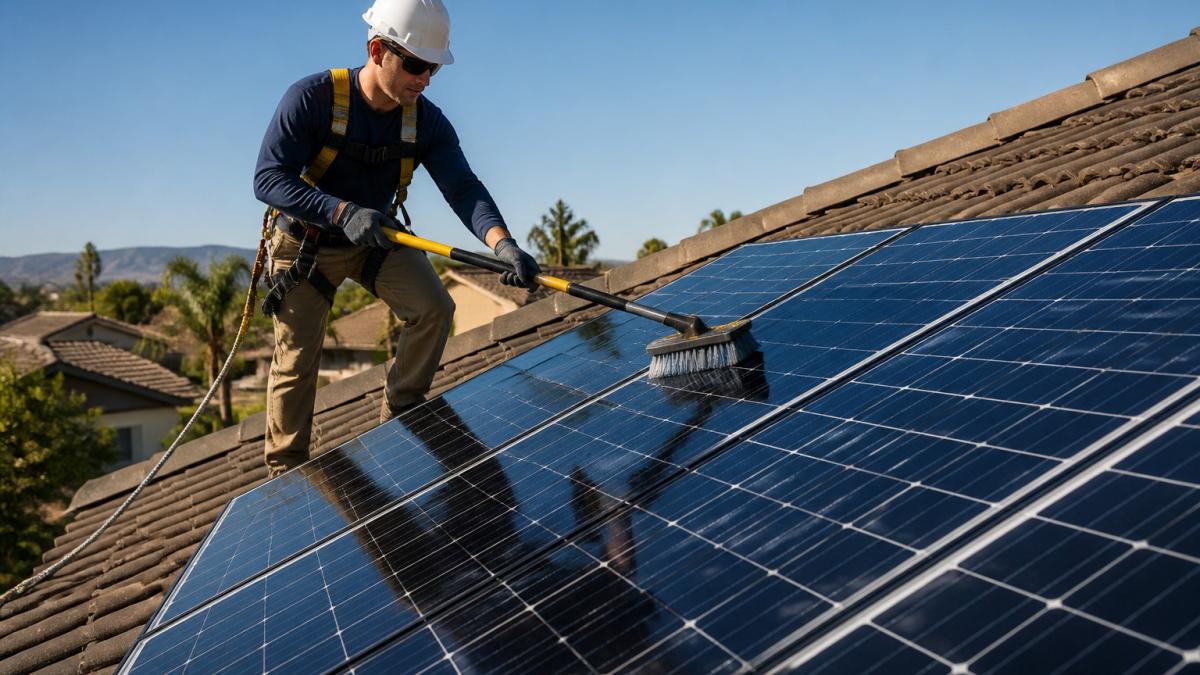
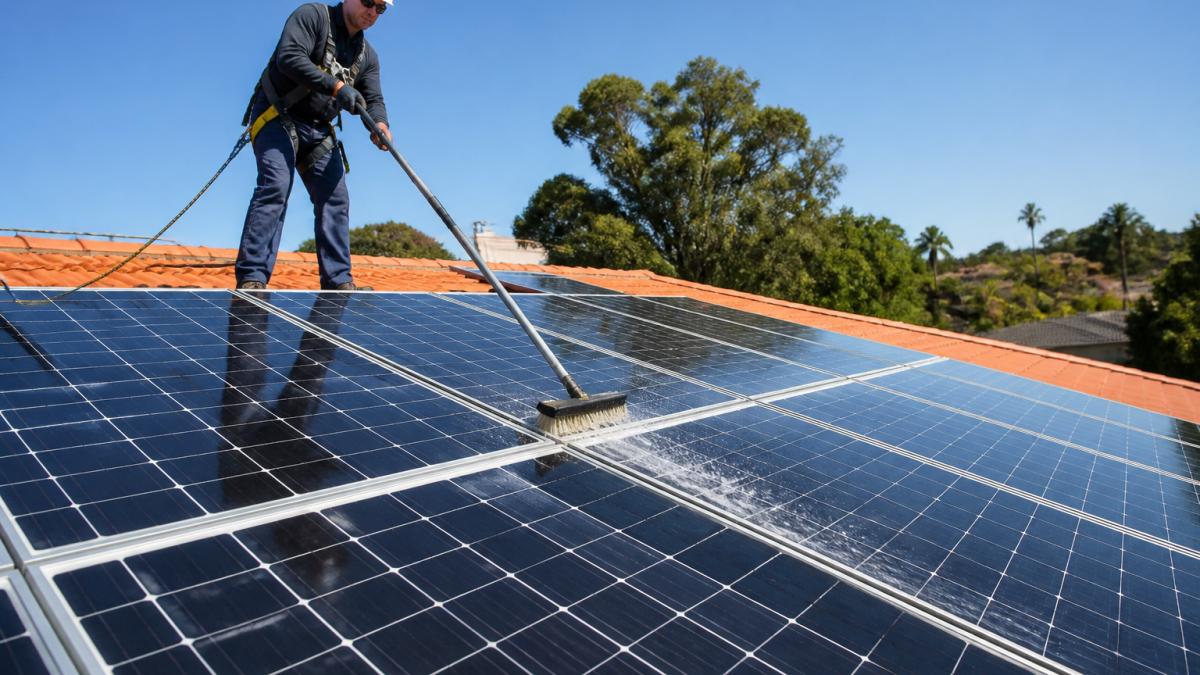
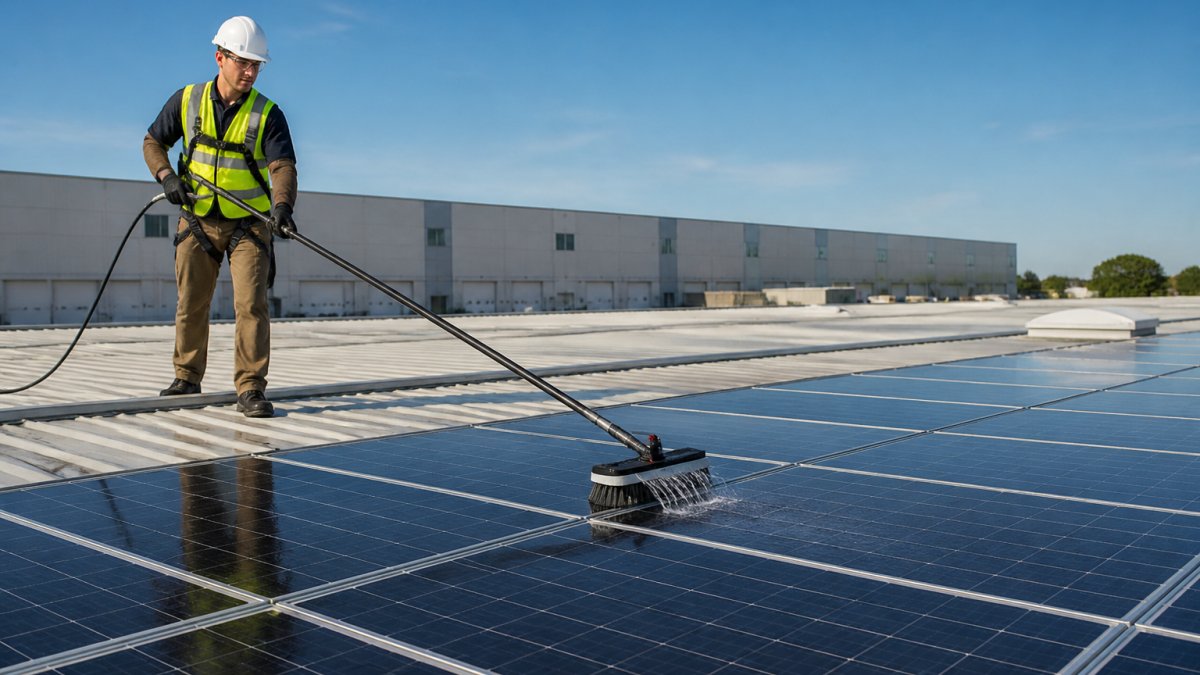
Use deionized water and soft-bristle equipment rather than abrasive scrubbers. Professional inspections can help identify visible issues.
Booking a Performance Check for Your System
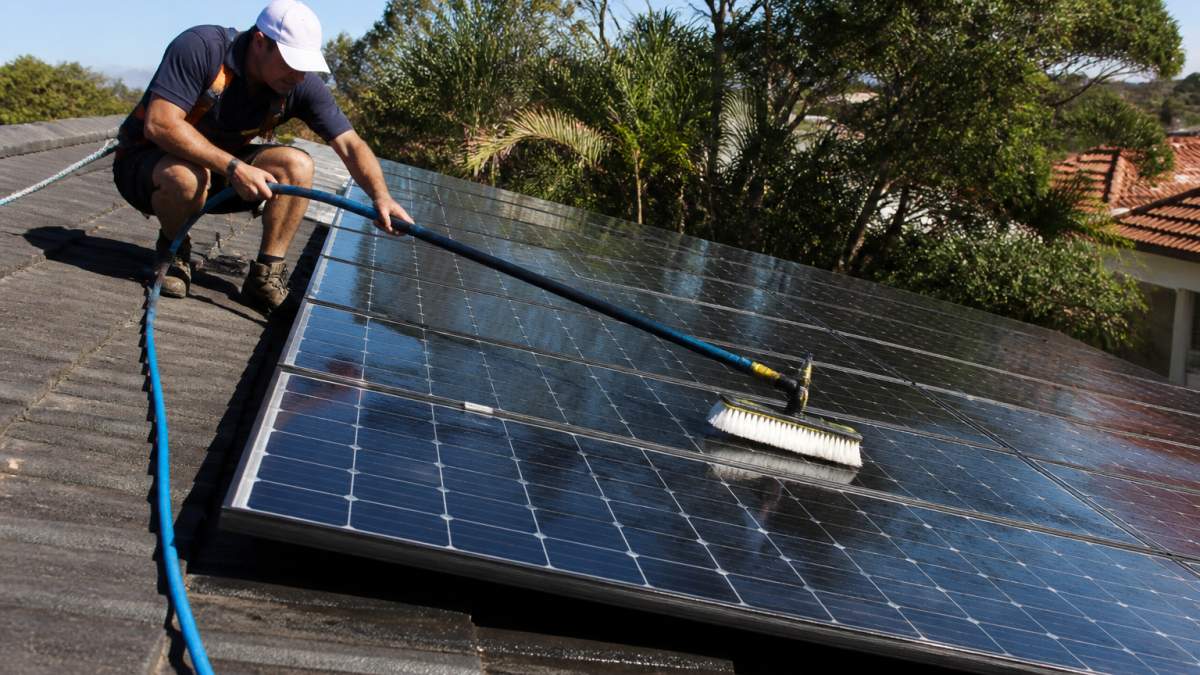
If your output has dropped and you are not sure why, cleaning may address surface buildup. At Mr Clean Solar Cleaning, we clean solar panels using purified deionized water and specialized soft-bristle systems.
Get started with Mr Clean Solar Cleaning to request a quote for solar panel cleaning.
Frequently Asked Questions
Why do solar panels degrade?
Solar panels degrade because of long-term exposure to ultraviolet light, heat cycling, moisture, and mechanical stress. Over time these forces can discolor the encapsulant, corrode metal contacts, and cause microcracks in the cells. Each effect lowers the amount of sunlight the panel converts into electricity. Degradation is gradual, which is why it often goes unnoticed until monitoring data shows a steady decline in output.
How much efficiency do solar panels lose each year?
Most crystalline silicon modules lose a fraction of a percent of output per year, and manufacturers typically publish annual degradation rates in their warranty documents. First-year losses are usually somewhat higher than later years. Your actual rate depends on the module technology, the local climate, and installation quality. The most reliable way to know your system's rate is to compare current production against the original system design and historical data from your monitoring platform.
How can I tell whether my solar panels are degrading or just need cleaning?
Start by checking whether output drops are temporary. Dust, pollen, and bird droppings can reduce output. Permanent degradation may show up as a slow, steady decline that persists after cleaning. Comparing production over time and reviewing inverter error logs may help assess changes in output.
Can solar panel degradation be prevented?
Degradation cannot be eliminated. Choosing modules with strong warranties and good climate ratings, correct installation, and adequate airflow and sound wiring may help limit some contributing factors. Keeping vegetation trimmed can prevent shading.
Can dirt, dust, or bird droppings reduce solar panel output?
Yes. Dirt, dust, pollen, and bird droppings can block sunlight from reaching the cells and reduce output. Professional cleaning with purified deionized water and specialized soft-bristle systems is available from Mr Clean Solar Cleaning.
Why are my solar panels producing less?
Common causes include soiling, shading from trees or new structures, inverter faults, wiring or connector problems, and panel degradation. Start with the fastest checks: look for visible dirt or droppings, confirm no new shade has appeared, and review inverter alerts. If those are clear and output stays low, further technical assessment may be needed. Matching the drop to the season and weather also helps separate temporary losses from lasting problems.
What is the biggest disadvantage of solar panels?
The most cited disadvantage is that output depends on sunlight, so production drops at night, during storms, and in winter months. Upfront installation cost and the need for adequate roof space or land are also common concerns. Panels also degrade over time and need maintenance to hold their output. Costs and returns vary with location, system size, and incentives, so get a site-specific estimate before deciding.