 ultimate-guide
Solar Panel Maintenance for Homeowners: A Complete Guide
Table of Contents
- Why Solar Panel Maintenance Matters
- How Often Should Solar Panels Be Cleaned
- How to Clean Solar Panels Safely
- Solar Panel Maintenance Checklist
- Monitoring Performance and Spotting Problems
- Solar Panel Cleaning Cost and Professional vs. DIY
- Maintenance by Climate and Roof Type
- Protecting Your Warranty and Investment
- Frequently Asked Questions
Last Updated: October 7, 2026
Why Solar Panel Maintenance Matters
Your solar system is one of the largest investments you'll make in your home's energy future, and without proper maintenance it degrades faster than you'd expect.
This is where solar panel maintenance becomes critical. At Mr Clean Solar Cleaning, we consistently find that panels perform at their peak only with proper care.
The good news: maintenance doesn't require complex expertise. Understanding the fundamentals of solar panel maintenance for homeowners helps you protect your system, maintain your warranty, and keep energy bills low.
How Often Should Solar Panels Be Cleaned
Most homeowners should clean their solar panels at least twice per year, typically in spring and fall, to address seasonal debris and prepare for peak production.
Areas with frequent dust storms, high pollen, or large bird populations may need quarterly cleanings, while regions with regular rainfall might need only one annually since rain removes lighter debris.
Climate plays a major role: coastal salt spray, desert dust storms, agricultural pollen, and urban industrial pollution all call for more regular cleaning cycles.
How to Clean Solar Panels Safely
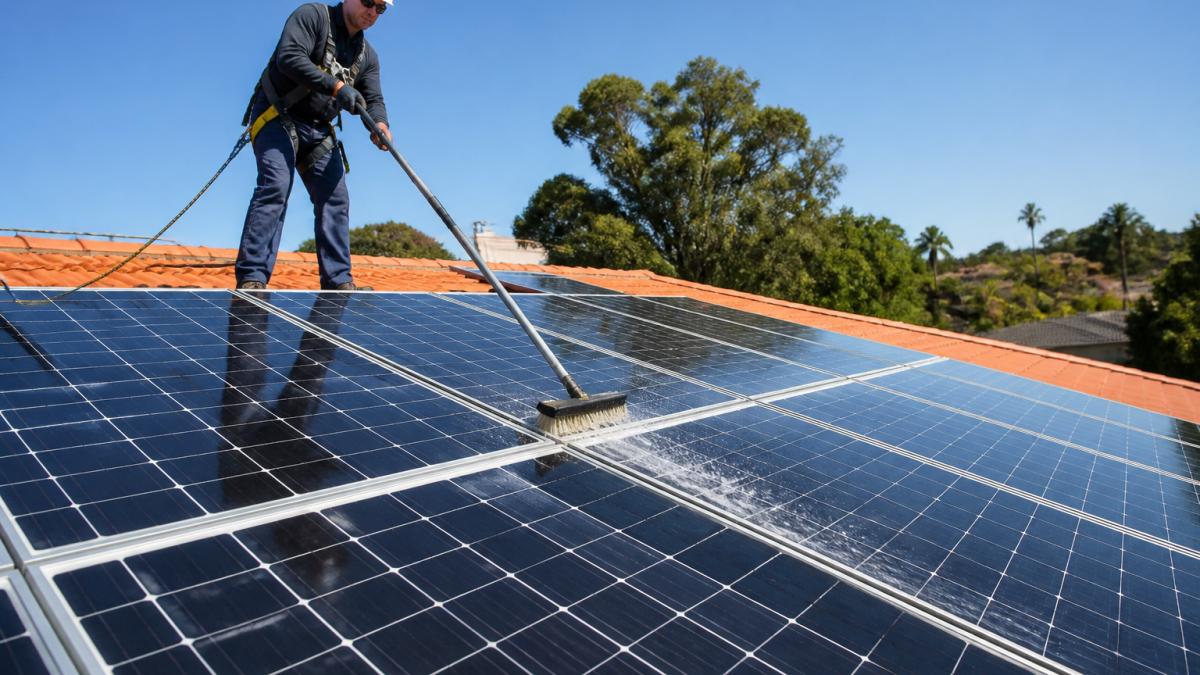
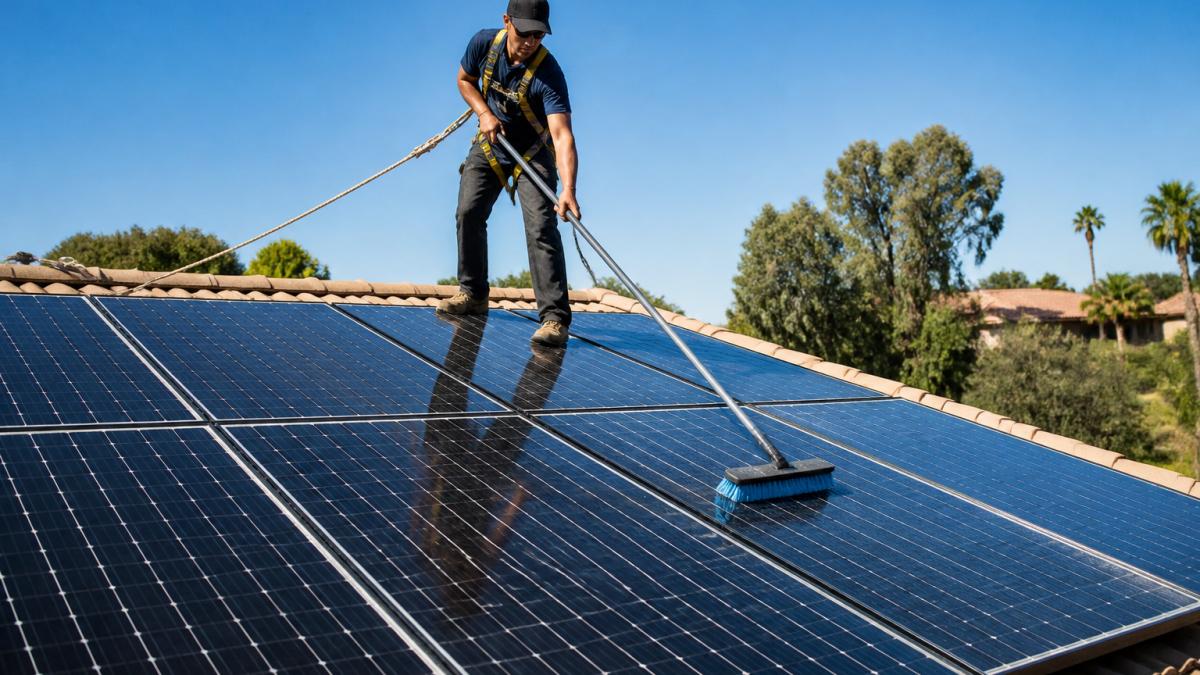
Cleaning solar panels yourself is possible, but safety comes first. Falls from roofs are among the leading causes of serious home injuries, so honestly assess your comfort with heights before climbing up.
Safe Tools and Water Quality
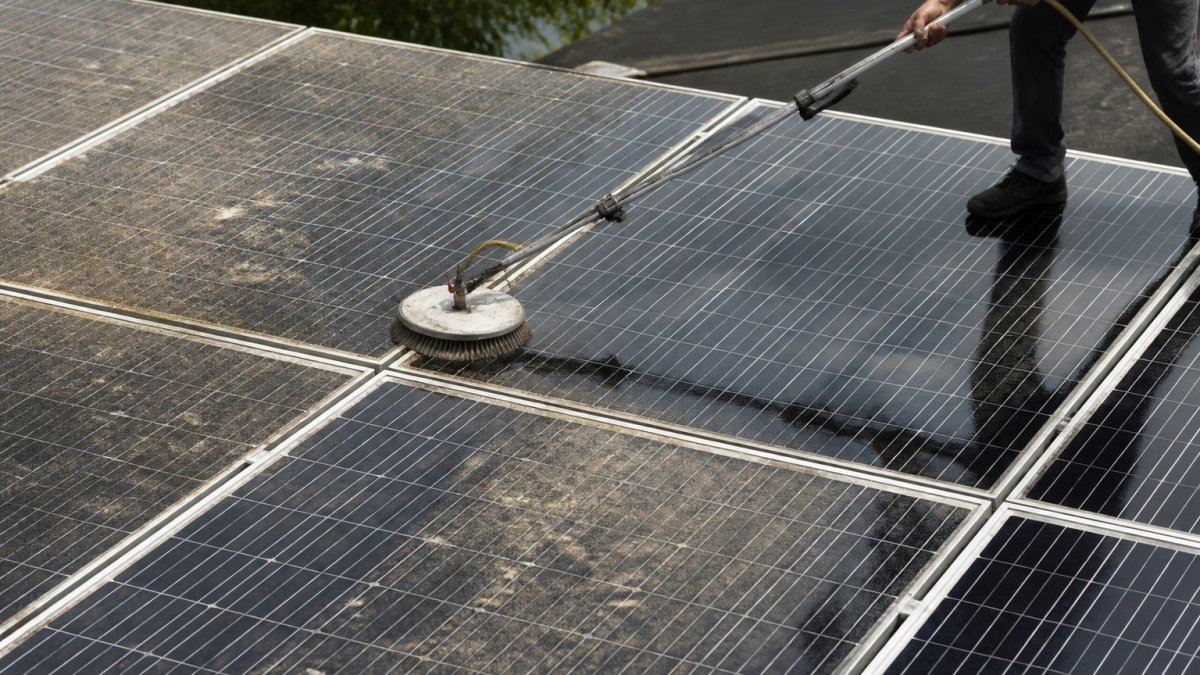
The tools matter as much as the method.
Water quality matters too. Many professional solar panel maintenance services use ultra-pure deionized water for this reason.
Your cleaning setup should include:
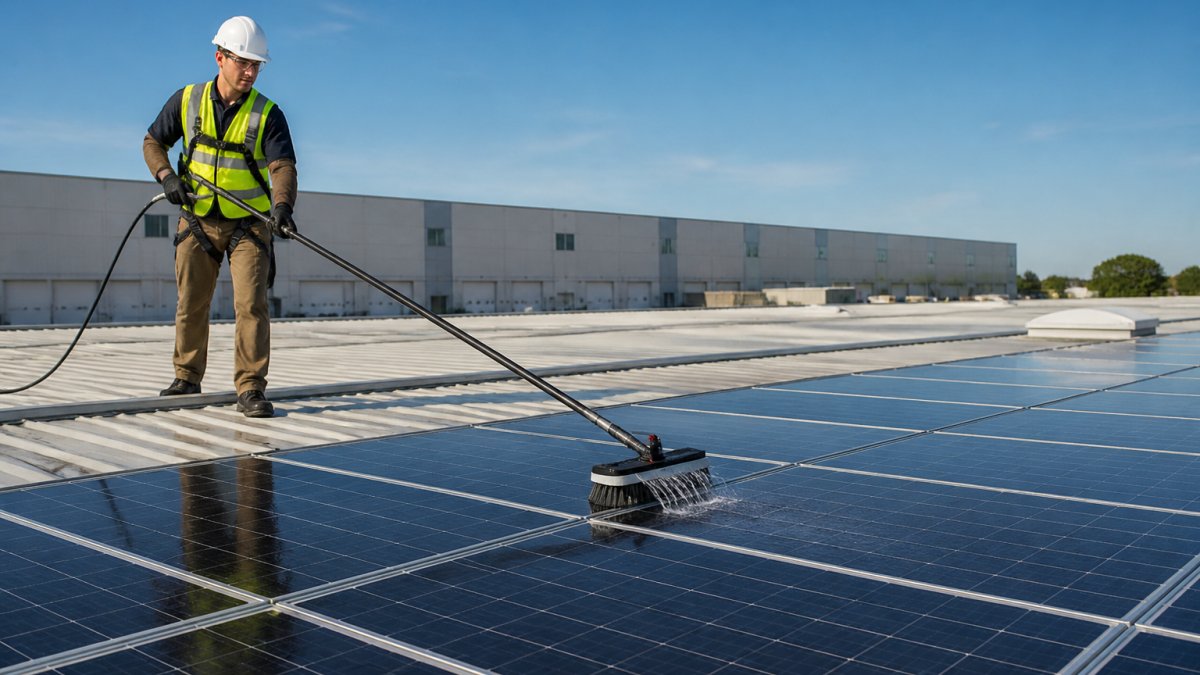
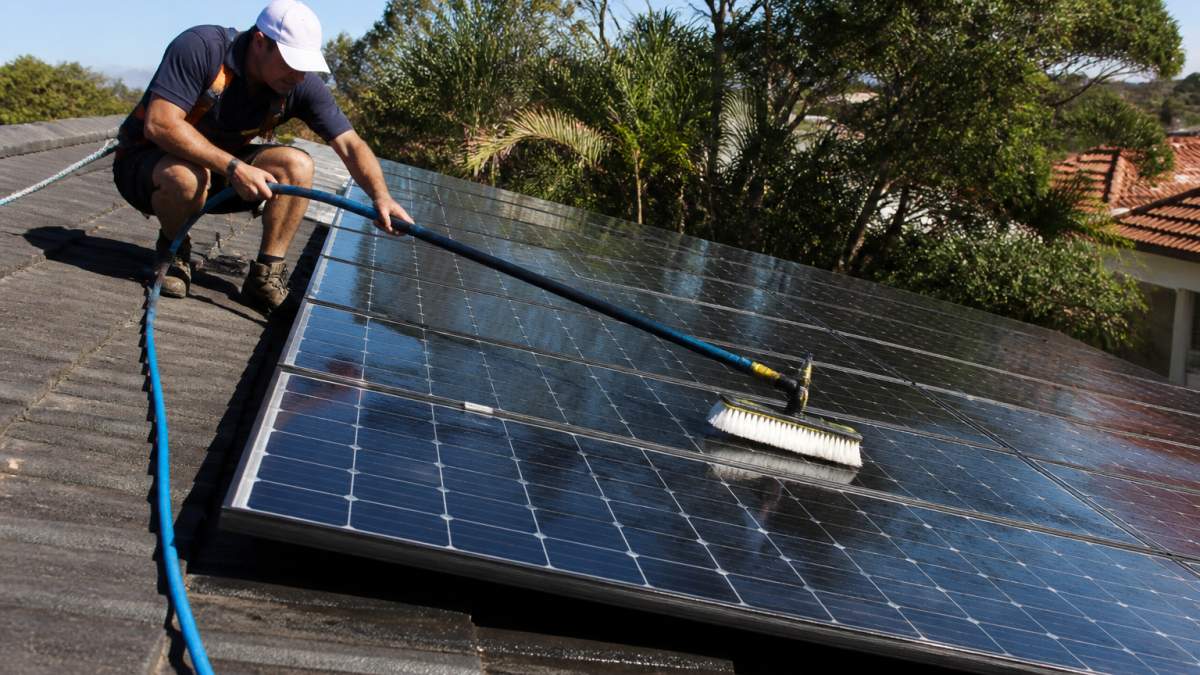
- Soft-bristle brush or mop designed for solar panels
- Purified or deionized water
- Mild, non-abrasive soap if needed
- Safety equipment: harness, rope, non-slip footwear
- Bucket or spray system for water application
What to Avoid
High-pressure washing is the most common mistake homeowners make. Pressure washers can damage edge seals, force water into electrical connections, and scratch the glass, risks that far outweigh any cleaning benefit.
Chemical cleaners and harsh solvents are equally problematic, degrading sealants, discoloring frames, and leaving residues that affect performance. Plain water and mild soap are all your panels need.
Never use abrasive materials like steel wool, scouring pads, or rough cloths.
Solar Panel Maintenance Checklist
Cleaning is only one part of solar panel maintenance for homeowners. A solar array is a system, panels, inverter or microinverters, wiring and conduit, rapid shutdown devices, mounting hardware, monitoring hardware, and any battery, and each component has its own failure modes and inspection cadence.
Monthly: Visual and Performance Checks
- Read your inverter or monitoring app and record production for the month
- Compare that number to the same month last year, not last month, seasonality swings output far more than dirt does
- Walk the array (from the ground if roof-mounted) and look for new shade, debris, droppings, or cracked glass
- Confirm the inverter display or app shows no active fault codes
- Check that no new trees, satellite dishes, or rooftop additions are casting shade
Quarterly: Hardware and Electrical Checks
- Inspect visible conduit, junction boxes, and cable ties for cracking, UV damage, or sagging
- Look at the mounting rails and clamps for rust, loose bolts, or gaps between the panel frame and the roof
- Check the roof surface under and around the array for staining, which can indicate a mounting or flashing leak
- Verify the rapid shutdown label and disconnect are still legible and unobstructed
- If you have a battery, check its state of charge and any error indicators in its app
Annually: Professional Inspection
- Have a licensed electrician or certified solar technician torque-check mounting hardware and inspect DC/AC connections
- Request a thermal imaging scan to catch hot spots, bypass diode failures, and micro-cracks invisible to the eye
- Ask for an insulation resistance or IV-curve test if production has drifted
- Confirm the grounding and rapid shutdown system still meet current code
- Get a written report you can file for warranty purposes
Recordkeeping That Actually Protects You
Warranty disputes and insurance claims rarely hinge on whether you cleaned your panels, they hinge on whether you can prove you maintained the system. Keep a log with:
- Date and type of each task (cleaning, visual check, professional inspection)
- Production readings from your monitoring app, with the date and weather noted
- Photos of the array after each cleaning and after any storm
- Names, license numbers, and invoices from any contractor who worked on the system
- A copy of the original installation paperwork, equipment model numbers, and warranty documents
A shared cloud folder or paper binder both work; what matters is that the record exists and is dated. Most manufacturers require proof of proper maintenance before honoring a claim.
| Task | Frequency | Who | What to Record |
|---|---|---|---|
| Production reading | Monthly | Homeowner | kWh, date, weather |
| Visual debris and shade check | Monthly | Homeowner | Photos, notes |
| Wiring, conduit, mounting check | Quarterly | Homeowner | Photos, any anomalies |
| Inverter / battery status | Quarterly | Homeowner | Fault codes, state of charge |
| Professional electrical and structural inspection | Annually | Licensed pro | Written report, invoice |
| Deep cleaning | 1-2x yearly, or as needed | Homeowner or pro | Before/after photos, production delta |
Monitoring Performance and Spotting Problems
Your inverter is your window into system health. Most modern inverters display real-time production and alert you to problems, so check readings monthly against historical data, a sudden drop, especially on clear days, signals trouble.
Many homeowners don't realize monitoring is part of solar panel maintenance: performance data tells you whether cleaning is working, whether weather damage occurred, or whether electrical components are failing.
Common warning signs include:
- Consistent underperformance relative to weather conditions
- Visible cracks or delamination on panel surfaces
- Water pooling around the mounting system
- Inverter error codes or frequent shutdowns
- Unexplained gaps between your energy output and your utility bill
Solar Panel Cleaning Cost and Professional vs. DIY
The right answer depends less on money than on three questions: can you safely reach the array, is the system simple enough to inspect without specialized tools, and does your warranty require professional service?
Typical Cost Ranges
Professional solar panel cleaning for a typical residential array generally runs in the low hundreds of dollars per visit, driven by system size, roof pitch and height, accessibility, and buildup severity. Price-raising add-ons include:
- Multi-story or steep-pitch roofs that require fall-protection setup
- Heavy bird droppings, tree sap, or hard-water spotting that needs a second pass
- Detached garages, ground mounts, or arrays split across multiple roof planes
- Travel distance if you are outside a provider's normal service radius
Annual professional inspections, the electrical, structural, and thermal-imaging work in the checklist above, are quoted separately and cost more, since they involve a licensed electrician and diagnostic equipment.
DIY cleaning costs far less in cash but carries hidden costs: ladder and harness equipment, purified or deionized water, the time to do it correctly, and fall risk. A single ER visit dwarfs years of professional cleaning bills.
When DIY Is Reasonable
- Single-story home with a low-pitch roof and safe ladder access
- Ground-mounted array you can reach without climbing
- No visible damage, no inverter faults, and production tracking normally
- You are physically comfortable on a ladder and have a spotter
- Your warranty does not require professional service
When to Hire a Professional
- Two or more stories, steep pitch, or a roof with fragile tile or slate
- Any visible crack, delamination, burn mark, or water intrusion
- Inverter fault codes, rapid shutdown issues, or unexplained production drops that cleaning does not fix
- Battery systems, complex wiring, or anything requiring the enclosure to be opened
- After a hail, wind, or wildfire-smoke event that may have caused hidden damage
- Any time you feel unsure, the downside of guessing is far worse than the cost of a service call
What to Check in Your Warranty and Contracts
Before you climb up or hire anyone, read three documents:
- The panel manufacturer's warranty. Most cover defects and a guaranteed power output for 25 years, but they exclude damage from improper cleaning, pressure washing, or abrasive tools. Some require that maintenance be performed by a qualified professional to keep coverage intact.
- The inverter and battery warranties. These often have shorter terms and stricter service requirements than the panels themselves.
- Your installer's workmanship warranty. This typically covers roof penetrations and mounting for a set number of years and may specify who is allowed to service the system.
Also confirm your homeowner's insurance policy treats the array as covered property and whether it requires an inspection after major storms. A written invoice from a licensed contractor is often what an insurer or manufacturer asks for when a claim is filed.
Consumer resources on home solar and contractor licensing
Maintenance by Climate and Roof Type
Your local climate fundamentally shapes your solar panel maintenance schedule.
Roof type affects both maintenance needs and safety. Pitched metal roofs drain better but are steeper to climb; flat roofs are easier to access but may collect standing water; clay tile requires extra care to avoid breakage; asphalt shingle is forgiving but degrades faster if technicians aren't careful.
Vegetation matters too: trees that drop leaves or pollen increase cleaning needs, homes near bird roosting areas see more droppings, and coastal properties deal with salt spray.
Protecting Your Warranty and Investment
Your solar panel warranty typically covers manufacturing defects but excludes damage from improper maintenance.
Keep detailed records of all maintenance work: dates, what was cleaned, issues found, and who performed the service.
Professional solar panel maintenance services provide written reports that serve as proof of proper care, invaluable if panels fail and you file a warranty claim.
Your system's longevity depends on consistent, proper maintenance.
Maintaining your solar panels isn't complicated, but it requires attention and the right approach.
Frequently Asked Questions
How often should homeowners clean solar panels?
Most homeowners benefit from cleaning solar panels twice annually, typically in spring and fall. However, frequency depends on your local environment. Areas with high dust, pollen, or bird activity may need quarterly cleaning. Rainfall naturally cleans panels in wet climates, so you may need less frequent professional cleaning. Monitor your energy output monthly, a sudden drop signals it's time for a cleaning.
What's the actual cost for solar panel cleaning?
Solar panel cleaning costs vary based on system size, roof pitch, accessibility, and local labor rates. Pricing depends on the number of panels, frequency of service, and whether additional maintenance is needed. Contact a certified solar cleaning specialist for a quote tailored to your specific system.
Can I clean my solar panels myself, or should I hire a professional?
DIY cleaning works for ground-level arrays with mild soapy water and soft-bristle brushes. However, roof-mounted panels present serious safety risks. Professional cleaners are trained in fall protection, use specialized equipment, and carry insurance. They also avoid damage from high-pressure washing and hard-water residue. For most homeowners, professional cleaning is safer and protects your warranty against accidental damage.
How can I tell if my solar panels need maintenance?
Check your monitoring system for declining energy output, a 10-20% drop often indicates buildup. Visually inspect panels for dust, debris, bird droppings, or visible damage. After storms, check for cracks or loose mounting hardware. If rainfall hasn't occurred in weeks and your area is dusty, cleaning is likely overdue. Detailed performance reports from professional cleaners show exactly how much efficiency you regain.
Will professional cleaning scratch my panels or void my warranty?
Professional cleaners trained in solar maintenance use soft-bristle brushes and purified water, never high-pressure washers or harsh chemicals that scratch glass. Most manufacturers require gentle cleaning methods anyway. Certified technicians follow industry standards that protect your warranty. Always verify that your cleaning service uses non-abrasive techniques and carries insurance to cover any rare mishaps.
What should I check after a storm?
After severe weather, inspect panels for visible cracks, discoloration, or loose mounting hardware. Check the inverter and electrical connections for damage. Look for debris trapped between panels or on the roof. If you notice any damage, contact a professional immediately, even small cracks can worsen and reduce efficiency. Document damage with photos for insurance purposes if needed.