 ultimate-guide
Cost of Professional Solar Panel Cleaning: 2026 Guide
Table of Contents
- What Drives the Cost of Professional Solar Panel Cleaning
- Solar Panel Efficiency Loss Due to Dirt: The Real Numbers
- How Often to Clean Solar Panels in Northern California
- DIY vs Professional Solar Cleaning: Safety, Warranty, and Cost
- Pricing Models and How to Compare Quotes
- Warranty Compliance and Water Quality: What Most Guides Skip
- Frequently Asked Questions
Last Updated: October 2, 2026
What Drives the Cost of Professional Solar Panel Cleaning
The cost of professional solar panel cleaning depends on four variables: system size, roof pitch and height, local soiling conditions, and your provider's pricing model. Mr Clean Solar Cleaning prices on panel count and access difficulty rather than a flat rate, because a ground-mount array and a steep two-story roof are not the same job.
System Size and Panel Count
Panel count is the primary cost driver. A 12-panel residential array takes a fraction of the labor of a 200-panel warehouse roof, and providers usually quote per panel or per kilowatt.
Roof Pitch, Height, and Access
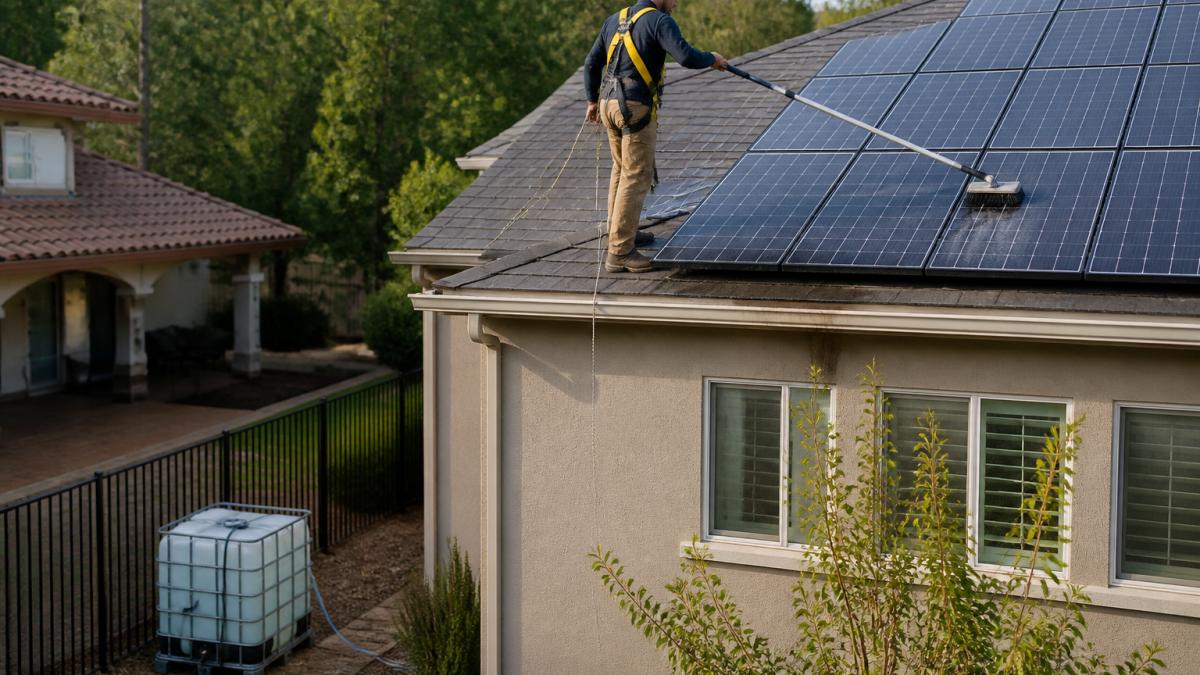
Roof pitch, tilt angle, and height change the labor and equipment required. Steep roofs need fall protection, and multi-story buildings may require lift equipment rather than ladders.
- Single-story, low-pitch roof: fastest service tier
- Two-story or steep pitch: adds harness work and slower movement
- Ground-mount arrays: usually the least expensive to service
- Commercial flat roofs with parapets: access planning adds time
Solar Panel Efficiency Loss Due to Dirt: The Real Numbers
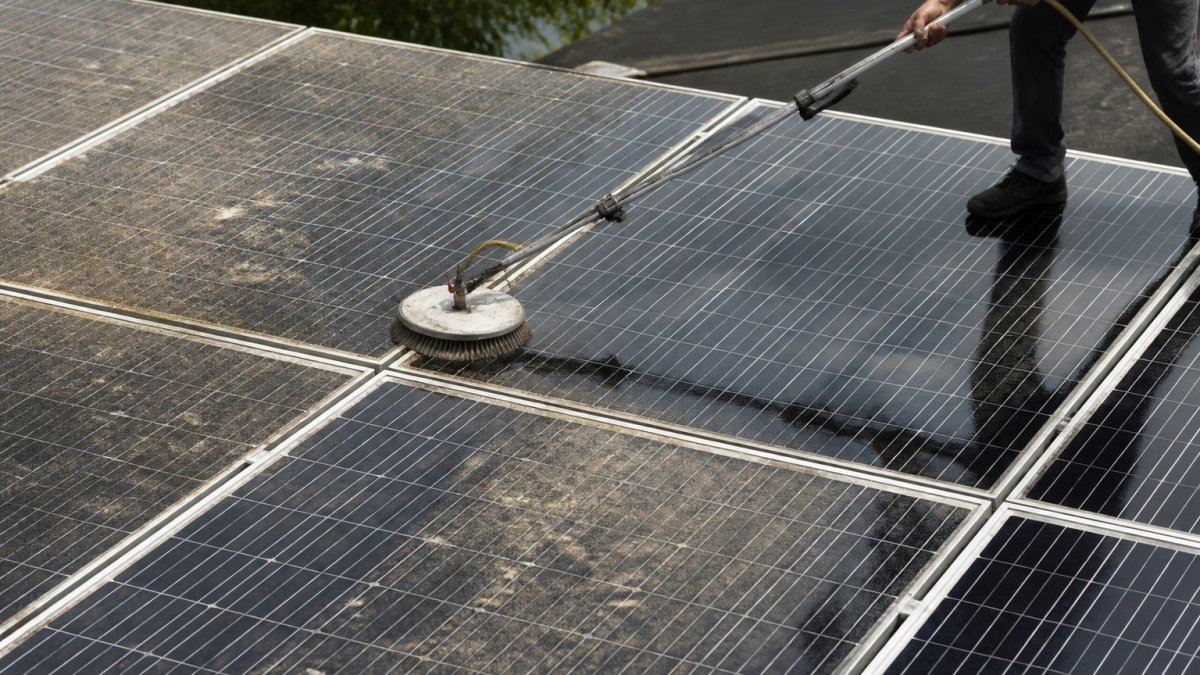
Dirt reduces solar panel output, and the loss is measurable rather than theoretical. Soiling accumulates from dust, pollen, bird droppings, and contaminants that settle on the glass and block light reaching the cells. Loss varies enormously by location and season, a rural array downwind of agricultural dust soils faster than a suburban roof, and a panel under a tree with roosting birds can lose output in weeks.
How Soiling Turns Into Lost Kilowatt-Hours
Solar panels are rated under Standard Test Conditions, which assume a clean glass surface and fixed light intensity. Every layer of grime reduces the irradiance reaching the photovoltaic cells, and output drops roughly in proportion to the light lost. That is why energy output, measured in kilowatt-hours, is the number to watch, not the glass's appearance.
The mechanism matters because different soils behave differently:
- Loose dust and pollen scatter and absorb light, producing a fairly uniform, gradual output decline.
- Bird droppings create localized shading. Because cells in a panel are wired in series, a shaded cell can throttle the current through the whole string, so a small dropping can cost more output than its footprint suggests.
- Hard water spots are worse than loose dust because dissolved minerals bond to the glass and scatter light rather than simply sitting on top of it, and they resist a simple rinse.
Why Water Quality Changes the Math
This is the angle most pricing guides skip. The water a cleaner uses determines whether the job ends with a clean panel or one covered in new mineral deposits. Tap, well, and hard water all carry dissolved calcium and magnesium; when they dry on hot solar glass, those minerals precipitate out and leave hard water spots, deposits far harder to remove than the original dust, scattering light the same way soiling does.
How to Confirm the Loss Is Real
Performance monitoring separates a genuine soiling problem from a seasonal dip or equipment fault. The practical check is a before-and-after comparison:
- Record daily production for a week before cleaning.
- Note weather, cloud cover, and daylight hours so you are comparing like with like.
- Clean the array.
- Record daily production for the following week under similar conditions.
How Often to Clean Solar Panels in Northern California
Most residential systems in this region need cleaning once or twice a year, with commercial and agricultural arrays on a quarterly schedule. The right frequency depends on your specific soiling sources, not a universal calendar. Northern California has a distinct pattern: the dry season brings dust and pollen with no rain to rinse the glass, and wildfire smoke and ash add a heavier layer in some years.
A regional maintenance schedule should account for:
- Dry-season dust and pollen: heaviest soiling window, roughly late spring through early fall
- Bird activity: nests and droppings near trees or rooflines need more frequent debris removal
- Agricultural or rural dust: properties near fields or unpaved roads soil faster
- Post-wildfire ash: clean after significant ashfall rather than waiting for the next scheduled visit
DIY vs Professional Solar Cleaning: Safety, Warranty, and Cost
DIY solar panel cleaning saves the service fee but introduces real risk to your safety and your warranty. Professional cleaning costs more up front and protects the asset underneath. The decision comes down to three things: roof safety, water quality, and what your warranty requires. On a ground-mount array with a garden hose, DIY is a reasonable weekend task. On a two-story roof, it is a fall hazard, and falls from residential roofs send people to emergency rooms every year.
What DIY Gets Wrong About Hard Water and Abrasives
The two most common DIY mistakes are using tap water and using abrasive cleaning agents.
Pricing Models and How to Compare Quotes
Providers quote solar panel cleaning using one of three models: per-panel pricing, flat rate by system size, or a custom quote based on access and condition. Knowing which model you are looking at is the only way to compare quotes fairly, because two bids that look identical can cover very different scopes of work.
| Pricing Model | How It Works | Best For | Watch Out For |
|---|---|---|---|
| Per-panel pricing | Fixed rate multiplied by panel count | Larger arrays, easy comparison | Minimum visit charges on small systems |
| Flat rate by system size | One price for a size bracket | Standard residential roofs | Brackets that hide steep-pitch surcharges |
| Custom quote | Priced after access and condition review | Complex roofs, heavy soiling | Hard to compare against other bids |
The Equipment Checklist That Separates a Real Quote From a Low Bid
Most guides tell you to compare prices. Almost none tell you what the price should buy. The equipment a crew brings is the clearest signal of whether a bid is professional or a shortcut.
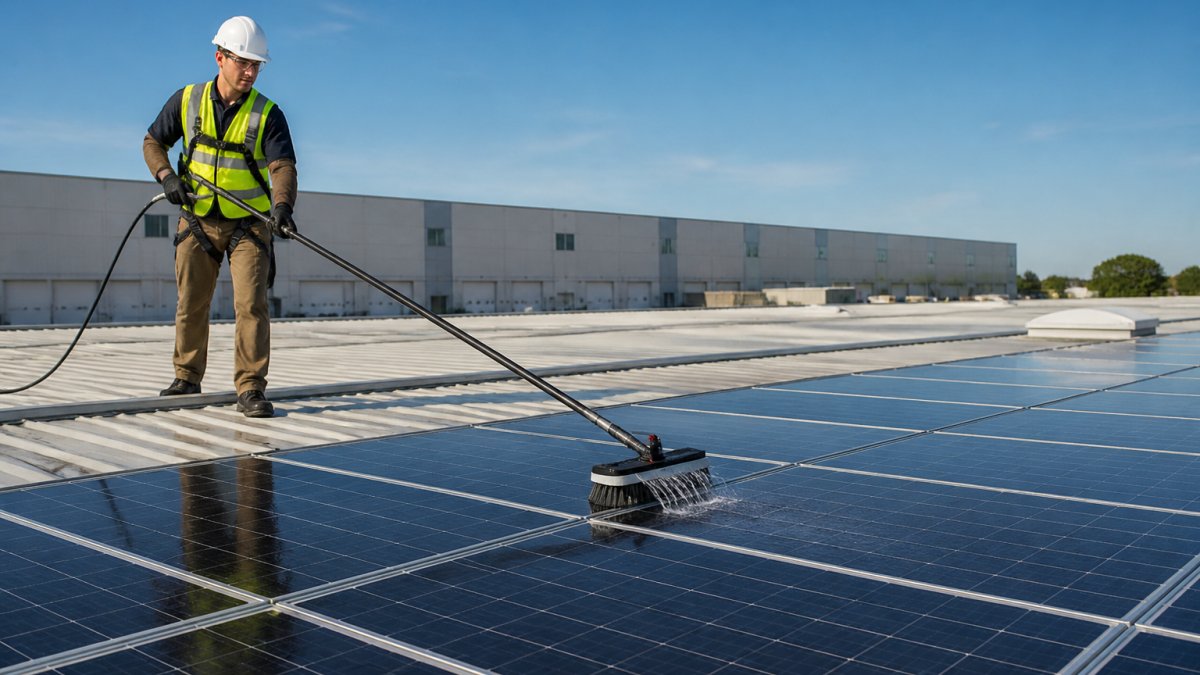
What a professional solar cleaning setup typically includes:
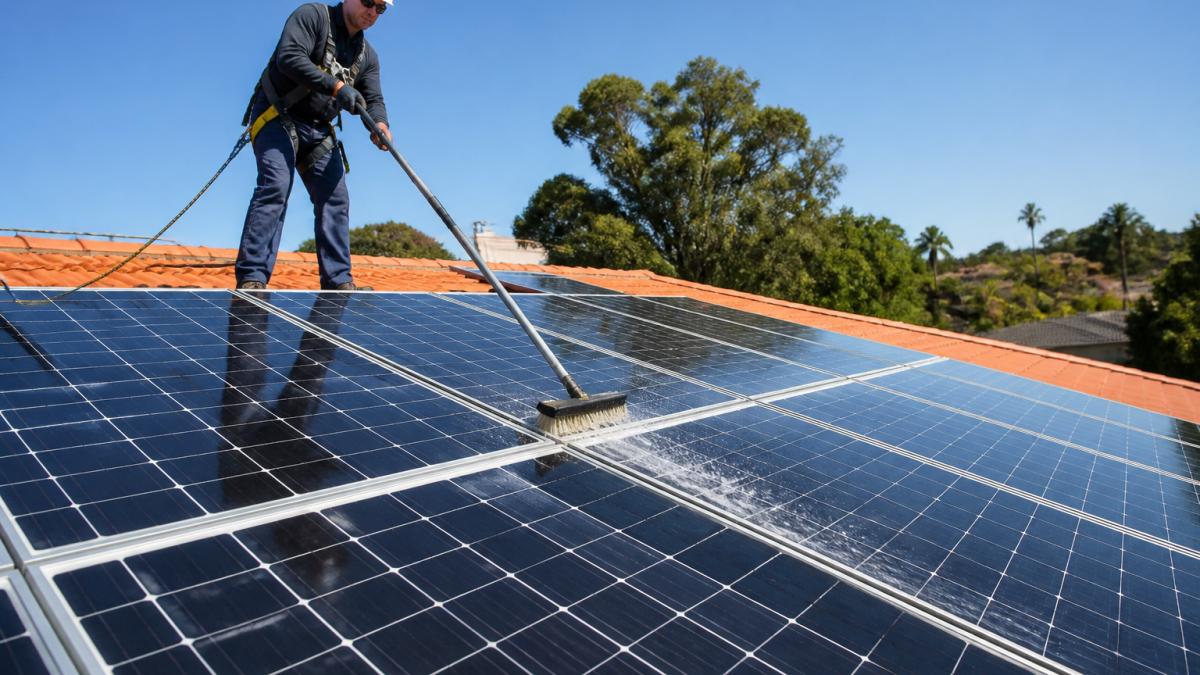
- Soft-bristle brushes designed for solar glass, so the anti-reflective coating is not scratched.
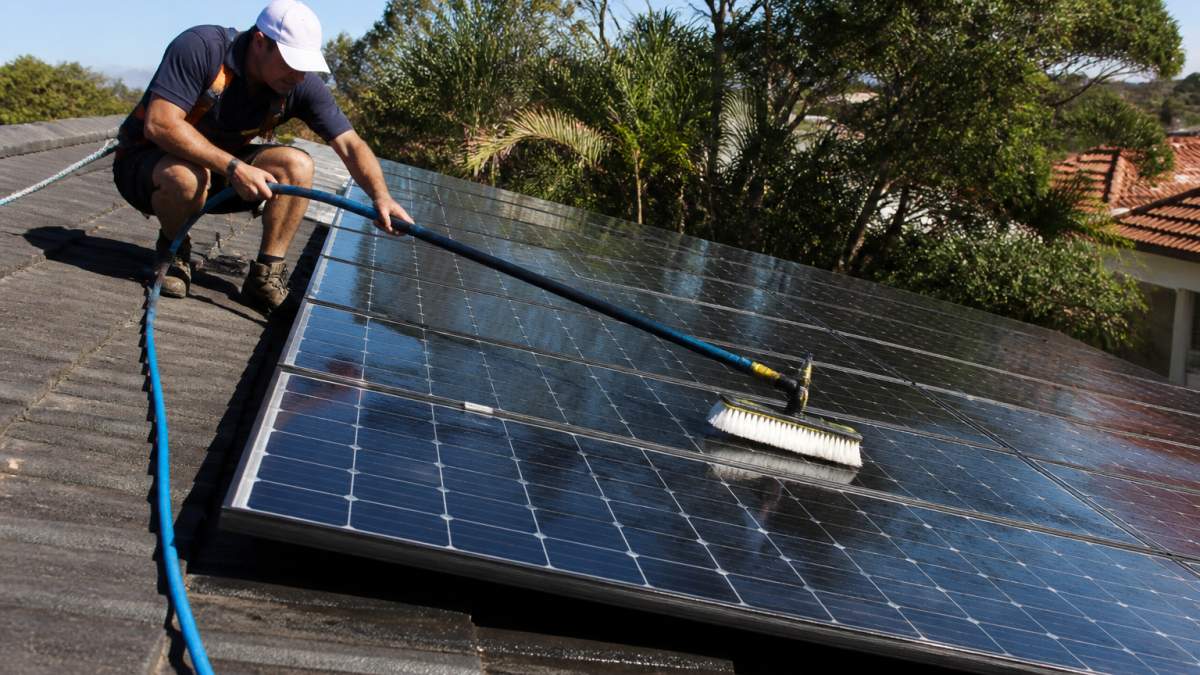
- Telescopic water-fed poles that let the crew reach panels from the ground or a stable position, reducing time spent on the roof.
- Deionized or purified water delivered through a filtration system, so the glass dries without mineral spots.
- A spot-free rinse as the final step, which is what actually produces a streak-free finish.
- Fall-protection gear, harnesses, anchors, and roof-edge protection, for any work above a single story.
What should never appear on a solar array:
- Pressure washers. High-pressure water can force moisture past the panel seals and crack glass, and it is a common reason warranty claims get denied.
- Abrasive pads, scouring sponges, or stiff brushes. These scuff the anti-reflective coating, and the damage is permanent.
- Detergents and harsh chemicals. Residue can etch the glass and leave a film that reduces light transmission.
- Tap water on a hard-water property. It leaves the mineral deposits described above.
Questions to Ask Every Provider
When you collect quotes, ask each provider the same questions so the numbers are comparable:
- Is the price per panel, flat rate, or custom?
- Does it include roof access and safety equipment?
- What water source is used, and is it deionized or purified?
- What brushes and tools are used on the glass?
- Is there a minimum service visit charge?
- What happens if the panels are heavily soiled?
- Will you provide a before-and-after performance report?
The Warranty Question Most Quotes Ignore
This is the gap competitors miss. Most solar panel manufacturers require reasonable maintenance and prohibit cleaning methods that damage the panel, including pressure washing and abrasive agents. If a panel later fails and the manufacturer attributes the damage to improper cleaning, the claim can be denied, turning a small cleaning savings into a full panel replacement out of pocket. That is why the equipment and water questions above are about documentation, not just quality.
Warranty Compliance and Water Quality: What Most Guides Skip
Warranty compliance is the cost factor almost no pricing guide mentions, and it is the one that can cost you the most. Most manufacturers require reasonable maintenance and prohibit cleaning methods that damage the panel, including pressure washing and abrasive agents. If a panel fails and the manufacturer can attribute the damage to improper cleaning, the claim can be denied, turning a small cleaning savings into a full panel replacement out of pocket.
Frequently Asked Questions
Is professional solar panel cleaning worth it?
It depends on your soiling level and energy rate. Panels losing 15-25% output to dust, pollen, and bird droppings can recover that production after a professional clean. At higher utility rates, the recovered kilowatt-hours often outweigh the service cost within a few months. Mr Clean Solar Cleaning provides before-and-after performance reports so you can see the actual output difference rather than guessing.
How often do solar panels need to be cleaned?
Most residential systems in this region need cleaning once or twice a year, with commercial and agricultural arrays on a quarterly schedule. Homes near farmland, open fields, or heavy tree cover may need more frequent service because of pollen accumulation and bird droppings. Rain helps but does not remove hardened bird droppings or mineral deposits, so a seasonal schedule works better than waiting for weather.
Can I clean my own solar panels or should I hire a professional?
You can rinse panels from the ground with a garden hose, but roof access, roof pitch, and safety harness requirements make full cleaning risky for most homeowners. DIY also risks hard water spots and scratched glass if you use abrasive cleaning agents or a pressure washer. Professional crews use deionized water, soft-bristle systems, and OSHA-trained safety practices that protect both the panels and your warranty.
Does dirty solar panel buildup significantly impact energy output?
Yes. Soiling loss from dust, pollen accumulation, and bird droppings commonly reduces output by 15-25% in dry periods, and heavy buildup can push losses higher. Hard water spots and environmental contaminants also block light transmission. Mr Clean Solar Cleaning has restored output by up to 30% on heavily soiled systems, with performance monitoring data confirming the gain after each service visit.
What factors influence the total cost of solar panel cleaning?
Key factors include system size, roof pitch and height, panel count, soiling severity, and whether the array is residential or commercial. Pricing models vary between flat rate and per-panel pricing, and some providers charge more for steep roofs or difficult roof access. Water quality also matters: crews using deionized water avoid mineral buildup, which protects your return on investment over the system's life.