 ultimate-guide
Commercial Solar Maintenance for Warehouses: A 2026 Guide
Table of Contents
- Why Commercial Solar Maintenance Matters for Warehouse Operations
- How Often Should You Schedule Commercial Solar Panel Cleaning Frequency
- Building a Solar System Preventative Maintenance Checklist
- OSHA Safety Standards for Rooftop Solar Maintenance
- Understanding the Cost of Commercial Solar Maintenance Services
- Ground-Mount vs. Rooftop Solar: Maintenance Differences
- Maximizing ROI Through Predictive Maintenance and Asset Management
- Frequently Asked Questions
Last Updated: September 30, 2026
Why Commercial Solar Maintenance Matters for Warehouse Operations
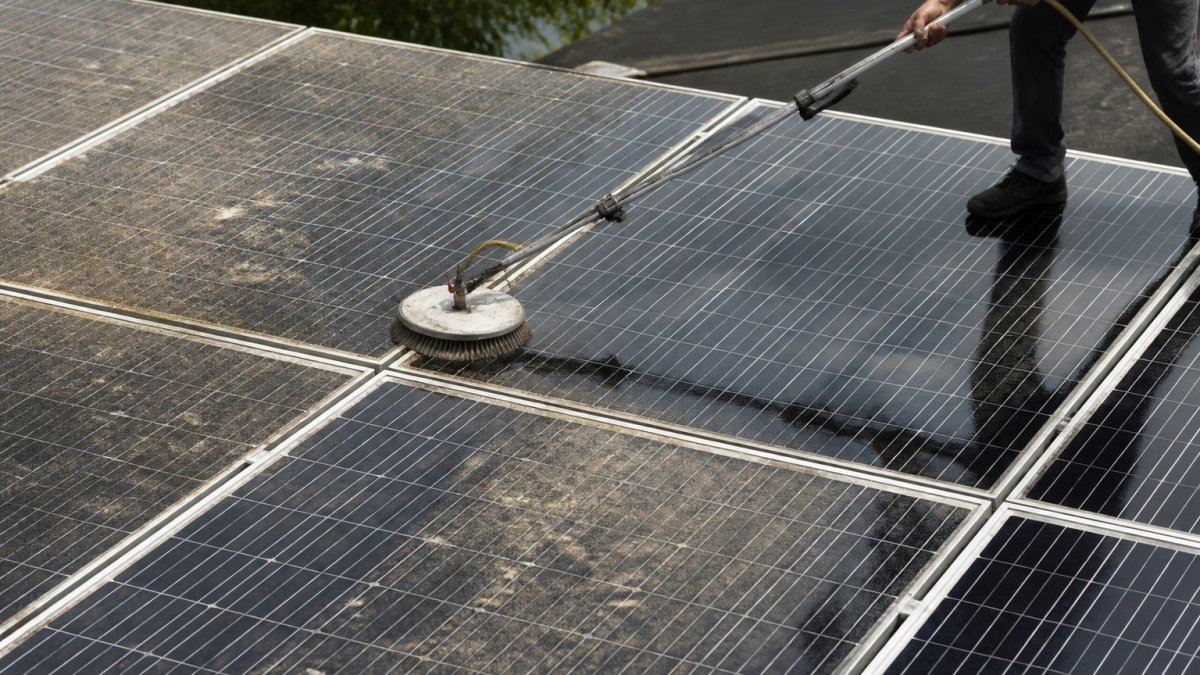
Commercial solar installations represent substantial capital investments for warehouse operators. Without a structured maintenance program, these systems degrade faster than expected, losing efficiency and generating significantly less revenue than their potential. The difference between a well-maintained array and a neglected one compounds over years, dust, debris, bird droppings, and environmental contaminants accumulate on photovoltaic panels, reducing energy yield and increasing operational expenditure unnecessarily.
Warehouse managers often underestimate how quickly soiling loss impacts their bottom line. A facility with 200+ panels can lose measurable kilowatt-hour output within weeks if cleaning and preventative maintenance fall behind. This is where commercial solar maintenance for warehouses becomes critical. Regular inspections, cleaning protocols, and system monitoring directly protect your return on investment and extend asset lifespan.
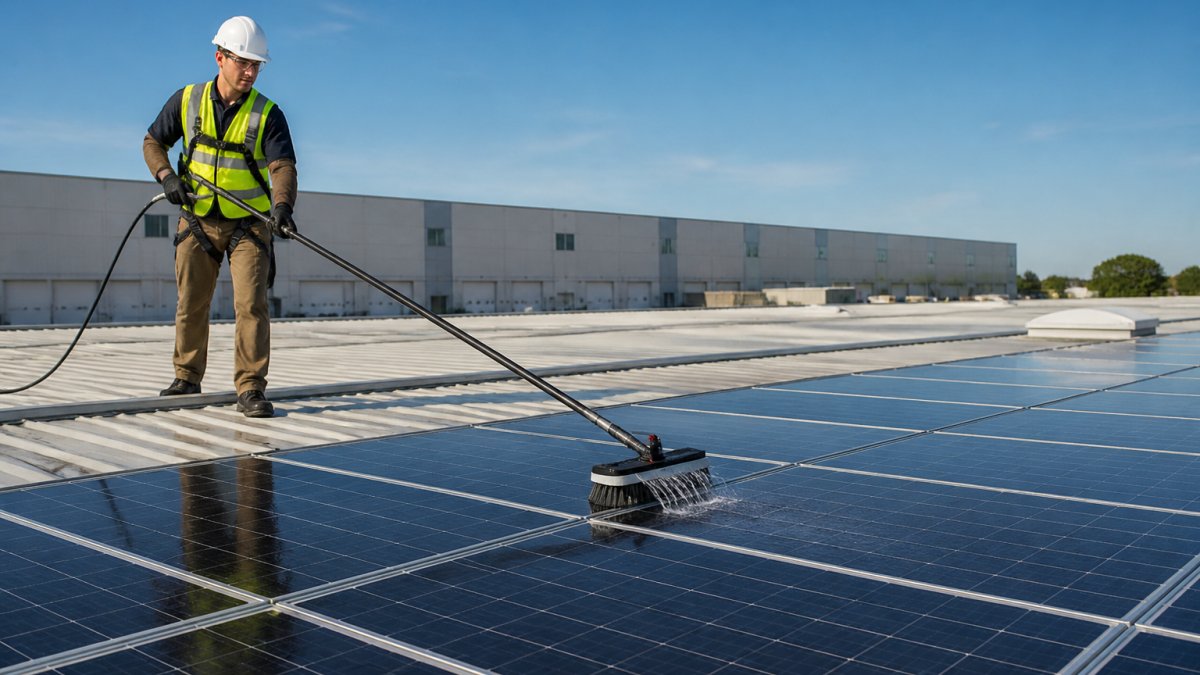
At Mr Clean Solar Cleaning, we work with warehouse operators to maintain peak system performance. Our OSHA-trained team understands the unique demands of large-scale rooftop installations, structural load concerns, electrical safety protocols, and the specific debris patterns that accumulate on industrial roofs. Proper maintenance isn't optional; it's the difference between a system that performs as engineered and one that underperforms year after year.
How Often Should You Schedule Commercial Solar Panel Cleaning Frequency
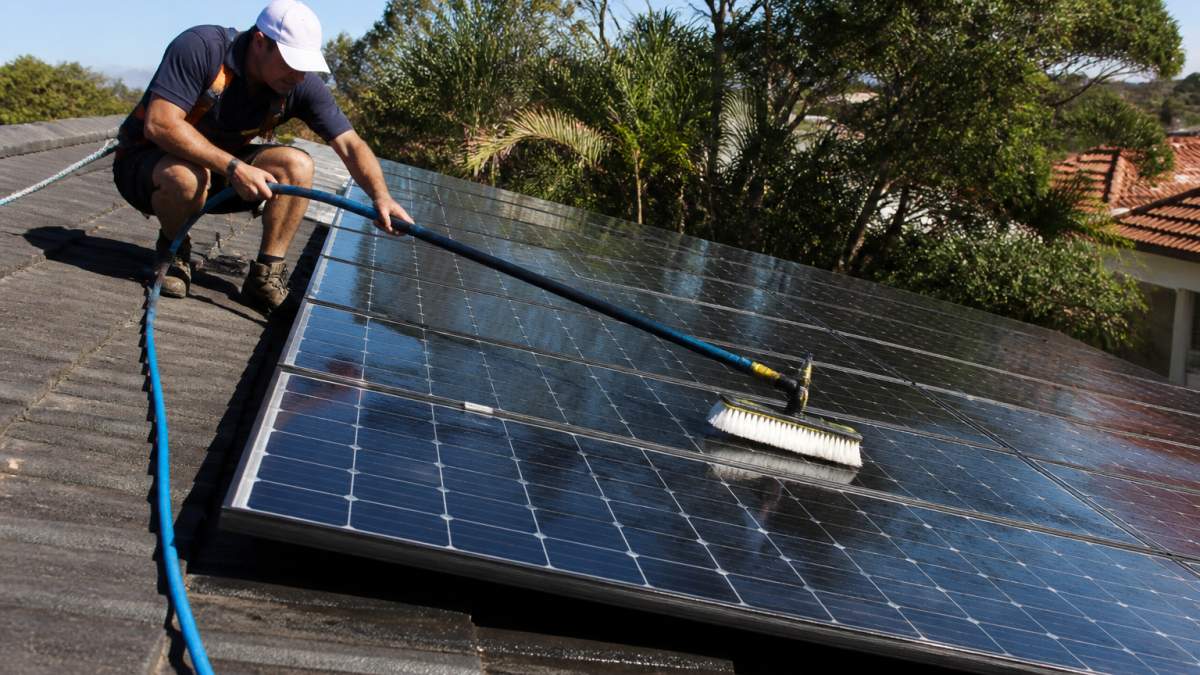
The ideal commercial solar panel cleaning frequency depends on your warehouse location, roof configuration, and local environmental conditions. Most facilities benefit from cleaning every three to six months, though some high-debris environments require quarterly service.
Your specific cleaning schedule should account for seasonal patterns. Spring and fall often bring more debris, pollen, leaves, and dust storms. Summer heat can bake contaminants onto glass surfaces, making them harder to remove. Winter precipitation helps naturally rinse panels, but freezing conditions can trap moisture and create buildup when temperatures fluctuate.
Bird activity directly influences your cleaning needs. Warehouses near agricultural areas or water sources experience more bird droppings, which are acidic and damage panel glass over time if left untreated. High winds in coastal or elevated locations carry salt spray and sand that accelerate soiling. Industrial areas generate dust and particulates that settle on arrays faster than rural locations.
A practical approach is to schedule quarterly inspections with your maintenance provider. During these visits, technicians assess actual soiling levels using visual inspection and performance monitoring data. If dirt and debris have reduced output by 5-10%, cleaning is warranted. If output remains strong, you may extend the interval. This data-driven approach prevents unnecessary cleanings while ensuring you never let performance degrade beyond acceptable thresholds.
Building a Solar System Preventative Maintenance Checklist
A structured preventative maintenance checklist ensures nothing gets overlooked on your warehouse solar installation. The checklist should cover electrical systems, structural integrity, monitoring software, and safety protocols specific to rooftop work.
Electrical System and Inverter Checks
Your string inverters and electrical components form the backbone of energy conversion. Inverter efficiency directly determines how much of your photovoltaic generation actually reaches usable power. Quarterly electrical inspections should verify that all connections remain tight, junction boxes are sealed, and no visible corrosion has developed on terminals or breakers.
Check inverter displays for error codes or performance warnings. Modern systems provide real-time feedback on voltage, current, and system status. If an inverter shows reduced efficiency or thermal warnings, it may need cleaning, ventilation adjustment, or professional servicing. Micro-inverters, if your system uses them, should be spot-checked for moisture ingress and secure mounting.
Test all disconnect switches to ensure they operate smoothly. Corroded or stuck disconnects create fire hazards and complicate emergency shutdown procedures. Verify that all labeling remains visible and accurate, electrical safety depends on clear identification of live circuits and emergency controls.
Structural Integrity and Roof Load Assessment
Your warehouse roof must safely support the photovoltaic array's weight plus maintenance personnel, equipment, and environmental stresses. Annual structural inspections catch problems before they become safety hazards or lead to system damage.
Examine mounting hardware for corrosion, loose bolts, or bent brackets. Salt air, industrial pollution, and UV exposure degrade fasteners over time. Replace any corroded hardware immediately, a single failed mount point can shift load distribution across the array and damage panels. Check that flashing around roof penetrations remains sealed; water intrusion is the leading cause of roof damage in solar installations.
Assess roof load capacity if you're planning expansion or adding battery storage. Your structural engineer's original assessment may not account for added weight from monitoring equipment, additional panels, or future upgrades. Document the current load distribution and verify that remaining capacity supports your maintenance access and future modifications.
Monitoring Software and Performance Tracking
Your energy management system provides the clearest window into whether commercial solar maintenance is working. Monitoring software tracks energy yield, system uptime, and performance ratio, the actual output compared to theoretical maximum under current weather conditions.
Review performance reports monthly. A healthy system maintains a performance ratio above 75-80%. If your ratio drops below 70%, it signals either soiling, electrical issues, or equipment degradation. Compare your facility's output to historical data and weather patterns. Unusually low generation on clear days suggests panel contamination or inverter malfunction.
Set up automated alerts for performance anomalies. Most modern systems notify facility managers when output drops more than 10-15% below expected levels for the current weather. This early warning catches problems before they compound into major efficiency losses. Track which panels or strings underperform to pinpoint specific issues, a single shaded panel or failed micro-inverter will show as a localized performance dip.
OSHA Safety Standards for Rooftop Solar Maintenance
Working on warehouse roofs demands strict adherence to OSHA safety protocols. Rooftop solar maintenance involves fall hazards, electrical risks, and confined-space considerations that require certified, trained personnel.
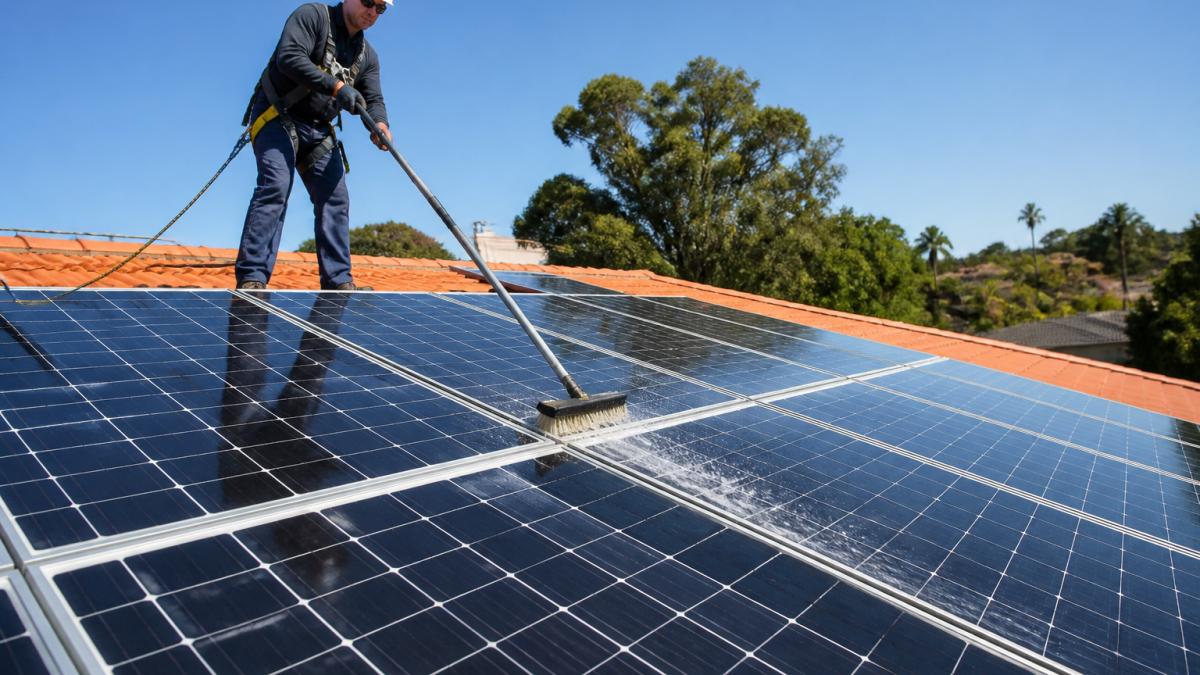
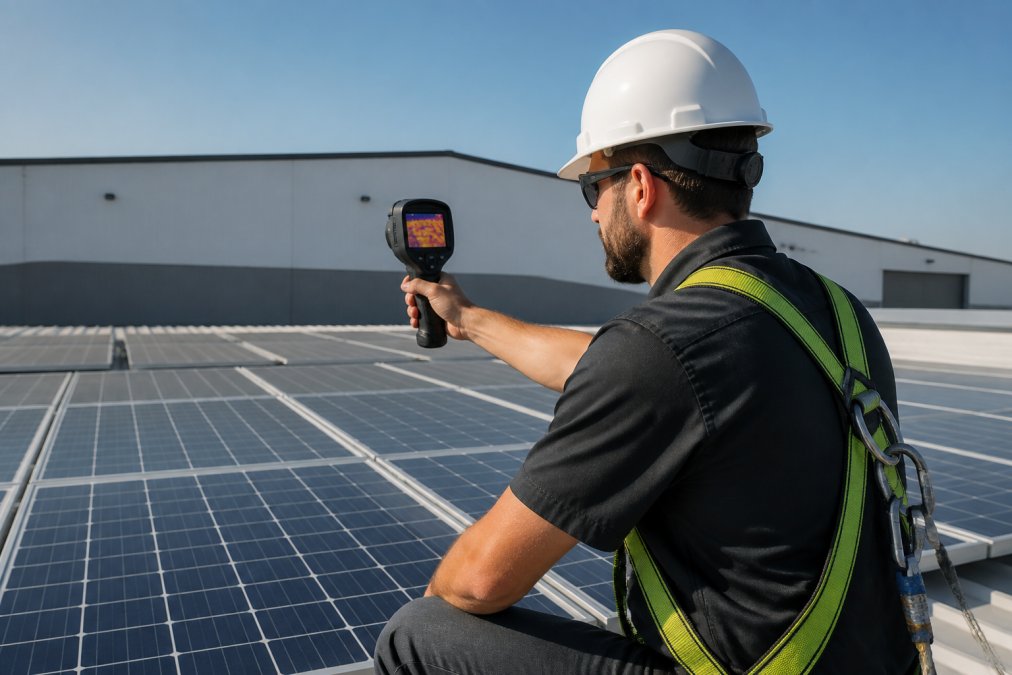
OSHA regulations require fall protection for any work at heights exceeding six feet. Your maintenance team must use proper harnesses, anchor points rated for the load, and inspection procedures documented before each job. Roofs with slopes greater than 4:12 pitch require additional safety measures, guardrails, warning lines, or personal fall arrest systems.
Electrical safety is equally critical. All work on live circuits requires de-energization or appropriate PPE and insulation. Your maintenance provider should follow NFPA 70E standards for electrical safety work practices.
Understanding the Cost of Commercial Solar Maintenance Services
Maintenance costs vary based on system size, roof complexity, location, and debris patterns. Pricing depends on quantity of panels, access difficulty, frequency of service, and whether you need specialized equipment like thermal imaging or rope access for steep roofs.
Ground-Mount vs. Rooftop Solar: Maintenance Differences
Ground-mounted systems and rooftop arrays require different maintenance approaches, each with distinct advantages and challenges for warehouse operators.
Maximizing ROI Through Predictive Maintenance and Asset Management
Predictive maintenance uses performance data and thermal imaging to identify problems before they cause significant output loss. Rather than waiting for performance to degrade noticeably, predictive approaches monitor trends and flag anomalies early.
Frequently Asked Questions
How often should commercial solar panels be cleaned on warehouse installations?
Cleaning frequency depends on your location and environment. Warehouses in dusty, agricultural, or high-traffic areas typically need quarterly cleanings. Coastal regions with salt spray may require monthly maintenance. Facilities in cleaner areas can often extend intervals to twice yearly. Regular monitoring of energy output helps determine your specific needs, a 15-20% drop signals that cleaning is overdue.
What's included in a solar system preventative maintenance checklist?
A comprehensive checklist covers panel cleaning, inverter efficiency testing, electrical connection inspections, roof structural assessment, thermal imaging for hot spots, monitoring software verification, and warranty documentation review. Professional maintenance specialists also check for debris accumulation, bird damage, and corrosion on mounting hardware. This preventative approach catches issues before they reduce energy yield or create safety hazards.
Are there OSHA safety standards I need to follow for rooftop solar maintenance?
Yes. OSHA requires fall protection systems, harnesses, and anchor points for anyone working at heights above 6 feet. Electrical safety standards (NFPA 70E) apply to inverter work and electrical inspections. Your maintenance team must be trained in confined space entry if accessing internal equipment areas. Hiring certified professionals ensures compliance and protects your liability.
What factors affect the cost of commercial solar maintenance services?
Costs vary based on system size (kW capacity), roof type and accessibility, cleaning frequency, additional services like thermal imaging or electrical testing, and your location. Larger installations typically have lower per-panel costs. Preventative maintenance programs offer better ROI than emergency repairs. Pricing depends on quantity, frequency, and specific service scope, contact a certified provider for a detailed quote tailored to your warehouse.
How much can cleaning improve my warehouse solar energy output?
Professional cleaning typically restores 15-30% of lost energy output, depending on soiling conditions. Dust, bird droppings, and debris create soiling losses that degrade performance ratio. Regular preventative cleaning maintains peak efficiency and extends panel lifespan. The return on investment becomes clear within months as your energy bills drop and system uptime increases.
What's the difference between ground-mount and rooftop solar maintenance?
Rooftop systems require fall protection and roof-safe equipment, making labor more expensive. Ground-mount systems are easier to access and clean, reducing labor costs and safety risks. Rooftop systems may accumulate more debris from wind patterns. Ground-mounted arrays typically need less frequent cleaning but require vegetation management. Your warehouse layout determines which system suits your maintenance budget and operational needs.