 ultimate-guide
Does Solar Panel Cleaning Improve Efficiency?
Table of Contents
- How Much Efficiency Do Dirty Solar Panels Actually Lose?
- Does Solar Panel Cleaning Improve Efficiency? What the Data Shows
- The Factors That Decide Whether Cleaning Is Worth It
- Solar Panel Cleaning Frequency: How Often Is Often Enough?
- How to Clean Solar Panels Safely (And What Can Damage Them)
- DIY vs. Professional Cleaning: A Cost-Benefit Breakdown
- Frequently Asked Questions
Last Updated: September 28, 2026
How Much Efficiency Do Dirty Solar Panels Actually Lose?
Dirty solar panels lose a meaningful amount of output, and how much depends on where you live and what is landing on the glass. If you have ever wondered does solar panel cleaning improve efficiency, the short answer is yes, but the size of the gain varies far more than most guides admit. At Mr Clean Solar Cleaning, we know that a dusty rooftop in a farming area and a suburban roof that gets regular rain are two completely different problems.
What Soiling Loss Looks Like in Real Numbers
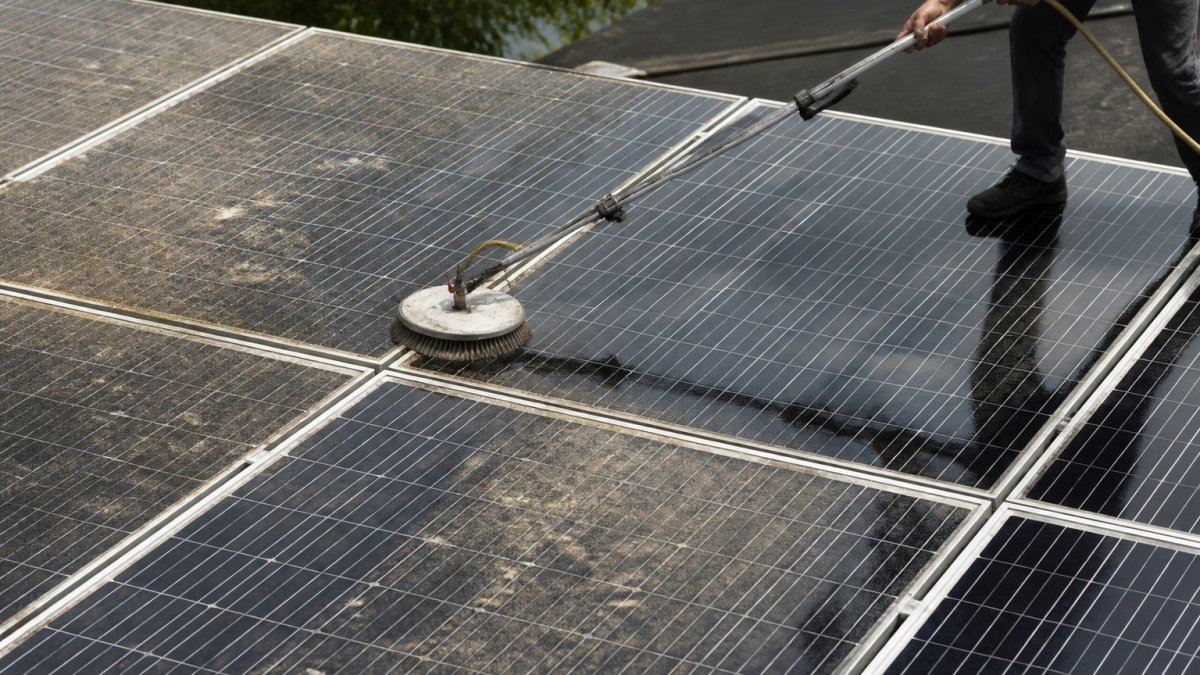
A light, even layer of dust might cost you a small percentage of daily output. Heavy debris accumulation, especially sticky droppings or a film of agricultural dust, can cut production far more. The performance ratio of a system, which measures actual output against what the panels should theoretically produce, is the metric that reveals the damage.
Does Solar Panel Cleaning Improve Efficiency? What the Data Shows
Cleaning restores efficiency by removing the physical barrier between sunlight and the cells. The mechanism is straightforward: more solar irradiance reaches the silicon, so the panel produces more power at the same sunlight level.
Why the 30% Recovery Claim Needs Context
You will see "restore up to 30% efficiency" thrown around a lot, and it deserves an honest explanation. That figure represents the best case, a heavily soiled system in a dry, dusty environment where particulate matter has built up for a long stretch without rain. A lightly dusty array in a wetter climate will recover far less.
U.S. Department of Energy solar energy resource library
The Factors That Decide Whether Cleaning Is Worth It
Whether cleaning pays off comes down to your specific environment, not a universal rule. Several environmental factors push soiling loss up or down, and understanding them tells you where you sit.
- Local dust and agriculture: Farming areas and unpaved roads load the air with grit that settles fast.
- Bird activity: Droppings create hot spots that block light unevenly and can leave residue if left too long.
- Rainfall patterns: Frequent, heavy rain provides rain-induced cleaning that resets the clock.
- Panel tilt: Steeper panel tilt helps rain and dew carry debris off the glass, while shallow angles let it pool and stick.
- Pollen season: Pollen buildup creates a sticky film that rain alone often cannot fully remove.
Solar Panel Cleaning Frequency: How Often Is Often Enough?
There is no single correct solar panel cleaning frequency, because the right interval is a function of how fast your specific site soils the glass and how much rain removes it. Most residential systems in dusty or agricultural areas benefit from cleaning one to four times a year, but that range is wide enough to be useless on its own.
Estimate Your Soiling Rate by Environment
Soiling accumulates at very different speeds depending on what is in the air and how often precipitation resets the surface. A rough framework most practitioners use:
- Arid and desert-adjacent sites: Dust settles continuously, and long dry stretches mean little natural reset. Cleaning every two to three months is common, and some arrays need monthly attention during windy seasons.
- Agricultural and rural sites: Harvest dust, tilling, and unpaved roads load the air with grit. Expect two to four cleanings a year, concentrated around planting and harvest.
- Suburban and urban sites: Pollen in spring, brake dust, and occasional construction create a sticky film. One to two cleanings a year usually holds output steady.
- Wet, humid climates: Frequent rain does much of the work, but humidity encourages biological growth (moss, lichen, algae) along frame edges and lower rows. One cleaning a year to address growth, plus spot treatment, is often enough.
- Coastal sites: Salt spray leaves a conductive film that rain does not fully remove and that can accelerate corrosion at connections. Two cleanings a year is a reasonable baseline.
How Panel Tilt Changes the Math
The panel tilt point is one competitors rarely address, and it directly changes how often you need to clean. A steeply pitched array sheds rain and dew efficiently, so self-cleaning properties do real work. A shallow or nearly flat commercial roof lets water pool, dust settle, and debris stick. Two systems in the same city, under the same sky, can need very different schedules for this reason alone.
Let Your Monitoring Data Set the Interval
Rather than guessing, use your system monitoring to detect the decline. Compare a clear, sunny day's production now against a similar day shortly after your last cleaning. A consistent downward drift that is not explained by weather or shading is your signal. Many monitoring platforms let you export daily energy generation so you can plot the trend.
Watch for these signals that it is time:
- Visible dust, pollen film, or droppings on the glass
- A gradual drop in daily energy output on your monitoring app
- Nearby construction, wildfire smoke, or harvest season
- A long dry stretch with no meaningful rain
- Biological growth along frame edges or lower rows
How to Clean Solar Panels Safely (And What Can Damage Them)
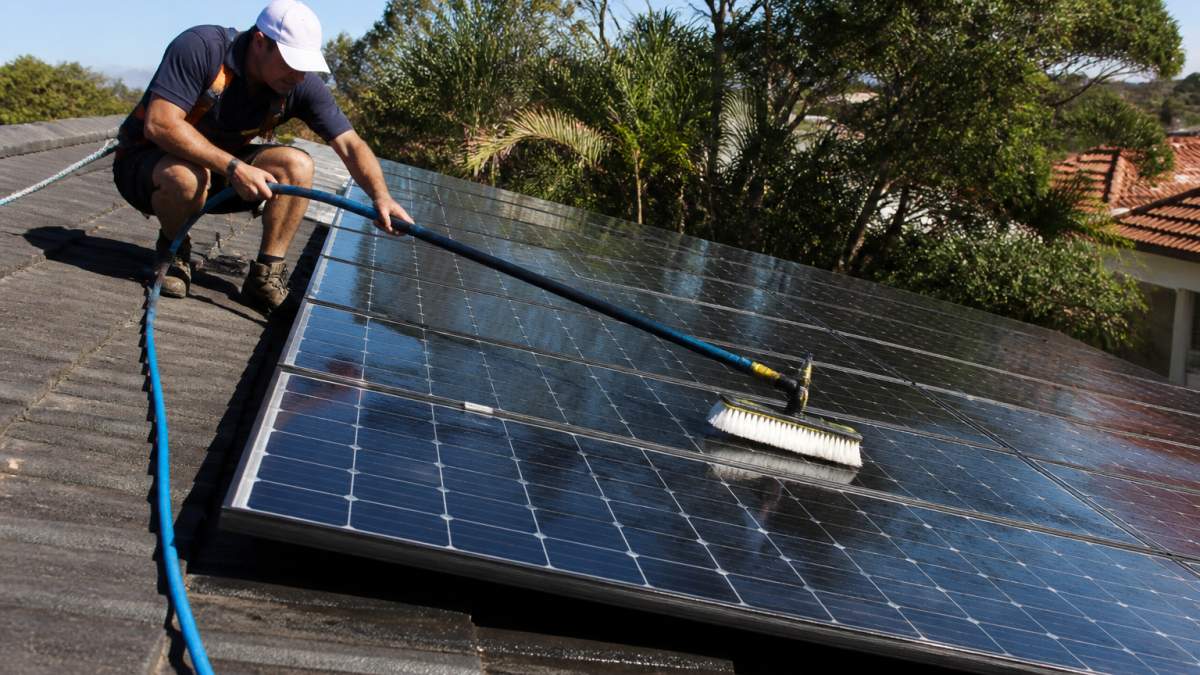
Safe cleaning means soft tools, pure water, and no pressure. The single biggest mistake is treating solar glass like a driveway. High-pressure washing and abrasive pads scratch the surface and can void your warranty.
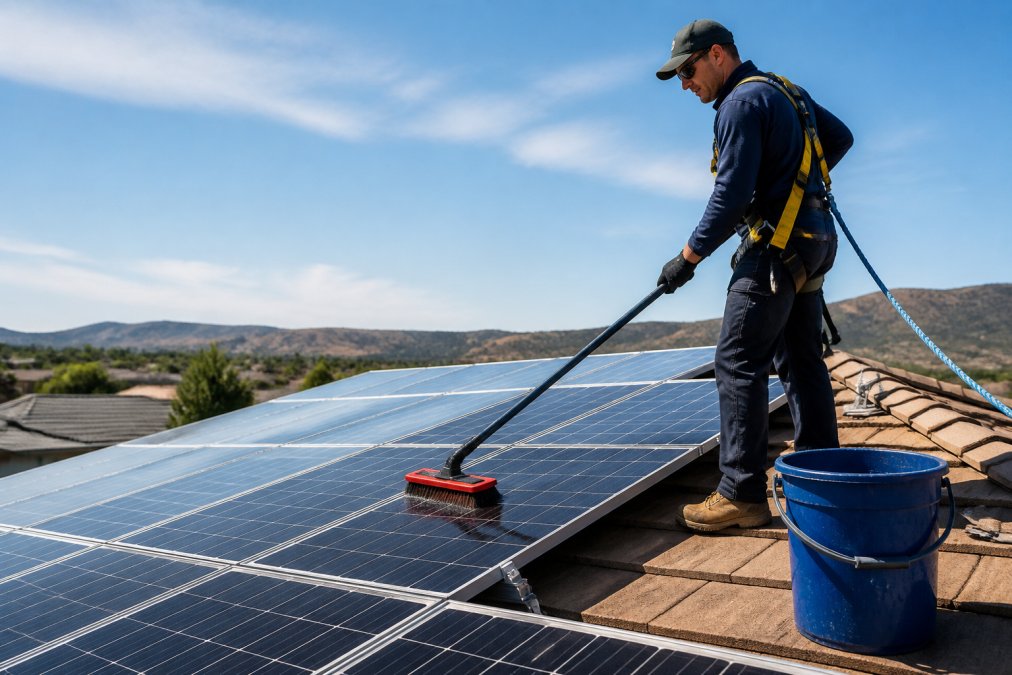
Here is a safe manual washing process:
- Shut down if recommended and work only when panels are cool, never in peak midday heat.
- Rinse loose grit first with low-pressure water so you are not grinding dust into the glass.
- Use a soft-bristle brush designed for solar glass, never abrasive materials or scouring pads.
- Wash with purified deionized water to avoid mineral spots and residue.
- Skip harsh soaps and chemicals that can leave a film or damage coatings.
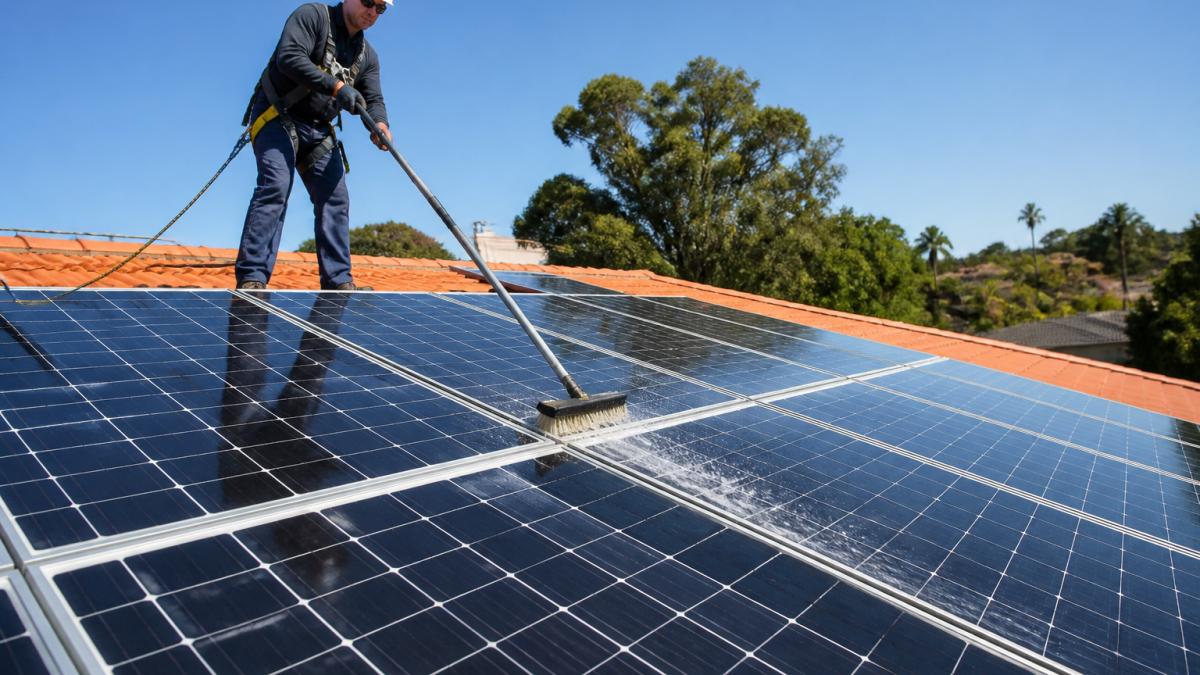
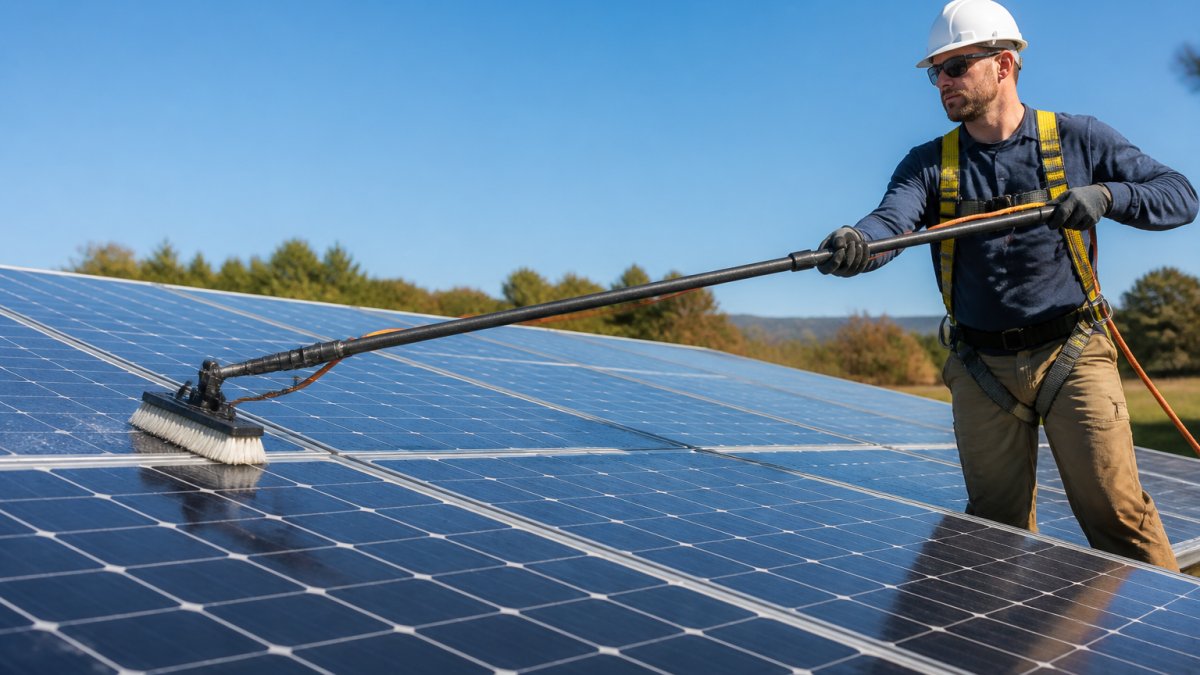
- Work from a safe position with proper fall protection, or stay off the roof entirely.
The Micro-Cracking Risk Most Homeowners Never Hear About
Roof safety matters just as much. Falls from a residential roof are a serious hazard, which is why many homeowners choose professional cleaning services rather than climbing up themselves.
DIY vs. Professional Cleaning: A Cost-Benefit Breakdown
The right choice depends on your roof, your array size, and your comfort with heights. DIY works for small, easily reached residential systems. Professional service makes more sense for steep roofs, large commercial arrays, and anyone who wants documented results. But the real decision comes down to a simple question: does the energy you recover pay for the cleaning?
A Framework for Deciding If Cleaning Pays Off
You do not need a spreadsheet to answer this, but you do need three numbers. Most homeowners can estimate all three in a few minutes.
- Your soiling loss. If you have monitoring data, compare a clear day now against a clear day right after your last cleaning. The percentage gap is your soiling loss. If you have no baseline, use a conservative estimate for your environment, a lightly dusty suburban roof might lose a few percent, while a heavily soiled agricultural array can lose considerably more.
- Your system's daily production value. Take your system's rated size in kilowatts, multiply by your local peak sun hours, and multiply by your electricity rate. That gives you a rough dollar value per day at full output.
- Your cleaning cost. For DIY, this is your time plus any equipment. For professional service, it is the quoted price.
Where DIY Makes Sense
DIY is reasonable when all of the following are true:
- Your array is small and reachable from the ground or a low, safe position.
- Your roof pitch and height let you work without fall risk.
- You are comfortable using a soft-bristle brush and a garden hose with low pressure.
- You are not trying to document results for a warranty or a commercial report.
Where Professional Service Wins
Professional service makes more sense when any of these apply:
- Steep roof, multi-story height, or fragile roofing material.
- Large or commercial arrays where downtime and reporting matter.
- Hard water that would leave spots if applied directly.
- A desire for documented results you can show a manufacturer, insurer, or property owner.
| Factor | DIY Cleaning | Professional Cleaning |
|---|---|---|
| Best for | Small, low, accessible arrays | Steep roofs, large or commercial systems |
| Water quality | Tap water, risk of spots | Deionized water, streak-free |
| Damage risk | Higher with wrong tools | Lower with soft-bristle systems |
| Safety | You manage roof risk | OSHA-trained, insured team |
| Proof of results | None | Detailed performance reports |
| Time | Your weekend | Handled for you |
The Warranty Angle Most Homeowners Miss
The cost-effectiveness question is not only about energy recovered. It is also about protecting the asset. Many panel manufacturers specify that cleaning must be done with non-abrasive tools and without high-pressure water. If a micro-crack or scratched coating is traced to improper cleaning, a warranty claim can be denied. That risk is asymmetric: a DIY mistake can cost far more than the cleaning you were trying to avoid.
Frequently Asked Questions
Does cleaning solar panels really make a difference in energy output?
Yes, in most cases. Dust, pollen, and bird droppings block sunlight from reaching the photovoltaic cells, reducing energy generation. The U.S. Department of Energy notes that soiling losses can range from 5% in mild climates to over 25% in dusty regions. After cleaning, most systems recover a measurable portion of that lost output. The exact gain depends on how dirty your panels were, your local environment, and your panel tilt angle.
How often should I clean my solar panels for optimal performance?
Solar panel cleaning frequency depends on your location and surroundings. In Northern California, where dust, pollen, and bird droppings accumulate seasonally, most residential systems benefit from cleaning two to four times per year. Properties near agricultural fields, highways, or heavy tree cover may need quarterly service. Check your inverter data monthly; a sudden drop in energy yield without a weather explanation usually signals it is time to clean.
Can cleaning solar panels damage the glass or coating?
Improper cleaning can cause micro-cracks and scratch anti-reflective coatings, which may void your warranty. Never use abrasive materials, hard water, or high-pressure washing on solar glass. Professional cleaners use deionized water and soft-bristle systems designed for photovoltaic panels. If you clean your panels yourself, use a soft brush, plain water, and work in the early morning when the glass is cool to avoid thermal shock.
Is it better to let rain clean my solar panels?
Rain helps rinse light dust but rarely removes baked-on bird droppings, pollen buildup, or sticky particulate matter. Rain-induced cleaning varies by panel tilt and rainfall intensity. Flat-mounted panels may retain more debris after a storm. Self-cleaning properties work best on steeply tilted arrays in areas with frequent, heavy rain. For most residential and commercial systems, rain alone is not enough to maintain peak energy output year-round.