 blog
Eco-Friendly Solar Panel Cleaning Methods
Table of Contents
- Why Eco-Friendly Solar Panel Cleaning Matters
- When Solar Panels Need Cleaning and How Often to Clean Solar Panels
- Safety Precautions Before You Start
- Solar Panel Cleaning With Deionized Water: The Gold Standard
- Can You Use Dish Soap to Clean Solar Panels? What Works and What Doesn't
- Removing Mineral Deposits From Solar Panels Without Damage
- When to Call a Professional Solar Panel Cleaner
- Frequently Asked Questions
Last Updated: October 21, 2026
Why Eco-Friendly Solar Panel Cleaning Matters
Dirty solar panels lose efficiency fast. Dust, pollen, bird droppings, and mineral deposits block sunlight from reaching your cells. Over time, this buildup costs you real money in lost energy production.
The good news: cleaning your panels restores their power. But how you clean matters just as much as whether you clean. Harsh chemicals, abrasive brushes, and high-pressure water can scratch your glass, void warranties, and damage the delicate coating that makes your panels work.
This guide from Mr Clean Solar Cleaning covers eco-friendly solar panel cleaning methods that protect your investment while maximizing energy output. Understanding the right approach saves you money and headaches.
When Solar Panels Need Cleaning and How Often to Clean Solar Panels
Your panels need cleaning when visible dirt or debris blocks sunlight. Look for dust layers, bird droppings, pollen buildup, or mineral deposits on the glass surface. If your energy production drops unexpectedly, dirty panels are often the culprit.
How often to clean solar panels depends on your location and environment:
- Desert or dusty areas: every 2-4 weeks
- Coastal regions with salt spray: monthly
- Areas with heavy pollen: seasonal (spring and fall)
- Rainy climates: 2-4 times per year
- Urban areas with moderate dust: quarterly
Rain helps. Natural rainfall removes some loose debris and dust. But rain alone won't remove stubborn bird droppings, mineral deposits from hard water, or thick pollen buildup.
The best approach is to monitor your energy production. Most modern solar systems show real-time output. If you notice a sudden drop that matches dusty or dirty conditions, it's time to clean. Don't wait for performance to tank, regular maintenance prevents that problem.
Safety Precautions Before You Start
Working on a roof or elevated surface requires serious precautions. Falls are a leading cause of home injuries, and solar panels sit where falls are most dangerous.
Before you touch anything, follow these safety rules:
- Turn off or isolate your solar system at the breaker
- Never work alone, have a spotter present
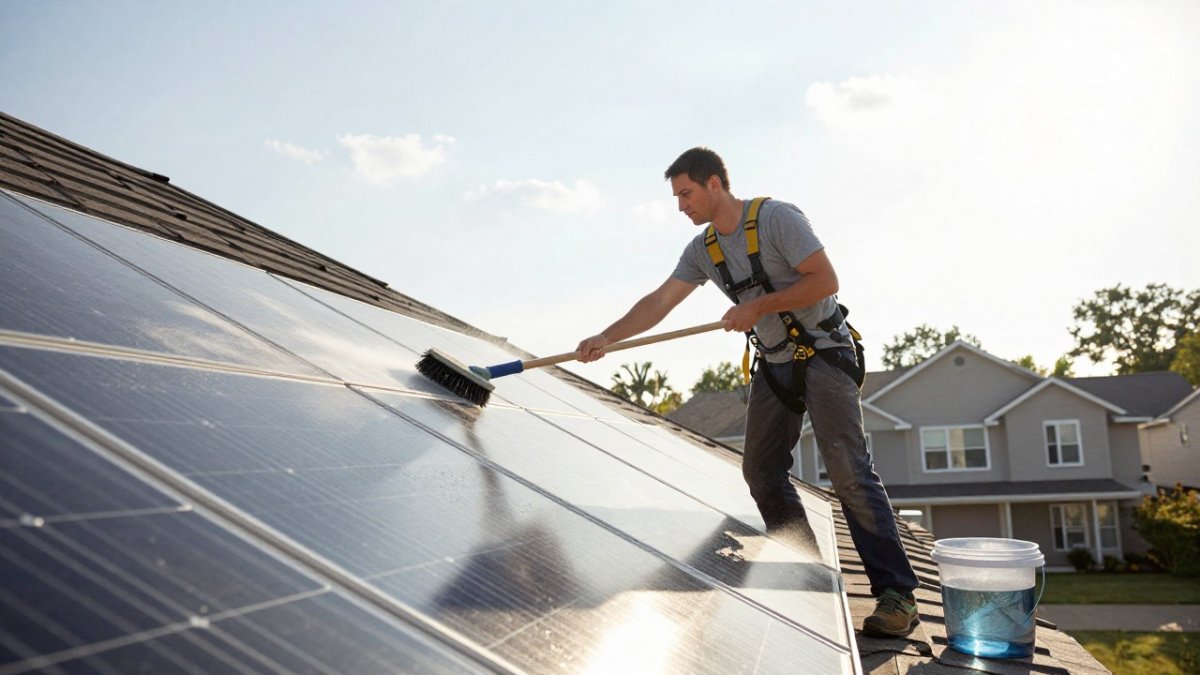
- Use a proper safety harness if you're on a roof
- Wear slip-resistant shoes with good grip
- Check weather conditions, don't clean in high wind or storms
- Avoid working in extreme heat; early morning or late afternoon is safer
- Keep one hand free for balance; never carry equipment in both hands while climbing
If your system is high, angled steeply, or hard to access safely, stop. This is exactly when professional cleaning makes sense. Mr Clean Solar Cleaning's OSHA-trained team handles the dangerous work, leaving you safe on the ground.
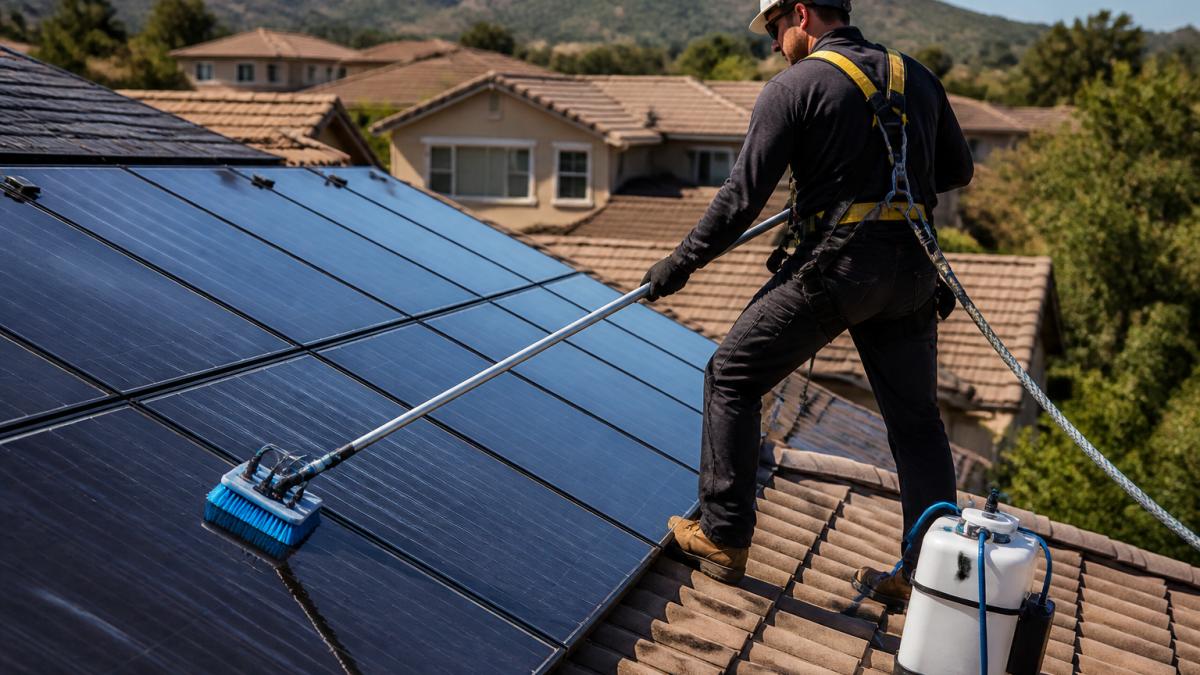
Don't skip this step to save money. A fall costs far more than professional cleaning ever will.
Solar Panel Cleaning With Deionized Water: The Gold Standard
Deionized water is the best choice for eco-friendly solar panel cleaning. It's pure water with minerals removed, so it won't leave streaks or deposits when it dries. But deionized water is not the only low-impact option, and the greenest choice depends on how much water you use, what kind of soil you're removing, and where the runoff goes. Here is how the main low-impact methods compare.
Low-impact cleaning methods compared by water use:
- Deionized water with a soft brush (moderate water use). Best for routine dust, pollen, and light bird droppings. The water carries away loosened soil and dries without mineral spots. A typical residential array uses a few gallons per cleaning, and because the water is pure, you rarely need a second rinse. This is the method most professional crews use because it balances cleaning power with low chemical impact.
- Filtered tap water with a soft brush (higher water use). Cheaper and easier to source, but hard water leaves calcium and magnesium deposits that can force a repeat rinse, which doubles water use. If your tap water is hard, filtered or deionized water actually saves water over time by eliminating the second pass.
- Waterless dry brush or microfiber tool (near-zero water use). A soft dry brush or purpose-built waterless tool removes loose dust and pollen without any water. It is the lowest-impact option by water volume, but it only works on dry, loose soil. Never dry-brush bird droppings, tree sap, or caked mud, because dragging abrasive grit across the glass can scratch the anti-reflective coating. Use dry cleaning for light dust between wet cleanings, not as a replacement for them.
- Steam or low-moisture vapor cleaning (very low water use). Some professional services use steam to lift stubborn film with a fraction of the water. It is effective on oily or biological residue, but the equipment is specialized and not practical for most homeowners. Ask a provider whether steam is appropriate for your panel coating before booking.
How to use deionized water for cleaning:
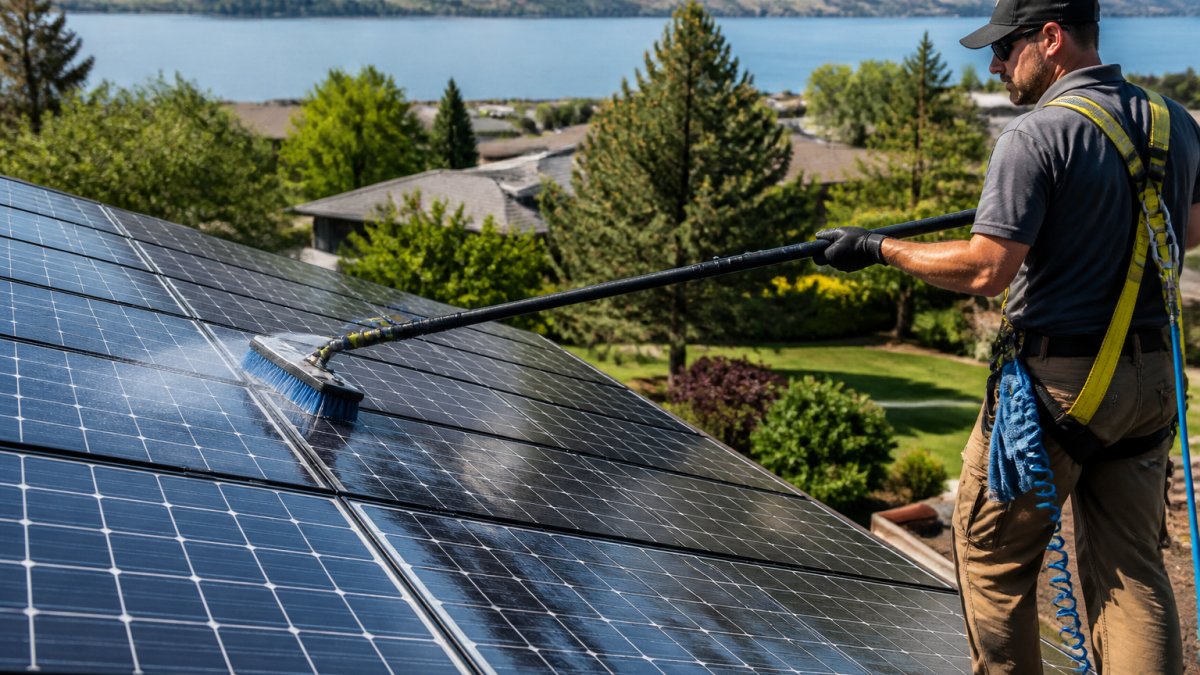
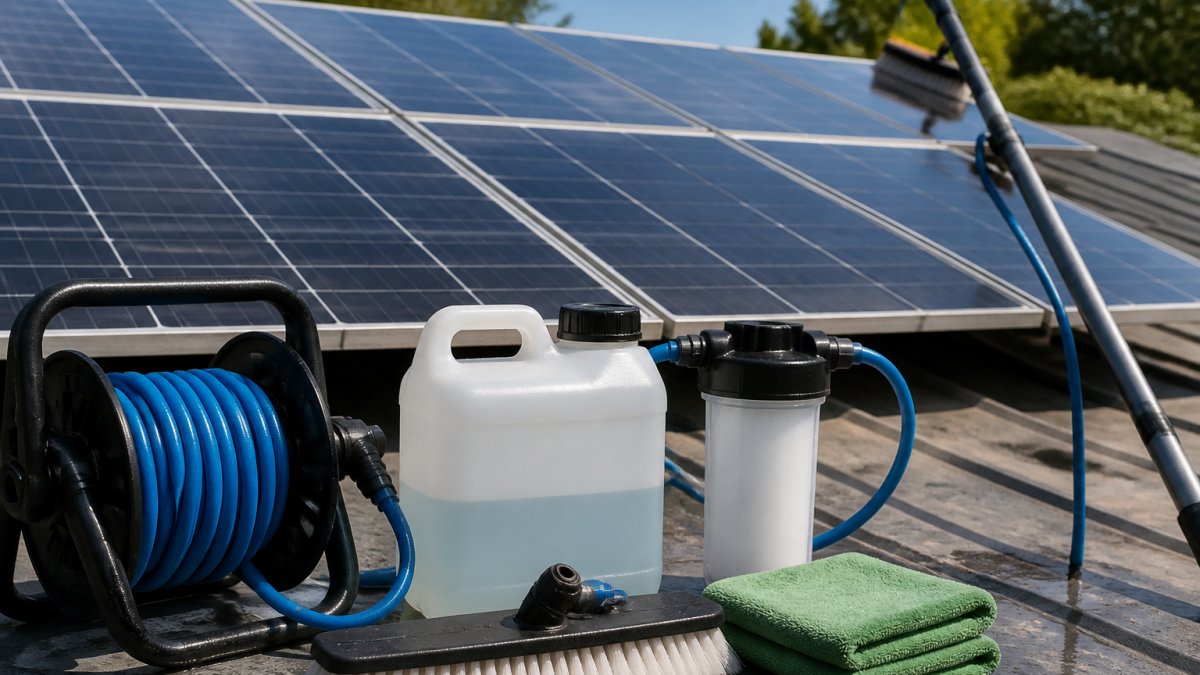
- Connect deionized water to a soft-bristle brush or sponge system
- Gently wet the panel surface
- Brush softly in one direction to avoid streaks
- Rinse thoroughly with more deionized water
- Allow to air dry or squeegee gently
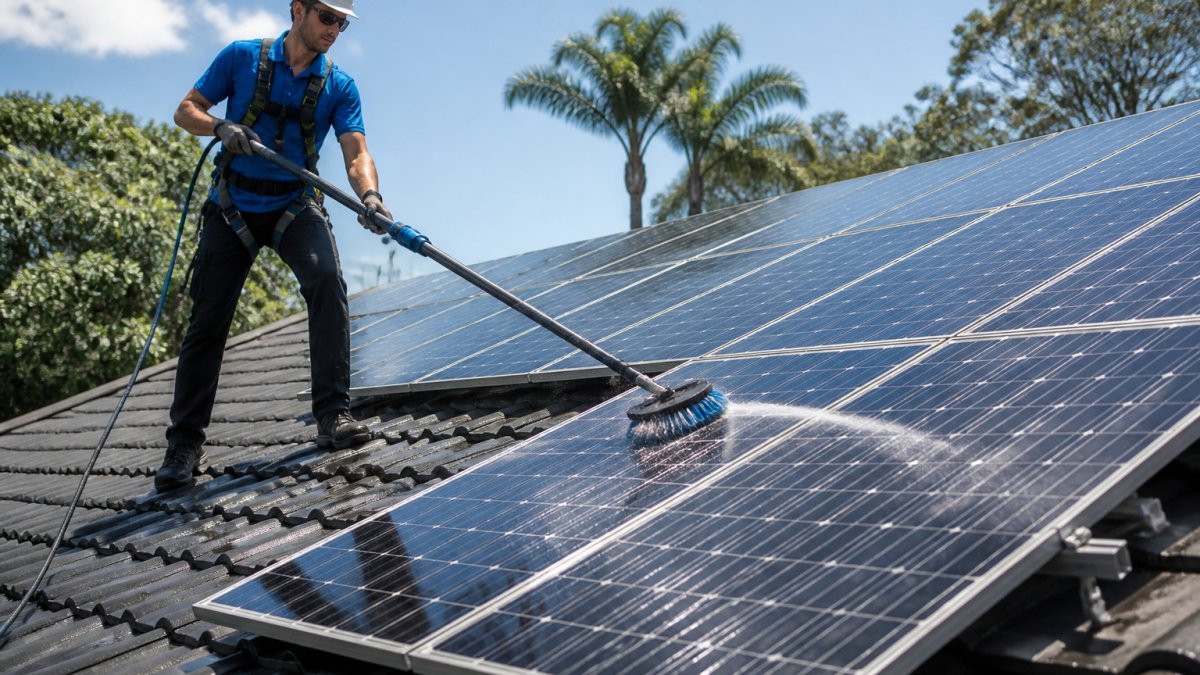
Many professional systems use filtered or deionized water fed through extendable poles. This keeps you safely on the ground while reaching panels on high roofs. The water quality matters, tap water contains minerals that defeat the purpose.
Can You Use Dish Soap to Clean Solar Panels? What Works and What Doesn't
No. Avoid dish soap on solar panels. Here's why.
Dish soap leaves a film on the glass surface. Even after rinsing, residue remains. This film blocks sunlight just like dirt does, reducing your energy production. You've cleaned the panels but made them less efficient.
Additionally, soap can damage or degrade the anti-reflective coating that manufacturers apply to maximize light absorption. Once that coating is compromised, your panels never perform at their original capacity again.
What actually works for solar panel cleaning:
- Deionized or filtered water (best option)
- Mild, non-abrasive cleaner designed for glass (only if needed for stubborn debris)
- Soft-bristle brushes or sponges
- Squeegees with soft rubber blades
- Gentle rinsing with clean water
If you need something beyond water, look for cleaners specifically formulated for solar panels. These are rare but designed to clean without damaging coatings.
Detergent-free and biodegradable options, and when to use them:
Most residential cleanings do not need any detergent at all. Water plus a soft brush removes dust, pollen, and fresh bird droppings.
- Water only. The default for routine cleaning. No chemical runoff, no residue, no coating risk.
- Biodegradable solar-specific cleaner. If you must use a product, choose one labeled biodegradable and formulated for solar glass. Mix it at the weakest dilution the label allows, spot-test a small corner, and rinse thoroughly with deionized water so no surfactant film remains.
- Avoid vinegar and acidic home remedies. Vinegar is sometimes recommended for mineral spots, but it is acidic and can etch or degrade coatings if left on the glass or used too strong. If you try it at all, use a very weak dilution, test first, and rinse immediately.
Managing runoff and local environmental rules:
Eco-friendly cleaning is not only about what goes on the panels; it is about what comes off them. Wash water carries dust, pollen, bird droppings, and any cleaner you used.
- Direct wash water onto a lawn, gravel, or landscape bed where it can soak in, rather than toward a driveway that drains to a storm sewer.
- Do not let detergent-laden water run into storm drains. In many communities, storm drains discharge untreated to local waterways, and some municipalities have rules about what can enter them. Check your local public works or environmental agency guidance before using any cleaner outdoors.
- Clean bird droppings and other biological soil promptly so runoff carries less contamination, and avoid cleaning right before rain that would wash residue into gutters and drains.
- If your panels sit above a vegetable garden, a rain barrel, or a sensitive water feature, use water only and route runoff away from those areas.
The safest approach: if water and a soft brush don't work, call a professional rather than risk damage with untested products.
Removing Mineral Deposits From Solar Panels Without Damage
Mineral deposits appear as white, cloudy spots or a film on the panel surface. They form when hard water dries on the glass. These deposits block sunlight and reduce efficiency.
To remove mineral deposits safely:
- Use deionized water as your primary cleaning fluid
- Apply gentle pressure with a soft-bristle brush
- Work in small circular motions, not back-and-forth scrubbing
- Rinse thoroughly with more deionized water
- Squeegee gently if needed to remove excess water
- Let air dry completely
For stubborn deposits, you can try a mild solution of distilled water mixed with a tiny amount of white vinegar (ratio: 20:1 water to vinegar). Test this on a small area first. Vinegar is acidic and can damage coatings if used incorrectly, so use it sparingly and rinse immediately.
Never scrub aggressively or use abrasive tools. Mineral deposits take time to accumulate, and they take time to remove safely. Patience prevents scratches and coating damage.
Prevention is easier than removal. If your water is hard, using deionized water for cleaning prevents mineral buildup from starting.
When to Call a Professional Solar Panel Cleaner
Some situations demand professional help. Knowing when to call saves money and prevents costly mistakes.
Call a professional if:
- Your roof is steep, high, or difficult to access safely
- You have more than 10-15 panels to clean
- Panels have stubborn bird droppings or thick mineral buildup
- You're uncomfortable working at heights
- Your system is new or under warranty (some warranties require professional cleaning)
- You want detailed performance reports before and after cleaning
Mr Clean Solar Cleaning handles all of this. Our OSHA-trained team uses ultra-pure deionized water and specialized soft-bristle systems engineered specifically for solar glass. We clean safely, thoroughly, and provide detailed performance reports showing energy output improvement.
Professional cleaning costs less than the energy you lose from dirty panels over time. For most homeowners and commercial operators, professional service is a smarter investment than DIY attempts that risk damage.
Dirty panels cost you money every single day. The right eco-friendly solar panel cleaning methods restore your system to peak efficiency without damage. Get started with a professional cleaning and see your energy output improve, we provide detailed performance reports so you can track the difference. Learn more about solar maintenance best practices from the Solar Energy Industries Association to understand how regular cleaning fits into your overall system care plan.
Frequently Asked Questions
Can you use dish soap to clean solar panels?
Dish soap can technically rinse away surface dirt, but it leaves residue and streaks that reduce light transmission. Most manufacturers recommend against it. Mild detergents designed for solar glass, or deionized water alone, are safer choices.
How often should solar panels be cleaned?
Most homeowners benefit from cleaning twice yearly, though frequency depends on local conditions. Areas with heavy dust, pollen, or bird activity may need quarterly cleanings. Check your panels monthly for visible buildup. A 20% drop in energy output signals it's time to clean.
Is purified or deionized water better for cleaning solar panels?
Deionized water is the superior choice because it has had minerals removed, preventing spotting and mineral deposits that reduce efficiency. Purified water removes some contaminants but may retain dissolved minerals. Ultra-pure deionized water, used by certified professionals, delivers streak-free results and protects your panel coating from long-term damage.
What eco-friendly solar panel cleaning methods avoid chemical runoff?
Professional services using specialized equipment and trained teams ensure compliance with environmental standards while maximizing panel performance.