 blog
Solar Panel Efficiency Restoration: A 2026 Guide
Table of Contents
- What Solar Panel Efficiency Restoration Actually Means
- Does Cleaning Solar Panels Improve Efficiency
- Cost of Professional Solar Panel Cleaning
- Solar Panel Cleaning Frequency and Maintenance Schedule
- Solar Panel Cleaning ROI: Measuring Performance Gains
- Repair, Replacement, or Restoration: Which Option Is Right
- Warranty, Safety, and Professional Standards
- Frequently Asked Questions
Last Updated: October 9, 2026
What Solar Panel Efficiency Restoration Actually Means
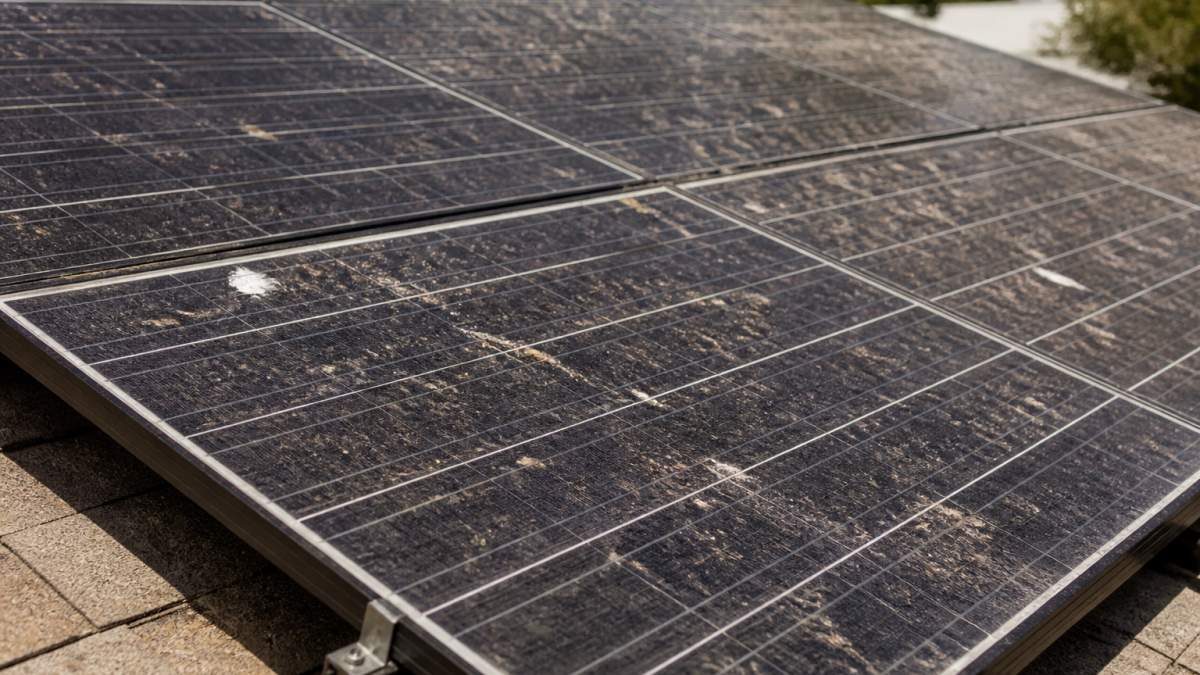
Solar panel efficiency restoration is the process of cleaning and maintaining your solar system to recover lost energy production caused by dust, dirt, bird droppings, and environmental buildup. Grime reduces panels' ability to convert sunlight into electricity; restoration brings them back to peak performance without replacement.
At Mr Clean Solar Cleaning, we've worked with hundreds of homeowners and commercial operators whose systems underperformed simply because no one was maintaining them. Panels covered in dust and debris can lose 15-25% of their output.
The key distinction: restoration is not repair. A repair addresses a broken component; restoration addresses performance loss from environmental factors. Your panels may be electrically perfect but underproducing because something blocks the sunlight.
This guide covers what efficiency restoration actually involves, how to measure whether it's worth doing, and how to choose between cleaning, repairs, and replacement options.
Does Cleaning Solar Panels Improve Efficiency
Yes. Cleaning solar panels directly improves energy production by removing barriers between sunlight and the photovoltaic cells. A clean panel produces measurably more electricity than a dirty one under identical conditions.
The improvement depends on how dirty your panels are. Light dust might reduce output by 5-10%; heavy buildup from bird droppings, pollen, or debris can cut it by 20-30%. Once cleaned, panels typically return to near rated output within days.
Consistency matters most. A one-time cleaning helps, but panels get dirty again; the real benefit comes from regular maintenance that keeps output high year-round. Many homeowners see energy bills stabilize once they establish a schedule, because the system produces reliably instead of degrading month by month.
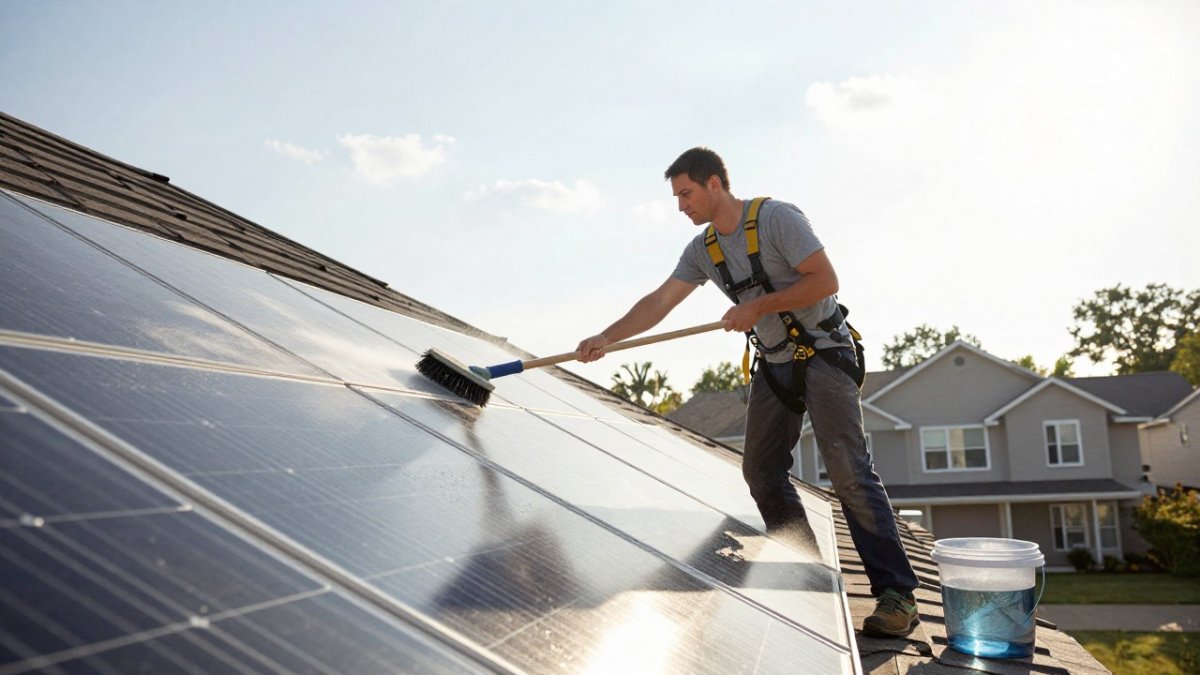
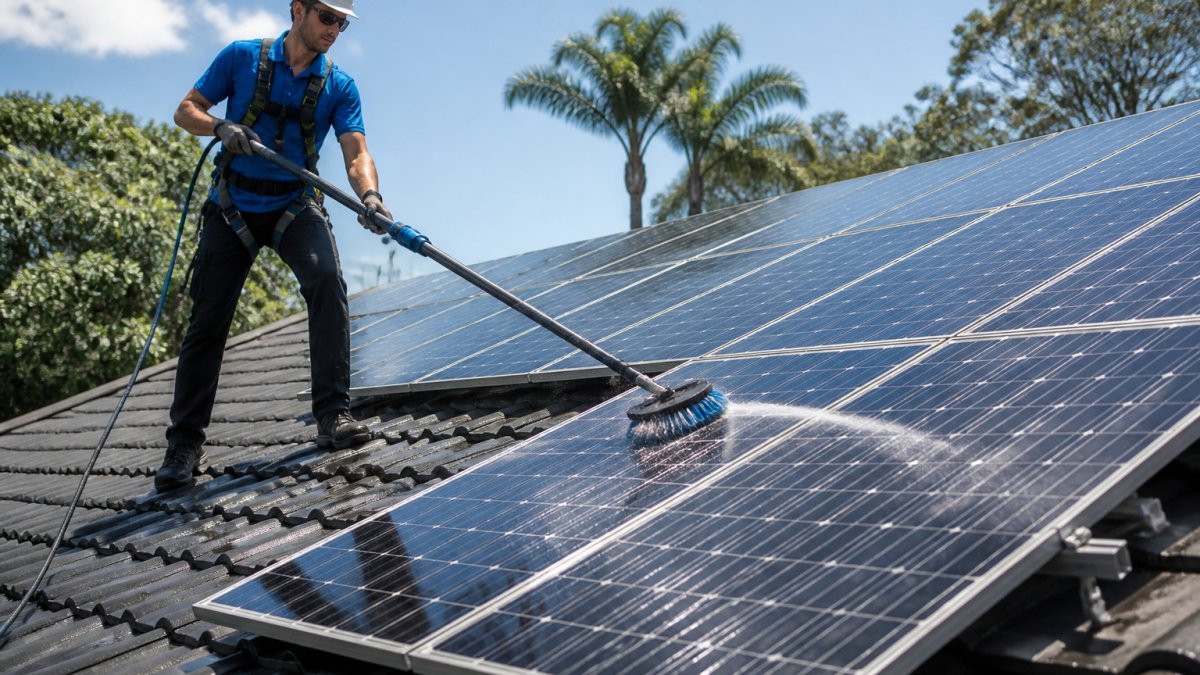
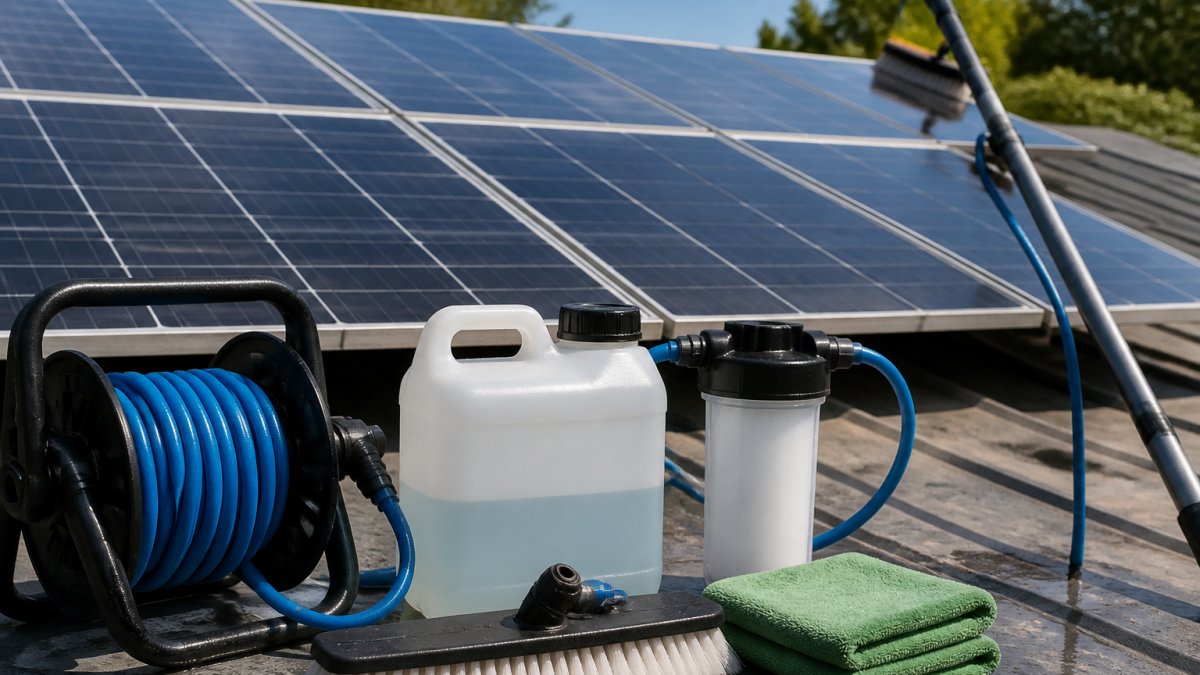
Done professionally, cleaning is straightforward: soft-bristle systems and purified deionized water remove grime without damaging glass or electrical components. Abrasive methods or harsh chemicals can scratch panels and void warranties, which is why technique matters.
Cost of Professional Solar Panel Cleaning
Most top-ranking pages dodge the pricing question, so here is a transparent framework you can use to sanity-check any quote.
What actually drives the price
Professional solar panel cleaning pricing in the residential market generally falls into these bands, based on system size and access difficulty. Pricing depends on quantity, dates, and delivery.
| System Size | Typical Access | Common Price Band |
|---|---|---|
| 5-10 panels (small residential) | Single-story, walkable pitch | Lowest tier |
| 15-25 panels (standard residential) | Two-story or steeper pitch | Mid tier |
| 30-50 panels (large residential / small commercial) | Multi-array, mixed roof planes | Upper tier |
| 50+ panels (commercial / ground-mount) | Warehouse, tilt racking, or ground array | Quoted per site |
Within each band, four variables move the number up or down:
- Roof pitch and height. A steep two-story roof requires fall-protection setup and slower work than a walkable single-story pitch.
- Access and obstructions. Dormers, skylights, HVAC units, and tight setbacks slow the crew down.
- Soiling type. Light dust rinses off; bird droppings, tree sap, and agricultural film need more passes and sometimes a pre-treatment.
- Water access and travel. Sites without on-site water or outside a service radius add cost.
The ROI math, worked through
Rather than quote a single number, here is the framework most homeowners should run before signing anything:
- Estimate your current output loss. If visibly soiled, assume a 5-25% production shortfall, heavier soiling at the top of that range.
- Convert that loss to dollars. Multiply expected monthly production (kWh) by the loss percentage, then by your utility's retail rate per kWh, your monthly cost of doing nothing.
- Compare to the cleaning quote. If the quote equals roughly 3-6 months of recovered energy value, payback is fast.
What is NOT included in a cleaning quote
Be wary of quotes that blur these lines:
- Diagnostics beyond a visual check. Full electrical testing (string voltage, current, insulation resistance) is separate.
- Component repair. Replacing an inverter, junction box, or damaged wiring is not cleaning.
- Panel removal and reinstallation. Needed for some roof work, priced separately.
- Tree trimming or pest exclusion. Sometimes the root cause of soiling, but not part of a cleaning visit.
How to compare quotes fairly
Put every quote on the same page by asking each provider for:
- A per-panel or per-system flat price, not an hourly estimate.
- Confirmation of insurance and any applicable state contractor licensing.
- Whether before/after production data is included.
- Whether the price changes if the crew finds damage or a fault.
Look up your state's licensing and consumer protection requirements for home service contractors
Solar Panel Cleaning Frequency and Maintenance Schedule
How often you clean depends on your environment and how much output you're willing to lose. Dusty or agricultural areas accumulate grime faster; coastal salt spray accelerates buildup; heavy bird populations create stubborn spots.
A common maintenance schedule is twice yearly: once in spring after winter dust and pollen accumulation, and once in fall before the shorter winter days when every bit of output matters. Some systems in particularly dirty environments benefit from quarterly cleaning.
The real question isn't "how often should I clean?" but "how much output loss am I willing to tolerate?" Annual cleaning means output declines gradually over 12 months; twice yearly keeps it higher and more consistent; quarterly keeps it near peak all year.
Professional maintenance also includes inspection: during cleaning visits, our team checks connections, monitors for physical damage, and flags issues before they become expensive. This preventive approach catches problems early, when they're cheaper to fix.
Solar Panel Cleaning ROI: Measuring Performance Gains
Most pages say cleaning 'improves efficiency' and stop there. Here is exactly how performance is measured before and after service.
The three measurement layers
A credible restoration service uses some combination of these, from simplest to most rigorous:
1. Production monitoring (most common). If your system has a monitoring platform (SolarEdge, Enphase Enlighten, SMA Sunny Portal, or similar), you already have the data:
- Record daily and weekly kWh production for the 2-4 weeks before service.
- Record the same for the 2-4 weeks after.
- Compare against the same period in prior years if available.
The catch: weather changes. A cloudy post-cleaning week can mask a real gain, so monitoring alone is directional, not definitive.
2. Irradiance-adjusted comparison (better). Production depends on how much sunlight hits the array, not just how clean it is. A more honest comparison normalizes production against measured solar irradiance. Some platforms report a 'performance ratio' or 'specific yield' (kWh per kW installed) that already accounts for this, if yours does, use that number, not raw kWh.
3. On-site electrical testing (most rigorous). A qualified technician can measure string current and voltage at the combiner box or inverter, and sometimes perform an I-V curve trace on individual strings. This isolates soiling losses from shading, mismatch, or a degrading panel, the only method that tells you whether a shortfall is dirt or something else.
What a before/after report should actually contain
If a provider promises a performance report, ask what is in it. A useful report includes:
- Date, time, and weather conditions at each measurement.
- System size (kW DC) and inverter model.
- Production (kWh) or performance ratio before and after.
- A stated comparison window (e.g., 14 days pre vs. 14 days post).
- Any anomalies noted (shading, fault codes, damaged panels).
A report showing only a single 'after' number, with no baseline, is a marketing claim, not a measurement.
Setting realistic expectations
Not every system shows a dramatic gain, and honest providers will say so:
- Heavily soiled systems (visible film, droppings, agricultural dust) tend to show the largest recoverable gains.
- Lightly dusty systems may show a modest gain hard to distinguish from weather noise.
- Systems with a real fault (failed string, degraded inverter, cracked panel) won't be fixed by cleaning, and the measurement will reveal that.
- Older systems with genuine degradation recover only the soiling portion, not the age-related loss.
Cleaning recovers what soiling took away, and nothing more. If a provider promises more, ask them to show you the measurement method.
A simple tracking template
You don't need a consultant. Track five numbers in a spreadsheet:
| Metric | Before Service | After Service |
|---|---|---|
| Daily kWh (avg over 14 days) | ||
| Performance ratio (if available) | ||
| Utility rate ($/kWh) | ||
| Estimated monthly value of gain | ||
| Service cost |
Divide service cost by monthly value of gain to get your payback period in months. If it is under 6, the service is easy to justify. If it is over 18, get a second opinion before repeating the service.
Review federal consumer guidance on home energy upgrades and contractor verification
Repair, Replacement, or Restoration: Which Option Is Right
When your solar system isn't performing, you have three paths: restore efficiency through cleaning and maintenance, repair failing components, or replace panels or the whole system.
Restoration is the first step. It's the lowest cost and lowest risk option. If your panels are simply dirty, cleaning solves the problem. This should always be your starting point before considering more expensive alternatives.
Repair addresses specific failures: a faulty inverter, damaged wiring, a malfunctioning monitoring system, or a cracked panel. Repairs make sense once you've identified a broken component. Cost varies widely, an inverter replacement might run several thousand dollars, while rewiring or fixing connections is usually cheaper.
Replacement makes sense only when repair isn't economical or the system is genuinely obsolete.
The decision tree is simple: start with restoration. If that doesn't solve your problem, get a professional inspection to identify what's actually broken. Then decide whether repair or replacement makes financial sense for that specific component.
| Option | Best For | Timeline | Cost Range |
|---|---|---|---|
| Restoration (Cleaning) | Dirty panels, routine maintenance | Same week | Varies by system size |
| Repair | Specific component failure | 1-2 weeks | Depends on component |
| Replacement | Aged or damaged panels, system obsolescence | 2-4 weeks | Highest upfront cost |
Warranty, Safety, and Professional Standards
Professional service protects your investment. Improper cleaning or maintenance can void your panel warranty, which typically covers 25 years of performance.
Professional solar cleaning services follow industry standards designed to protect your equipment. At Mr Clean Solar Cleaning, our OSHA-trained team uses specialized soft-bristle systems and purified deionized water.
Insurance and liability matter too. Professional services carry full insurance coverage. If something goes wrong during cleaning, you're protected. DIY cleaning or hiring uninsured contractors leaves you liable for any damage.
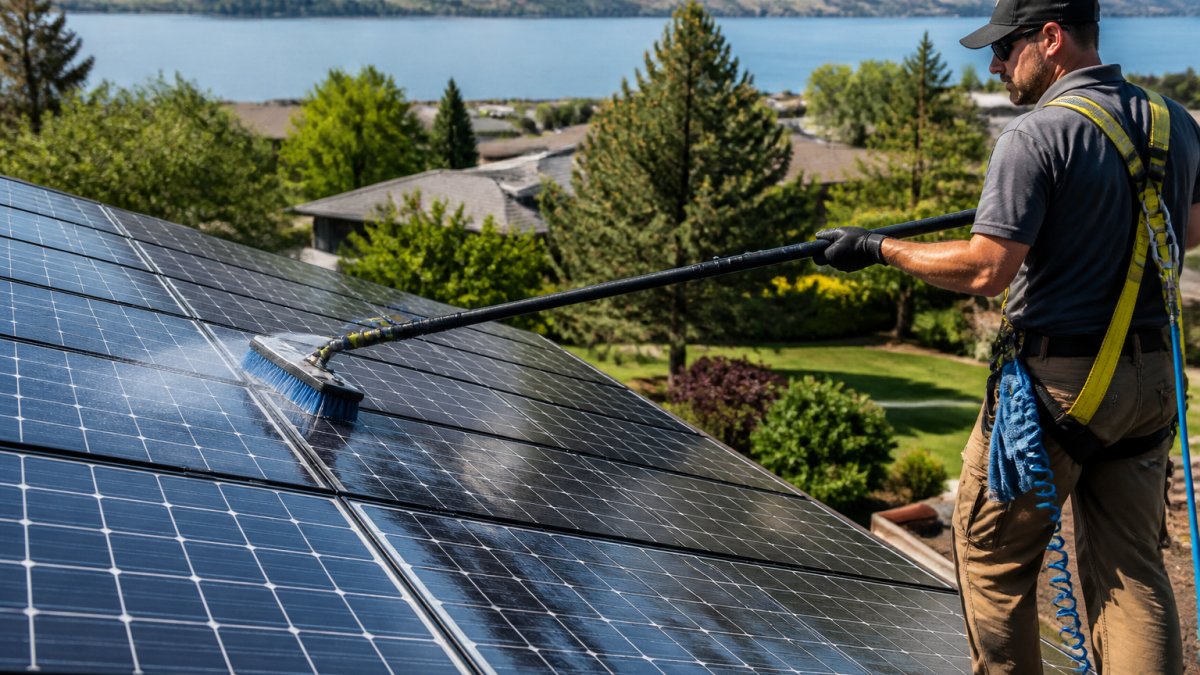
Safety is the other critical factor. Solar panels sit on roofs, often at steep angles, so DIY cleaning creates fall risk.
When you hire certified solar maintenance specialists, you're paying for expertise that protects both your safety and your warranty. That's not an unnecessary cost, it's insurance against expensive mistakes.
Restoring your solar panel efficiency starts with understanding what's actually limiting your system's performance. Dirty panels are fixable. Broken components need professional repair. Aging systems eventually need replacement.
Contact Mr Clean Solar Cleaning for a professional assessment of your system. We'll measure your current output, identify what's limiting performance, and show you exactly what efficiency restoration can deliver.
Frequently Asked Questions
Does cleaning solar panels actually improve efficiency?
Yes. Dust, bird droppings, and grime reduce light transmission to solar cells, lowering energy production. Professional solar panel cleaning removes these barriers, restoring output by up to 30% depending on buildup severity and local environmental conditions. Most homeowners see measurable gains within days of a thorough cleaning, especially in areas with high dust or bird activity.
How often should solar panels be professionally cleaned?
Frequency depends on your environment. Residential systems in dusty or coastal areas benefit from quarterly or semi-annual cleaning. Systems near trees or in areas with high bird activity may need cleaning every 2-3 months. Less contaminated locations may only require annual cleaning. A professional solar panel cleaning service can assess your specific conditions and recommend an optimal schedule that balances cost against performance gains.
What is the typical ROI for professional solar panel cleaning?
ROI varies based on system size, local electricity rates, and cleaning frequency. Professional cleaning also prevents long-term damage from buildup, extending panel lifespan and protecting your overall solar investment.
Will professional solar panel cleaning void my warranty?
No, when performed by certified technicians using appropriate methods. Professional solar panel cleaning services use soft-bristle systems, purified deionized water, and zero abrasive chemicals specifically designed to protect solar glass. Pressure washing or harsh chemicals can damage panels and void warranties, but certified solar maintenance specialists follow manufacturer guidelines and industry standards to preserve your coverage while restoring efficiency.